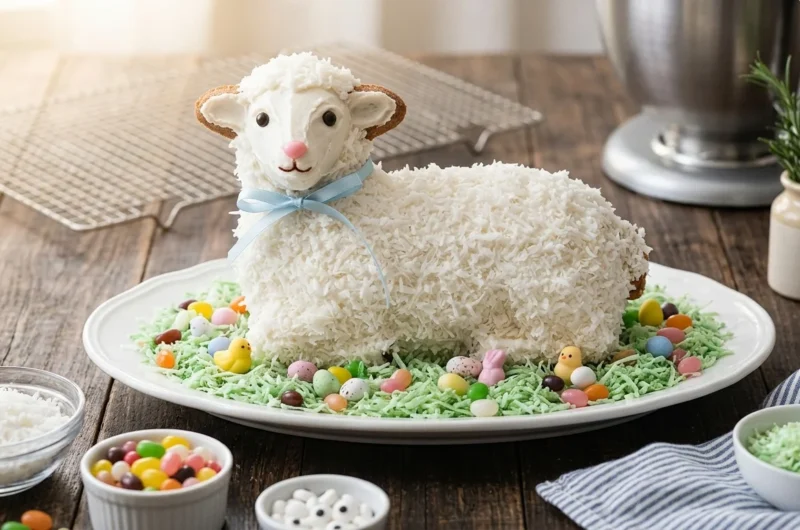
Lamb cake is an American celebration cake with deep Polish-American, German-American, and Central European Catholic immigrant roots baked in a cast iron or aluminum two-piece lamb-shaped mold that produces a standing three-dimensional figure decorated with white frosting and shredded coconut fleece, candy eyes, and a ribbon at the neck, served as both a devotional centerpiece and a dessert at Easter tables across the American Midwest and Northeast where Central European immigrant communities established the tradition from the 1880s onward. The mold preparation is the single most critical technique decision. Every interior surface of both mold halves including the finest relief details of the face, ears, legs, and fleece texture must be coated with solid vegetable shortening followed by a thin, even flour dusting that reaches into every carved recess, because any point of uncoated metal contact with the batter during baking creates a bond between the set cake protein and the metal surface that tears that portion of the lamb’s surface when the mold is separated damage that no frosting fully conceals on the fine facial features where the tear occurs most frequently.
The lamb cake’s cultural identity in American Catholic and Christian households is inseparable from its theological symbolism the Agnus Dei, or Lamb of God, whose image at the Easter table connects the celebration meal to the liturgical meaning of Easter Sunday within the Catholic and broader Christian theological tradition that the Central European immigrant communities brought to the American Midwest and Northeast from Poland, Germany, Austria, Hungary, and Czechoslovakia beginning in the 1880s. The cast iron lamb mold itself the specific object that makes the preparation possible was among the domestic tools that immigrant families carried from Central Europe as family heirlooms, and many American families today still use great-grandparents’ original European cast iron molds, making the lamb cake one of the only American baked preparations where the production object is simultaneously a culinary tool and a family artifact with direct material continuity to a European homeland. The preparation is documented in Polish-American Easter traditions as baranek wielkanocny Easter lamb and in German-American Easter tradition as Osterlamm, indicating its parallel development across multiple Central European immigrant communities that converged in the same American Midwestern cities during the same immigration period.
What Is Lamb Cake?
Lamb cake is a three-dimensional figure cake the American celebration cake tradition’s most structurally complex format, where the visual form of the dessert carries cultural and devotional weight equal to its flavor. It differs from a standard layer cake in that the mold’s closed interior produces a standing three-dimensional object rather than a flat-topped round, with the face, ears, body, and leg relief details integral to the cake’s surface rather than applied through decoration. It differs from a novelty cake carved or frosted to resemble a lamb in that the shape is structural produced by the mold’s casting and every surface detail is baked into the cake’s exterior rather than created through knife work or piping after baking.
The lamb cake’s batter must satisfy two simultaneous structural requirements. It must be thick enough to hold the mold’s three-dimensional relief details without slumping during the enclosed oven environment’s extended plastic phase the period before egg protein coagulation sets the crumb structure while remaining moist enough to release cleanly from all surfaces of the mold without tearing at the fine face and ear details where the high surface-area-to-volume ratio of those features creates the greatest adhesion risk. These two requirements sufficient viscosity for shape retention and sufficient moisture for clean release point in opposite directions and are resolved through the combination of the higher egg ratio, the sour cream’s fat enrichment of the crumb, and the 20-minute refrigerator chill that extends the cold batter’s higher-viscosity resistance to slumping until the protein network can set around the mold’s relief details.
What Equipment Do You Need?
What Ingredients Do You Need?
The lamb cake batter uses a higher egg ratio than a standard American layer cake 3 large eggs per 283g of cake flour versus the typical 2 eggs providing the additional albumin protein concentration needed for earlier structural setting in the enclosed mold environment where steam retards surface crust formation and extends the plastic phase during which fine detail slumping risk is highest. Use cake flour rather than all-purpose the lower protein content produces a more tender crumb that releases from the mold’s fine detail surfaces more cleanly than a tighter all-purpose flour gluten network at the same moisture level.
For the Lamb Cake Batter
The almond extract at 1/4 teaspoon contributes benzaldehyde the primary aromatic compound of bitter almonds and the specific flavor signature of the traditional Central European lamb cake at a concentration that provides the recognisable marzipan-adjacent note without the medicinal dominance that develops above 1/2 teaspoon. The benzaldehyde reference connects the American lamb cake to the European marzipan lamb figures used in the same liturgical celebration context a flavor continuity between the immigrant tradition’s original marzipan format and the American adaptation’s baked cake format.
For the White Buttercream Frosting
For the Decoration
Step by Step Process
Prepare the Mold
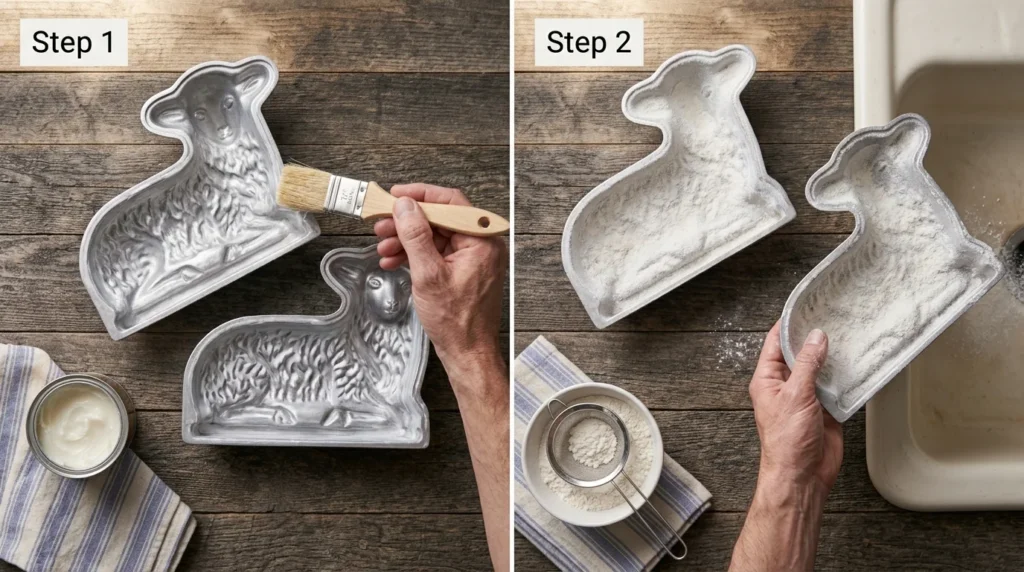
Step 1. Prepare both mold halves before making the batter the filled mold must go directly from mixing to the refrigerator for the 20-minute chill without delay, requiring the mold to be completely prepared before batter production begins. Using the small stiff pastry brush, work solid vegetable shortening into every interior surface of both mold halves, pressing the bristles into the deepest points of the face relief, the ear channels, the leg detail, and the fleece texture recesses individually. The shortening layer must be thin and visually complete every metal surface shows white shortening, no bare metal visible anywhere.
Step 2. Spoon 2 tablespoons of all-purpose flour into one greased mold half. Rotate and tap the mold over the sink to distribute flour across all shortening-coated surfaces, then tip out all excess. Repeat with the second mold half. Tap both halves firmly to dislodge any excess flour that did not adhere to the shortening un-adhered flour falls onto the batter during filling and produces white flour streaks on the finished cake surface.
Make the Batter
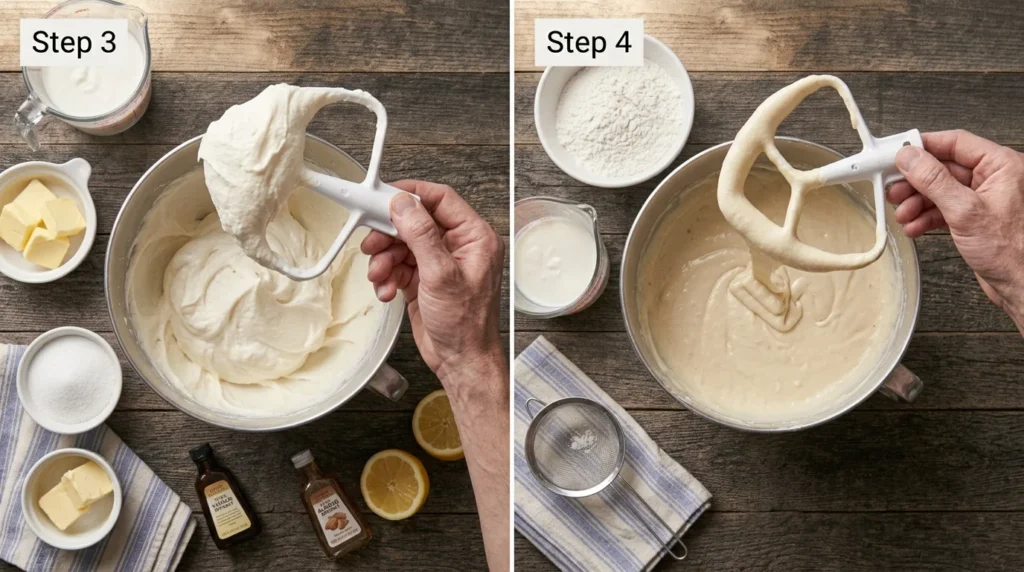
Step 3. Sift the cake flour, baking powder, and salt together. Combine the whole milk and sour cream in a measuring jug and whisk until smooth. Beat the room-temperature butter with the paddle attachment at medium speed for 2 minutes until pale. Add the sugar and beat at medium-high for 4 to 5 minutes until very pale and significantly increased in volume. Add the eggs one at a time, beating 30 seconds after each. Add the vanilla extract and almond extract and beat for 10 seconds.
Step 4. Add the flour mixture in three additions alternating with the milk-sour cream mixture flour, liquid, flour, liquid, flour beating at low speed after each until just incorporated. Stop mixing the moment no dry flour patches remain after the final flour addition. Over-mixing at this stage develops gluten that tightens the batter and increases adhesion risk at the mold’s fine relief details during release.
Fill the Mold and Chill
Step 5. Spoon the batter into the face half of the mold the half containing the face, ears, and front body relief filling to approximately 2/3 full. Using a small spoon, press the batter gently into all the fine relief details of the face and ear channels to ensure complete contact without air pockets. Air pockets against the mold surface produce hollow or sunken spots on the finished lamb’s surface where the batter failed to fill the carved relief completely.
Step 6. Fill the back half of the mold with the remaining batter to approximately 2/3 full. Secure the two halves together firmly with kitchen twine or metal clips the halves must be flush with no visible gap at the seam. Stand the mold upright and transfer to the refrigerator for exactly 20 minutes.
Bake the Lamb Cake
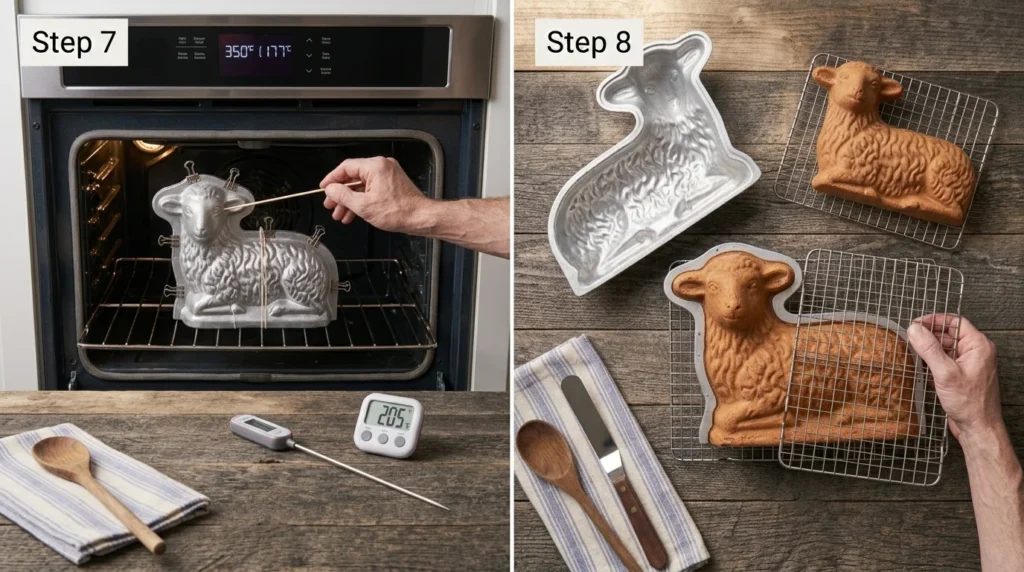
Step 7. Preheat the oven to 350°F (177°C). Remove the chilled mold from the refrigerator and place directly on the centre oven rack the transition from refrigerator cold to oven heat is immediate, preserving the cold batter’s viscosity advantage through the initial heating phase. Bake at 350°F for 40 to 50 minutes.
The mold’s enclosed format prevents all standard visual doneness assessment no visible dome, no spring-back test, no edge-pull observation. Verify doneness through the mold’s small vent holes if present insert a thin skewer through the vent into the body’s thickest point. Moist crumbs on the skewer confirm doneness. Alternatively insert a thin instant-read thermometer through the seam gap 200 to 205°F at the body centre confirms complete set.
Step 8. Remove from the oven. Cool in the mold for 15 minutes the minimum period for the protein network to set sufficiently to hold the lamb’s three-dimensional shape independently without the mold’s support. Opening before 15 minutes causes the still-soft crumb to tear at the fine detail areas as the metal separates from the cake surface.
Remove the securing twine or clips. Open the back mold half first, holding the face half steady with the other hand. The lamb should remain in the face half as the back is lifted away. Place a wire rack face-down against the open face-half and invert together in one confident motion, then lift the face half straight upward.
Step 9. Trim the seam ridge with the serrated knife hold the blade parallel to the ridge and use very light, gentle sawing strokes to remove the raised seam line flush with the surrounding surface. The lamb is still warm and the crumb soft firm knife pressure crushes rather than cuts. After trimming the seam, assess the base if the lamb does not stand steadily on the serving plate, trim a thin slice from the base with the serrated knife to create a flat standing surface.
Decorate the Lamb
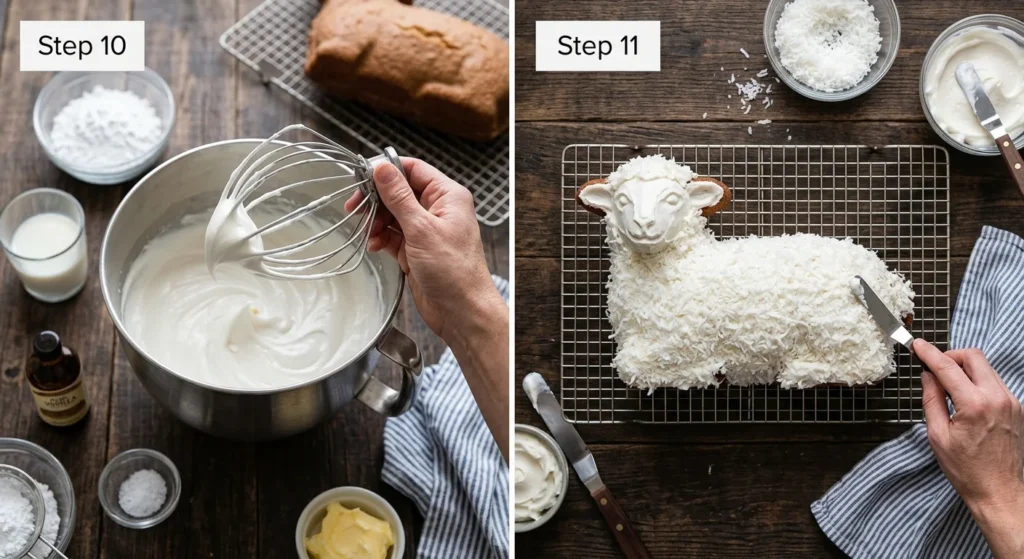
Step 10. Cool the trimmed lamb completely on the wire rack minimum 1 hour. Beat the room-temperature butter at high speed for 3 minutes until very pale. Add the sifted powdered sugar in three additions at low speed. Add the milk, vanilla, and salt. Beat at medium-high for 2 minutes until the frosting is bright white, smooth, and holds a stiff peak. The frosting must be completely white any yellow tinge from under-beaten butter reduces the visual contrast between the white-frosted lamb and the golden cake visible at the cut edges when sliced.
Step 11. Apply frosting to the entire lamb surface using a small offset spatula face and body working in sections. Apply the face frosting thinly so the facial relief details remain visible through the frosting layer. Apply the body frosting generously as the adhesive base for the coconut fleece. While each section of body frosting is still tacky, press white sweetened shredded coconut firmly against the surface cupping a handful of coconut in one palm and pressing the lamb body against it, rotating the figure to reach all body surfaces. Leave the face coconut-free the face frosting without coconut allows the facial features, candy eye placement, and the expression carved into the mold to remain visible and legible.
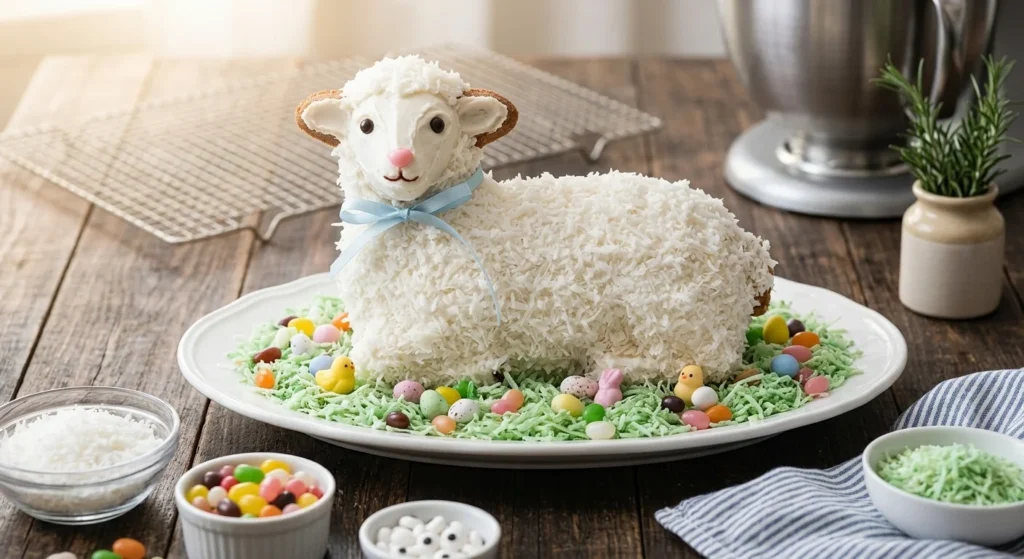
Step 12. Place the candy eyes in the correct anatomical positions on the lamb’s face pressing gently into the still-tacky face frosting. Allow the frosting to crust for 15 minutes before handling further. Tie the ribbon around the neck the narrowest point between the head and shoulders. Transfer the decorated lamb to the serving plate. Arrange green-tinted coconut grass across the plate surface around the lamb base. Place jelly beans or Easter candy around the base to complete the Easter tableau.
Why the Enclosed Mold Environment Requires a Higher Egg Ratio Than an Open-Top Pan
The Easter lamb cake’s two-piece enclosed mold bakes the batter in a fundamentally different thermal environment than any open-top pan format an environment that retards early crust formation, extends the batter’s plastic phase, and therefore requires a higher egg protein concentration to achieve the structural set that prevents the fine relief details from slumping before the crumb network stabilises around them.
In a standard open-top pan the batter’s upper surface is directly exposed to the oven’s dry convective heat. This direct exposure simultaneously dries the surface and allows the water vapor produced during baking to escape freely producing a surface crust within the first 8 to 10 minutes of baking that mechanically stabilises the batter beneath it, preventing further slumping regardless of the batter’s continued fluid phase below. The standard American layer cake’s two-egg formula is calibrated for this rapid surface-crust stabilisation the egg protein’s early coagulation at 140 to 145°F supplements the surface crust’s mechanical stabilisation to produce the final structure.
In the lamb mold’s enclosed format the batter is surrounded by metal on all surfaces with no opening for moisture escape until the internal steam pressure exceeds the mold seam’s resistance. The trapped steam maintains a 100 percent humidity environment inside the mold throughout the baking period, preventing the surface drying that produces the early crust in an open-top pan. Without an early surface crust, the batter’s plastic phase the period during which it remains fluid enough to slump under gravity extends until the egg protein network and starch gelatinisation together produce the structural set that replaces the absent surface crust’s mechanical function. In the high-humidity enclosed environment this set occurs later in the baking timeline than in a dry open-top environment at the same oven temperature, because the elevated humidity at the batter surface retards protein coagulation in the same mechanism that a humid kitchen retards bread crust formation.
The third egg’s albumin provides the additional protein concentration that compensates for this delayed structural set the higher total protein content produces a set that occurs at an earlier point in the extended baking timeline than the two-egg formula achieves, reducing the duration of the plastic phase during which the unsupported fine relief details are at risk of gravity-induced slumping. The 20-minute refrigerator chill works in direct concert with the higher egg ratio the cold batter’s higher viscosity extends the time before the enclosed mold’s trapped heat raises the batter temperature to the protein denaturation threshold, further reducing the slumping risk during the initial heating phase.
How Does Lamb Cake Compare to Related American Figure and Mold Cakes?
What Variations Can You Make?
Lemon Lamb Cake
Add 1 tablespoon (6g) of fresh lemon zest rubbed into the granulated sugar before creaming using the fat-phase integration technique from the chocolate orange cake to the batter. Replace the almond extract with 1 additional teaspoon of pure vanilla extract. The lemon version’s bright citrus character is the most widely preferred flavor variation for American tasters who find the almond extract reference too marzipan-adjacent the lemon-zest fat-phase integration produces a lamb cake whose citrus character permeates every fat-containing crumb bite from the limonene’s fat-phase distribution during creaming. Tint the buttercream frosting pale yellow with 2 drops of yellow gel food coloring before applying the pale yellow frosting against the white coconut fleece produces a visual warmth that communicates the lemon character before tasting.
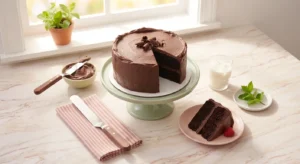
Chocolate Lamb Cake
Replace 1/3 cup (33g) of the cake flour with 1/3 cup (33g) of sifted Dutch-process cocoa powder. Add 1/4 cup (60ml) of hot brewed coffee at 190°F to the milk-sour cream mixture the hot coffee blooms the cocoa’s pyrazine and furanone aromatic compounds through the established fat-soluble aromatic release mechanism. Reduce the milk to 1/2 cup (120ml) to compensate for the coffee addition. The chocolate lamb cake requires the white coconut exterior without exception the visual contrast between the dark chocolate interior revealed at the first slice and the all-white coconut exterior is the most dramatically effective cross-section of any lamb cake variation, communicating the chocolate character only at the moment of slicing.
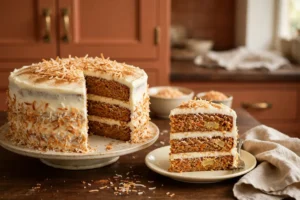
Carrot Lamb Cake
Replace 1/2 cup (60g) of the cake flour with 1/2 cup (60g) of finely grated fresh carrot pressed to remove excess moisture. Add 1 teaspoon of ground cinnamon, 1/4 teaspoon of ground nutmeg, and 1/4 teaspoon of ground ginger to the dry ingredients. Replace the almond extract with 1/4 teaspoon of ground cardamom added to the dry ingredients for a warm spice note that complements the carrot without the marzipan reference. The carrot lamb cake is the most thematically coherent seasonal variation the carrot’s Easter-Bunny cultural association layers a secular Easter reference over the devotional Agnus Dei symbolism, producing a lamb cake that operates simultaneously in both the religious and secular Easter celebration registers.
Dietary Adjustments and Substitutions
Gluten-Free Version
Replace the cake flour with a certified 1:1 gluten-free baking flour blend containing xanthan gum at exactly 283g. Increase the baking powder to 3 teaspoons (12g). The enclosed mold format is more forgiving for gluten-free batter than open-top formats the mold’s walls provide mechanical support throughout the full baking period, reducing the structural demand on the gluten-free flour blend’s xanthan gum binding relative to an open-top cake that must support its own structure from early in the baking timeline. For the mold flour dusting, use standard all-purpose flour regardless of the gluten-free batter the flour dusting contacts only the mold surface and never the interior crumb.
Dairy-Free Version
Replace the butter in the batter with Miyoko’s Creamery dairy-free butter sticks at the same weight (170g). Replace the whole milk with full-fat oat milk at the same volume (180ml). Replace the sour cream with unsweetened coconut yogurt at the same weight (60g). For the buttercream frosting, replace the butter with Miyoko’s dairy-free butter sticks at the same weight (113g) and the milk with full-fat oat milk at the same volume (45ml). The solid vegetable shortening used for mold greasing Crisco contains no dairy ingredients and requires no substitution.
What Are the Most Common Problems When Making Lamb Cake?
How Do You Store Lamb Cake?
Scaling
The lamb cake is produced one mold at a time the batter quantity is calibrated to fill one standard 7 to 9-inch lamb mold. For multiple lambs, prepare each batch separately rather than scaling and holding batter for a second mold fill the baking powder begins producing carbon dioxide from the moment the liquid contacts the dry ingredients, and batter held while the first mold bakes loses a significant portion of its leavening capacity before the second fill.
Nutritional Information
Per serving: 1 slice approximately 120g including buttercream frosting and sweetened shredded coconut, based on 12 slices. Values calculated using USDA FoodData Central reference data.
Frequently Asked Questions
Lamb cake is an American Catholic Easter celebration cake rooted in the Polish-American baranek wielkanocny and German-American Osterlamm traditions brought to the American Midwest and Northeast by Central European immigrant communities from the 1880s onward baked in the two-piece lamb mold that immigrant families carried from Central Europe as family heirlooms and that many American households still use today in which a vanilla-almond enriched butter cake batter with a higher egg ratio than a standard layer cake is prepared with solid shortening-and-flour mold preparation at every relief detail, filled and chilled for 20 minutes before baking to maintain the cold batter’s viscosity resistance to gravitational slumping through the enclosed mold’s extended humid plastic phase before egg protein coagulation at 140°F permanently sets the three-dimensional lamb structure around the mold’s carved facial detail and ear relief, then decorated with white buttercream frosting and sweetened shredded coconut fleece to produce the standing white lamb figure whose Agnus Dei theological symbolism and Easter celebration identity are communicated simultaneously to the Catholic household through its devotional reference and to every viewer through the unmistakable visual grammar of white coconut fleece, candy eyes, and the ribbon at the neck that make the lamb cake the most culturally specific and most visually distinctive Easter table centerpiece in the American Catholic baking tradition.