
American (Pennsylvania Dutch) · Fruit Cakes Amish Apple Cake Recipe A moist, oil-based spiced sheet cake made with pre-cooked diced […]
Check Out..!
Thick Batter American · Cakes
Chocolate Cola Cake Recipe
This chocolate cola cake recipe boils the cola with butter and cocoa first. The heat blooms the cocoa, and the cola acid lifts the crumb.
- Prep: 20 min
- Cook: 30 min
- Total: 1 hour 30 min
- Servings: 16
- Difficulty: Easy-Medium
- Dietary: Vegetarian
 Chef's review · Saba Aftab, Pastry Chef · Reviewed Nov 10, 2026
“Add the cola to the warm combined butter and cocoa mixture, not to the dry ingredients. The warm fat phase dissolves cola's aromatic esters before carbonation escapes, locking the flavor compounds into the batter's fat matrix rather than losing them to the air with the carbon dioxide.”
Our investigation: 27 recipes add cold cola directly to the dry ingredients or to the completed batter, losing virtually all of the cola’s aromatic ester compounds along with the escaping carbonation before either has any functional contact with the batter’s fat phase producing a cake whose cola contribution is structure from the liquid volume only, with no identifiable cola aromatic character in the finished crumb.
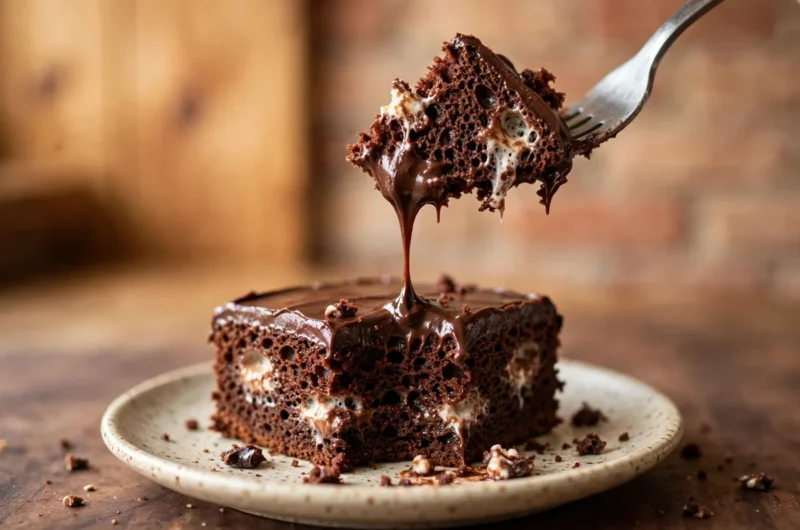
Chocolate cola cake is an American Southern sheet cake in which cola, traditionally Coca-Cola but functionally any dark cola, is combined with butter and cocoa in a warm saucepan before the dry ingredients are added, producing a deeply chocolate, moist, tender crumb with a complex warm sweet aromatic character from the cola’s vanilla, caramel, and citrus ester compounds dissolving into the warm butter cocoa fat phase rather than evaporating with the carbonation into the air above the mixing bowl.
The cola addition sequence is the single most critical technique decision. The cola must be added to the combined warm butter and cocoa mixture in the saucepan, at approximately 120 to 140°F, before the mixture contacts the dry ingredients, because the warm fat phase’s higher fat solubility for the cola’s aromatic ester compounds dissolves and retains those compounds through the fat phase distribution mechanism documented throughout this collection’s aromatic integration techniques. Cold cola added to assembled batter loses all its dissolved carbon dioxide and the majority of its aromatic esters within 60 seconds of contact with the room temperature batter mixture, the carbon dioxide’s rapid escape produces vigorous bubbling that carries the volatile aromatic compounds out of the liquid phase into the air above the bowl in the same mechanism that makes warm carbonated beverages lose their aroma faster than cold ones.
Chocolate cola cake is one of the most specifically American Southern dessert preparations, a preparation whose origin is inseparable from the mid 20th century American South’s cultural relationship with Coca-Cola as a domestic staple that appeared in cooking, baking, and confectionery throughout the region. The Coca-Cola Company’s Atlanta, Georgia headquarters made the soft drink a Southern cultural institution from the late 19th century onward, and the practice of using Coca-Cola as a baking ingredient, in ham glazes, in chocolate cakes, in fudge and candy preparations, became embedded in Southern American recipe tradition from at least the 1950s through community cookbooks and women’s magazine recipe columns. The chocolate cola cake specifically appears in the community cookbook tradition of the American South from the 1950s and 1960s onward, with the preparation becoming particularly associated with church potlucks, Junior League collections, and family recipe boxes throughout the Southern states, appearing alongside Texas sheet cake, Coca-Cola floats, and other preparations in the specific register of mid 20th century Southern food culture that treated Coca-Cola not merely as a beverage but as an ingredient with distinctive flavor contributions to the preparations it entered.
What Is Chocolate Cola Cake?
Chocolate cola cake is a Southern American one pan chocolate sheet cake in the Texas sheet cake tradition, baked in a 9×13 inch or half sheet pan, finished with a warm chocolate frosting poured over the hot cake, and served in squares directly from the pan, distinguished from Texas sheet cake by the cola’s specific aromatic contribution and by the slightly different crumb character that the cola’s carbonation produces during baking. The cola provides two simultaneous contributions to the finished cake. Its aromatic ester compounds, primarily benzyl alcohol, eugenol, linalool, and citrus derived limonene from the cola’s proprietary flavoring formula, dissolve into the warm butter cocoa fat phase and distribute through the crumb, contributing a subtle but perceptible warm sweet citrus complexity beyond the chocolate and butter that most tasters identify as the cola cake’s distinctive character without being able to specifically name cola as the flavor source.
The remaining carbonation, the carbon dioxide that survives the warm fat phase addition sequence, provides leavening supplementation that slightly opens the crumb structure and produces the notably light, almost airy crumb for a chocolate sheet cake that the cola cake achieves at its correct batter consistency.
The chocolate frosting poured immediately over the hot cake is the preparation’s canonical finish, the same warm pour mechanism as the Granny Cake’s caramel topping and the cinna bun cake’s cream cheese glaze, where the hot crumb’s open starch network draws the warm frosting partially into the top crumb layer through capillary absorption. The cola cake frosting, made with butter, cocoa, cola, and powdered sugar, applies the same cola aromatic integration logic at the frosting level: the cola is added to the warm butter cocoa base before the powdered sugar, allowing the fat phase to capture the cola’s aromatic esters before they escape with the carbonation.
What Equipment Do You Need?
| Equipment | Specification | Why It Matters |
|---|---|---|
| Large heavy bottomed saucepan | 4 quart minimum | For combining the butter, cocoa, and cola over heat, the mixture must be made in a saucepan large enough to receive the dry ingredients directly after the cola addition, since the Texas sheet cake method combines wet and dry in the saucepan rather than in a separate mixing bowl. The large saucepan eliminates the need for a separate mixing bowl entirely, producing the one pan batter assembly that makes the chocolate cola cake one of the simplest preparation methods of any layer adjacent cake format. |
| 9x13 inch baking pan | Light colored aluminum, 2 inches deep minimum | The sheet cake format's shallow batter depth produces the correct quick baking crumb that the warm pour frosting can penetrate through capillary absorption, a deeper pan produces a taller cake that requires extended baking time and a more set crumb at the surface when the frosting is applied, reducing capillary penetration. |
| Small saucepan | 1 quart | For making the chocolate cola frosting, the frosting is a cooked, poured preparation rather than a beaten buttercream, requiring a saucepan for the butter cocoa cola base rather than a mixing bowl. |
| Offset spatula or back of a spoon | Standard | For spreading the warm poured frosting to the pan edges, the frosting flows from the centre pour toward the edges but requires a brief assist with the offset spatula to reach all four corners before it begins setting from the cake's contact cooling. |
| Instant read thermometer | Standard | For verifying the butter cocoa cola mixture's temperature before the dry ingredients are added, the mixture must be warm but not hot at 120 to 140°F for the cola's aromatic ester dissolution into the fat phase to occur without heat degrading the ester compounds above their volatilisation threshold. |
What Ingredients Do You Need?
Use Coca-Cola Classic, the original formula, rather than Diet Coke, Coke Zero, or generic cola brands for two specific reasons. Coca-Cola Classic’s proprietary flavoring formula contains a specific balance of vanilla, citrus, cinnamon, and other spice derived aromatic compounds that produce the cola cake’s distinctive aromatic contribution. Diet and zero calorie colas replace the sucrose with artificial sweeteners, aspartame, acesulfame potassium, or sucralose, that do not caramelise or contribute to the Maillard reaction during baking in the way that sucrose does, producing a measurably different flavor contribution. Generic cola brands’ simpler flavoring formulas produce a less complex aromatic contribution than Coca-Cola Classic’s proprietary blend. RC Cola and Pepsi Cola are the most functionally similar alternatives to Coca-Cola Classic when Coca-Cola is unavailable, with RC Cola’s slightly higher vanilla content making it the preferred substitute among Southern cola cake bakers who have tested alternatives.
For the Chocolate Cola Cake Batter
| Ingredient | Volume | Weight |
|---|---|---|
| All purpose flour | 2 cups | 240g |
| Granulated white sugar | 2 cups | 400g |
| Baking soda | 1 teaspoon | 6g |
| Fine sea salt | 1/2 teaspoon | 3g |
| Ground cinnamon | 1/2 teaspoon | 1.3g |
| Unsalted butter | 1 cup | 226g |
| Dutch process cocoa powder, sifted | 1/3 cup | 33g |
| Coca-Cola Classic, at room temperature | 1 cup | 240ml |
| Buttermilk, room temperature | 1/2 cup | 120ml |
| Large eggs, room temperature | 2 eggs | 100g |
| Pure vanilla extract | 1 teaspoon | 5ml |
| Mini marshmallows | 1 1/2 cups | 75g |
The mini marshmallows are the most distinctively Southern American element of the chocolate cola cake, added to the warm batter immediately before baking and partially melting during the first 10 minutes of baking to produce irregular pockets of marshmallow enriched crumb throughout the cake. The marshmallows’ gelatin structure partially melts and re sets into the surrounding crumb during baking, producing a slightly sticky, richer, more complex crumb texture at the marshmallow locations than the surrounding plain chocolate crumb. The marshmallow contribution is what most tasters identify as the cola cake’s something different, a quality they cannot specifically attribute to cola or marshmallow independently but that distinguishes the preparation from every other chocolate sheet cake they have eaten.
The ground cinnamon at 1/2 teaspoon is a deliberate supporting aromatic, not enough to produce an identifiable cinnamon flavor in the finished cake but sufficient to supplement the cola’s own cinnamon derived aromatic compounds, from the cola’s proprietary spice flavoring, through shared cinnamaldehyde aromatic family stacking, amplifying the cola’s warm spice contribution at sub threshold cinnamon concentration.
For the Chocolate Cola Frosting
| Ingredient | Volume | Weight |
|---|---|---|
| Unsalted butter | 1/2 cup | 113g |
| Dutch process cocoa powder, sifted | 1/3 cup | 33g |
| Coca-Cola Classic, at room temperature | 1/3 cup | 80ml |
| Powdered sugar, sifted | 3 1/2 cups | 420g |
| Pure vanilla extract | 1/2 teaspoon | 2.5ml |
| Chopped pecans, optional | 1 cup | 100g |
The frosting uses the same cola into warm butter cocoa fat phase integration sequence as the batter, the cola is added to the warm butter cocoa base before the powdered sugar, capturing the cola’s aromatic esters in the fat phase before the carbonation escapes. The frosting’s cola content is proportionally lower than the batter’s cola content because the frosting is a thinner preparation where too much cola liquid produces a glaze too thin to set to the semi firm consistency needed for clean squares when cut.
Chocolate Cola Cake Recipe
A Southern American one pan chocolate sheet cake built on the Texas sheet cake method, with cola added to the warm butter cocoa fat phase to capture its aromatic esters, mini marshmallow pockets through the crumb, and a warm poured chocolate cola frosting.
Prep time
20
minutesCooking time
30
minutesRest
45
minutesTotal
1.30
hrYield
16
servingsEasy-Medium
Ingredients
- For the Chocolate Cola Cake Batter
All purpose flour, 2 cups (240g)
Granulated white sugar, 2 cups (400g)
Baking soda, 1 teaspoon (6g)
Fine sea salt, 1/2 teaspoon (3g)
Ground cinnamon, 1/2 teaspoon (1.3g)
Unsalted butter, 1 cup (226g)
Dutch process cocoa powder, sifted, 1/3 cup (33g)
Coca-Cola Classic, at room temperature, 1 cup (240ml)
Buttermilk, room temperature, 1/2 cup (120ml)
Large eggs, room temperature, 2 eggs (100g)
Pure vanilla extract, 1 teaspoon (5ml)
Mini marshmallows, 1 1/2 cups (75g)
- For the Chocolate Cola Frosting
Unsalted butter, 1/2 cup (113g)
Dutch process cocoa powder, sifted, 1/3 cup (33g)
Coca-Cola Classic, at room temperature, 1/3 cup (80ml)
Powdered sugar, sifted, 3 1/2 cups (420g)
Pure vanilla extract, 1/2 teaspoon (2.5ml)
Chopped pecans, optional, 1 cup (100g)
Instructions
- Make the Batter
Preheat the oven to 350°F (177°C). Grease a 9x13-inch pan and line it with parchment, leaving an overhang on the long sides. Whisk the flour, sugar, baking soda, salt, and cinnamon in a large saucepan, off the heat, until evenly mixed. Set aside.
Melt the butter with the sifted cocoa powder in a medium saucepan over medium heat, stirring constantly, until smooth, about 3 to 4 minutes. Remove from the heat. The mixture should be 120 to 140°F.
Slowly pour the room-temperature cola into the warm butter-cocoa mixture, stirring constantly. Stir until the foaming stops, about 30 to 45 seconds.
Pour the cola mixture over the dry ingredients and whisk 20 strokes until smooth. Add the buttermilk, eggs, and vanilla and whisk 20 strokes more. The batter will be thin. Fold in the mini marshmallows with a spatula in 5 strokes.
Pour the batter into the prepared pan. Bake 28 to 35 minutes, until a toothpick inserted between the marshmallow pockets shows moist crumbs and the center reads 200 to 205°F.
- Make and Apply the Frosting
While the cake bakes, melt the butter with the sifted cocoa powder in a small saucepan over medium heat, stirring, about 2 to 3 minutes. Remove from the heat and slowly stir in the cola until the foaming stops.
Stir in the sifted powdered sugar in three additions until smooth, then add the vanilla. Fold in the pecans, if using. Keep warm over the lowest heat.
As soon as the cake comes out of the oven, pour the warm frosting over the top and spread it to the corners with an offset spatula.
Cool the cake completely in the pan, at least 45 minutes, before cutting into squares.
Step by Step Process
Make the Batter
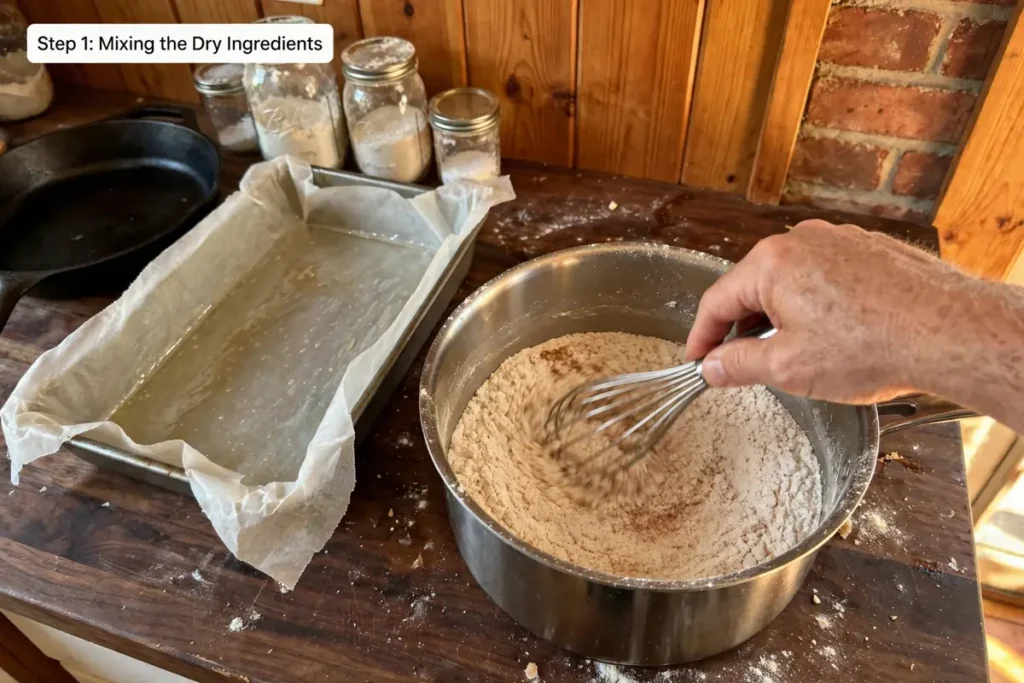
Step 1. Preheat the oven to 350°F (177°C).Grease the 9×13 inch pan generously and line with parchment leaving overhangs on the two long sides. Whisk together the flour, sugar, baking soda, salt, and cinnamon in the large saucepan, off heat, until completely uniform. Set aside.
Step 2. Combine the butter and sifted Dutch process cocoa powder in a separate medium saucepan over medium heat.Cook, stirring constantly, until the butter is completely melted and the cocoa is fully incorporated into the butter, approximately 3 to 4 minutes. The mixture should be completely smooth and flowing, with the cocoa uniformly distributed through the butter fat phase rather than sitting as dry powder in the liquid fat. Remove from heat. Verify the temperature with the instant read thermometer, the mixture should be at 120 to 140°F when the cola is added.
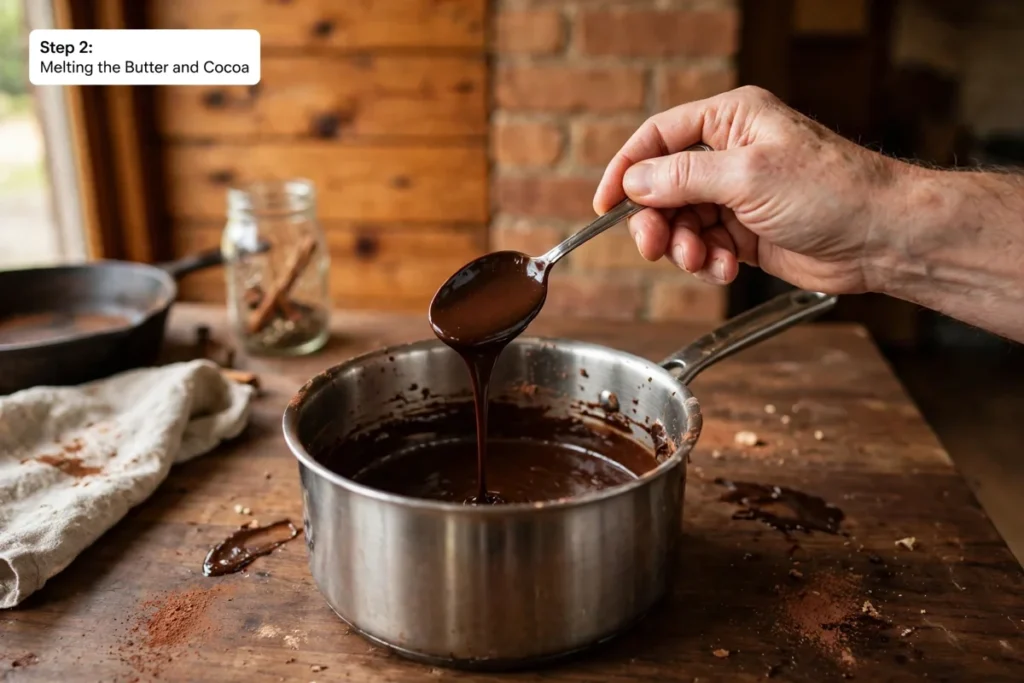
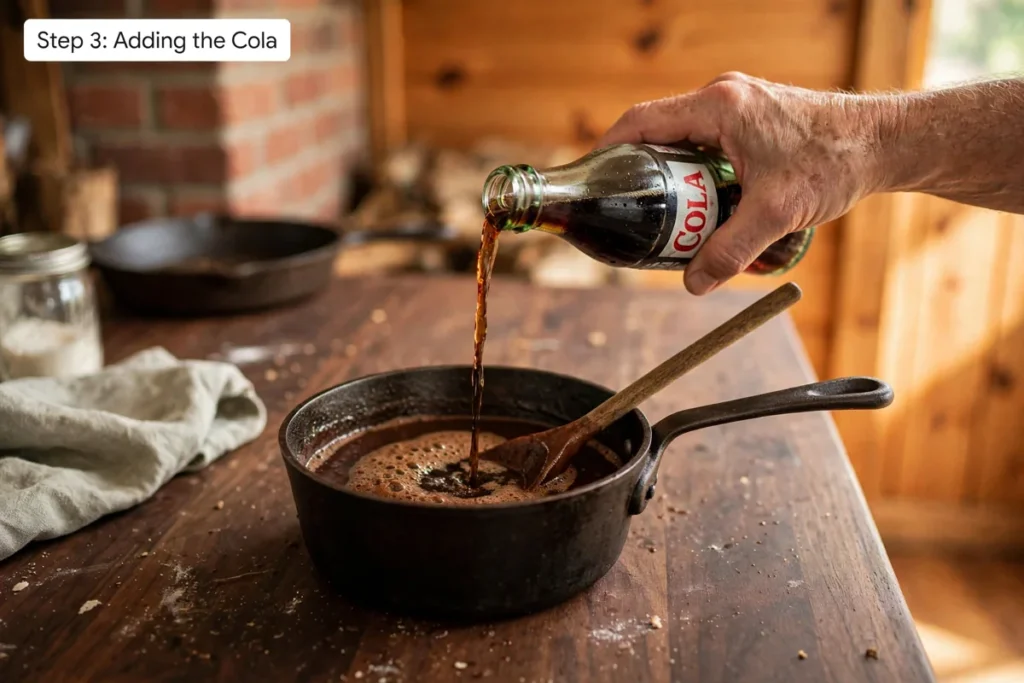
Step 3. Add the room temperature cola to the warm butter cocoa mixture,pour slowly in a steady stream down the inside of the saucepan while stirring constantly. The cola will foam vigorously as the carbonation is released, this is the controlled carbonation release that occurs with the aromatic ester compounds dissolved into the warm fat phase before the carbon dioxide carries them away. Stir until the foaming subsides, approximately 30 to 45 seconds, and the mixture is uniform.
The warm fat phase at 120 to 140°F is the temperature window at which the cola’s aromatic ester compounds are sufficiently volatile to transfer from the cola’s aqueous phase into the fat phase but insufficiently volatile to evaporate through the fat surface into the air above the pan. Below 100°F the fat phase’s lower solubility for the ester compounds reduces the transfer efficiency. Above 150°F the ester compounds’ vapor pressure above the fat surface is sufficient for significant evaporative loss even from the fat phase. The 120 to 140°F window maximises ester transfer into fat and minimises ester loss to the air simultaneously.
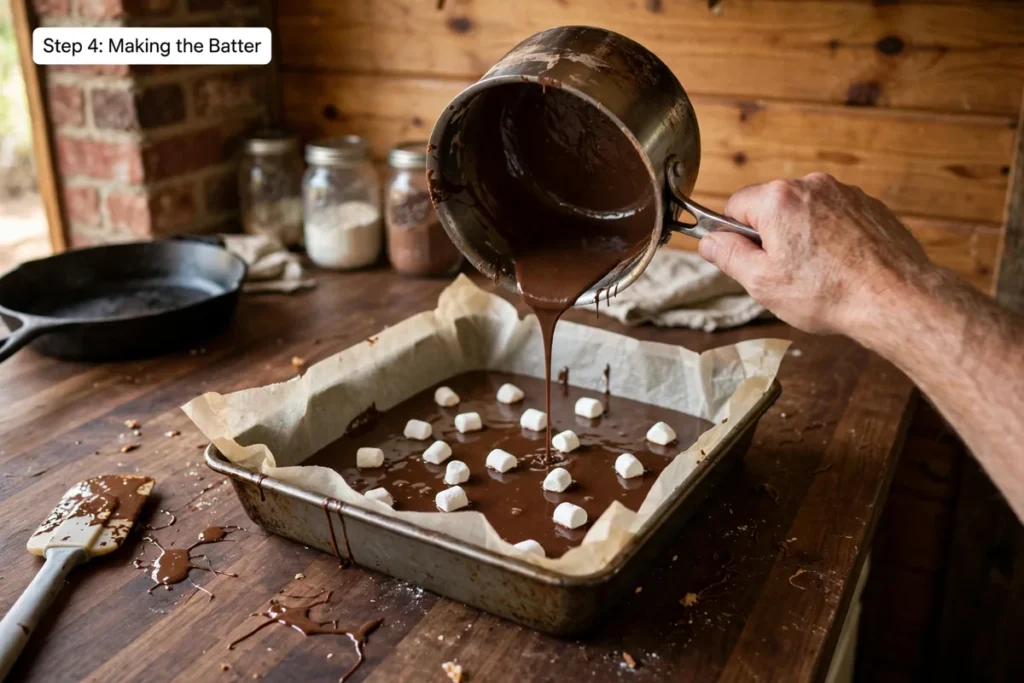
Step 4. Pour the warm butter cocoa cola mixture over the dry ingredients in the large saucepan.Whisk together until smooth, approximately 20 strokes. Add the buttermilk, eggs, and vanilla extract to the saucepan and whisk for an additional 20 strokes until completely uniform. The batter will be noticeably thin from the cola’s liquid contribution, thinner than a standard chocolate sheet cake batter. Fold in the mini marshmallows with a rubber spatula, 5 strokes to distribute through the full batter volume without crushing the marshmallows.
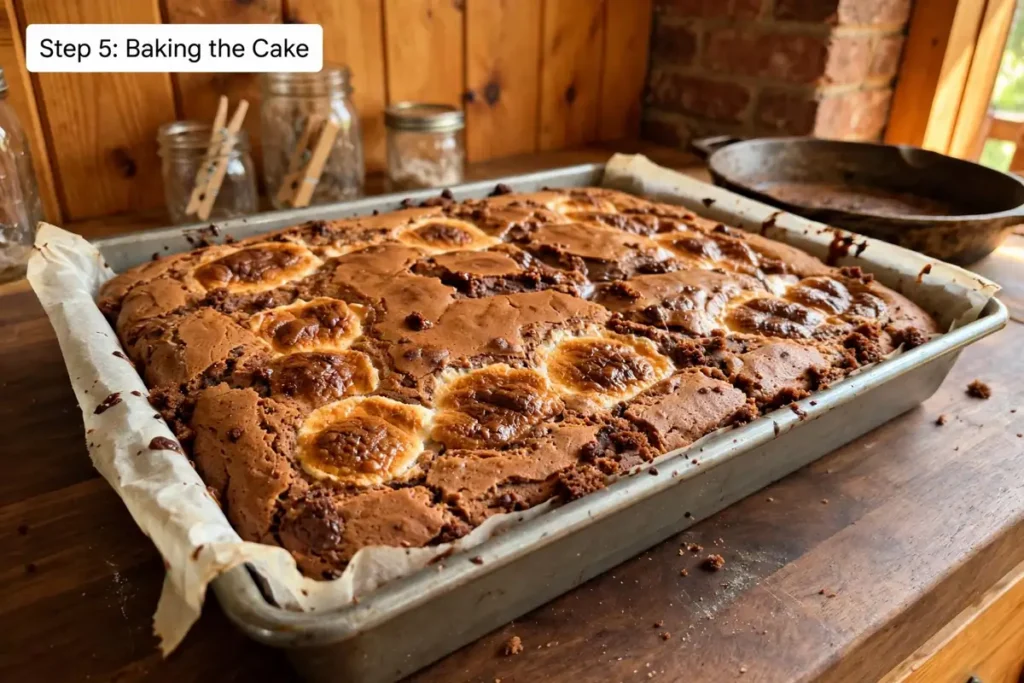
Step 5. Pour the batter into the prepared pan,it will self level from its fluid consistency. Bake at 350°F for 28 to 35 minutes until the toothpick inserted between marshmallow pockets shows moist crumbs and the internal temperature reads 200 to 205°F. The marshmallow pockets complicate the toothpick test, a toothpick inserted through a marshmallow pocket reads differently from the clean test through the chocolate crumb. Always verify with the thermometer as the primary doneness indicator.
Make and Apply the Frosting
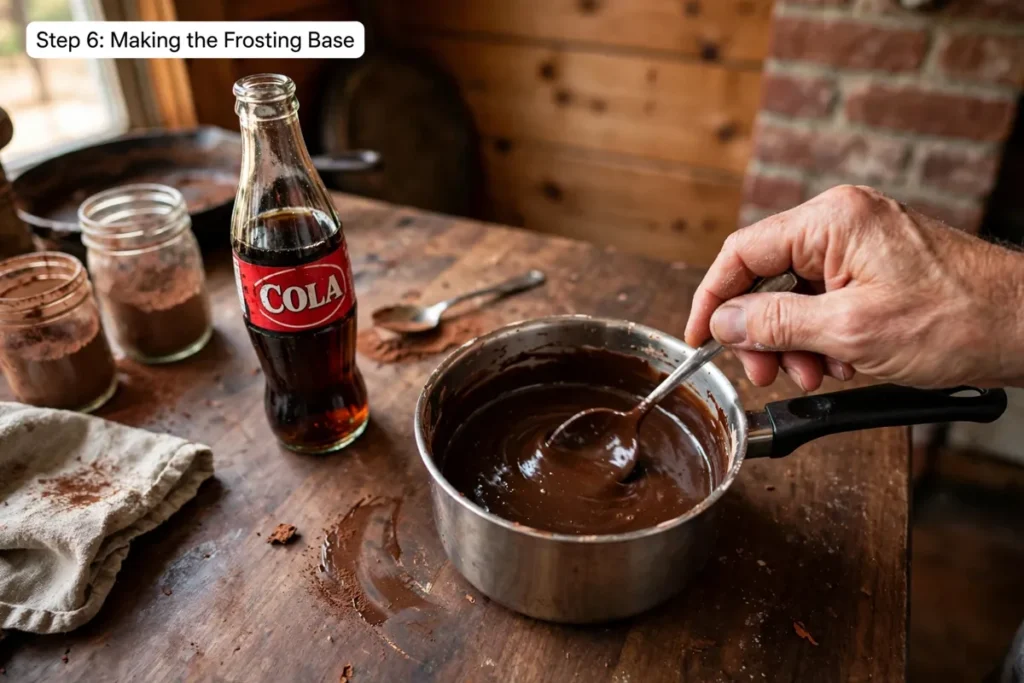
Step 6. Make the frosting while the cake bakes,timing the frosting to be ready when the cake comes out of the oven, since the frosting must be warm and fluid when poured over the hot cake for capillary absorption to occur. Combine the butter and sifted cocoa powder in the small saucepan over medium heat, stirring until the butter melts and the cocoa is fully incorporated, approximately 2 to 3 minutes. Remove from heat. Add the room temperature cola to the warm butter cocoa mixture in a slow stream while stirring, the same fat phase aromatic ester capture sequence as the batter. The foaming subsides within 30 seconds.
Step 7. Add the sifted powdered sugar to the warm frosting base in the saucepan in three additions,stirring vigorously after each until completely smooth. Add the vanilla extract. The finished frosting is warm, pourable, and slightly thicker than the batter but thin enough to flow freely from the saucepan. Fold in the chopped pecans if using. Keep warm over the lowest possible heat setting, the frosting must remain fluid until it is poured over the hot cake.
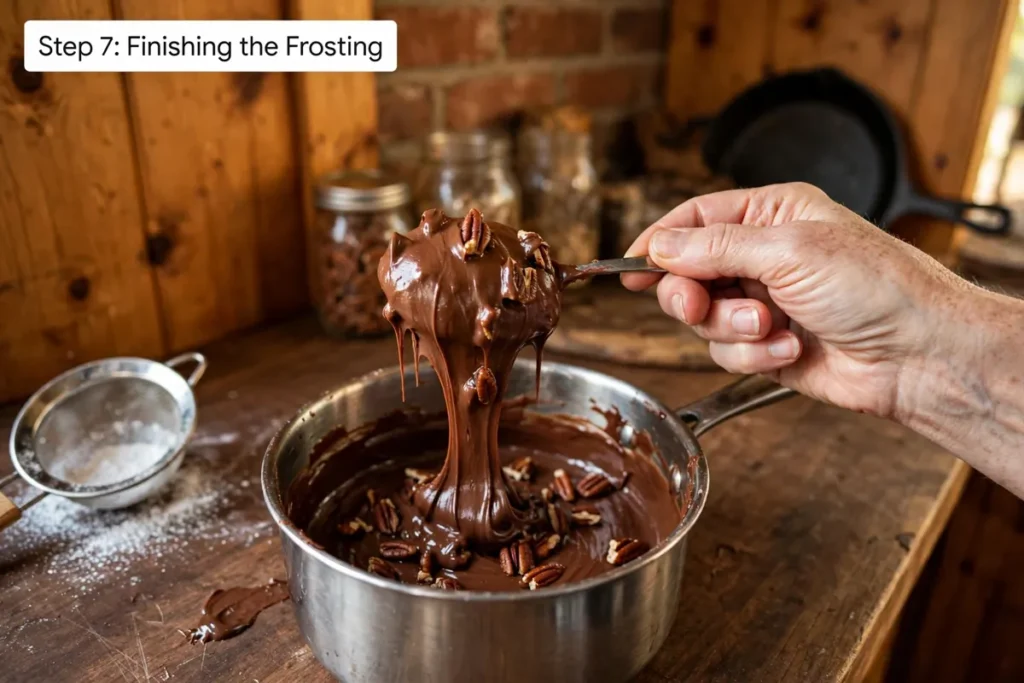
Step 8. Remove the cake from the oven.Immediately, within 30 seconds, pour the warm frosting over the full surface of the hot cake. Use the offset spatula to spread the frosting to all four corners before it begins setting from contact with the slightly cooler pan edges. The frosting absorbs into the hot top crumb layer within 2 to 3 minutes through capillary action, the same warm soak mechanism as the Granny Cake’s caramel topping, producing a frosting that is partially integrated into the top crumb layer rather than sitting entirely at the surface.

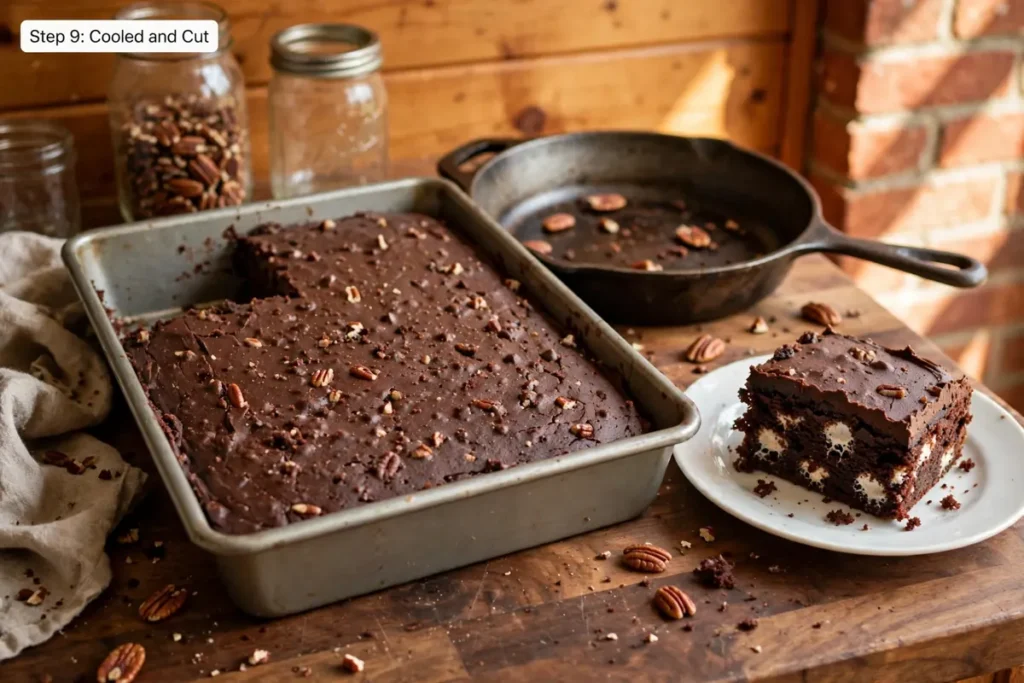
Step 9. Allow the cake to cool completely in the pan,minimum 45 minutes, before cutting into squares. The marshmallow pockets and the absorbed frosting layer both require the full cooling period to firm to a clean cutting consistency. Warm chocolate cola cake cutting through partially set marshmallow and partially set frosting produces squares with compressed, uneven edges, the fully cooled version cuts cleanly.

Why Adding Cola to Warm Fat Preserves Aromatic Esters Where Adding to Cold Batter Does Not
The chemistry of adding Coca-Cola to a warm butter cocoa fat phase rather than directly to a cold or room temperature batter mixture is one of the most practically significant aromatic integration decisions in this collection, and its mechanism is the same fat phase aromatic distribution principle documented for limonene in the chocolate orange cake and the orange pound cake, operating through the same thermodynamic preference of organic aromatic compounds for fat over water.
Coca-Cola’s flavoring formula contains a proprietary blend of aromatic compounds whose identities have been extensively analysed in food chemistry literature despite never being officially disclosed, the aromatic profile includes benzyl alcohol, cinnamyl alcohol, eugenol, linalool, neryl acetate, and citrus derived ester compounds including limonene derivatives from the cola’s citrus oil component. These compounds are primarily fat soluble organic esters and terpene alcohols, their log P values range from 1.5 to 4.8, indicating strong to very strong preference for fat phase distribution over aqueous distribution.
In the aqueous phase of room temperature cola, these compounds exist dissolved in the water ethanol sucrose solution at the concentration the manufacturer formulated. When this room temperature cola is added to a room temperature batter’s aqueous phase, which already contains dissolved sugars and proteins from the other ingredients, the ester and terpene compounds experience minimal driving force for fat phase transfer because the temperature is insufficient for rapid interfacial mass transfer. More critically, the carbonation’s carbon dioxide, releasing vigorously from the room temperature cola on contact with the batter’s atmospheric pressure environment, physically carries the volatile aromatic ester compounds upward through the bubbling liquid column and out of the batter into the air above the bowl through the same stripping mechanism that industrial aroma extraction uses to remove volatile compounds from liquids with carbon dioxide sparging. Most of the cola’s aromatic ester content is lost within 60 seconds of room temperature addition to the batter through this CO2 stripping mechanism.
When room temperature cola is added to warm butter cocoa at 120 to 140°F, two thermodynamic advantages operate simultaneously. The warm fat phase’s higher temperature reduces the interfacial barrier for fat soluble compound transfer from the aqueous cola phase to the fat, the aromatic esters transfer into the butter fat within seconds of contact at 120°F at a rate orders of magnitude faster than at room temperature. The carbonation still releases vigorously, but the aromatic compounds have already transferred into the fat phase before the CO2 bubbles can strip them from the liquid, the fat phase holds the dissolved esters through the hydrophobic interaction that the CO2 stripping mechanism cannot overcome, because stripping removes volatile compounds from aqueous solutions but is ineffective at removing fat dissolved compounds from a fat phase. The result is a batter where the cola’s aromatic ester profile is preserved in the fat phase distribution that ultimately carries those compounds through every fat containing bite of the finished crumb.
How Does Chocolate Cola Cake Compare to Related Southern American Chocolate Sheet Cakes?
| Attribute | Chocolate Cola Cake | Texas Sheet Cake | Granny Cake | Chocolate Mayonnaise Cake | Mississippi Mud Cake |
|---|---|---|---|---|---|
| Primary liquid component | Coca-Cola plus buttermilk | Water or buttermilk | Undrained crushed pineapple | Mayonnaise | Buttermilk |
| Batter assembly method | Wet ingredients combined in saucepan over heat | Butter cocoa water combined in saucepan over heat | Standard mixing bowl | Standard mixing bowl | Butter cocoa combined in saucepan |
| Distinctive batter ingredient | Cola plus mini marshmallows | Strong brewed coffee optional | Crushed pineapple | Full fat mayonnaise | Mini marshmallows |
| Frosting type | Warm poured chocolate cola frosting | Warm poured chocolate pecan frosting | Warm poured brown sugar coconut topping | Standard chocolate buttercream | Warm poured chocolate frosting plus marshmallow layer |
| Frosting application timing | Immediately post oven, warm pour | Immediately post oven, warm pour | Immediately post oven, warm pour | After cooling, standard application | Immediately post oven |
| Primary flavor distinction | Cola aromatic esters plus marshmallow pockets | Pure chocolate pecan butter | Pineapple caramel coconut | Dense uniform chocolate from mayonnaise emulsification | Chocolate marshmallow combination |
| Cultural specificity | American Southern, Coca-Cola Atlanta heritage | Texas, attributed to Lady Bird Johnson | American Southern community cookbook | American, Hellmann's marketing tradition | American Southern, Gulf Coast tradition |
| Pecan inclusion | Optional in frosting | Standard in frosting | No | No | Standard in cake and frosting |
What Variations Can You Make?
Cherry Cola Chocolate Cake
Replace 1/2 cup (120ml) of the Coca-Cola in the batter with 1/2 cup of maraschino cherry juice, the liquid from a jar of maraschino cherries. Add 1/2 cup (75g) of roughly chopped maraschino cherries folded into the batter alongside the marshmallows. The maraschino cherry’s benzaldehyde aromatic compound, the same compound that produces almond extract’s marzipan character, dissolves into the warm butter cocoa fat phase in the same mechanism as the cola’s aromatic esters, distributing the cherry almond character through the full crumb’s fat phase. The cherry chocolate cola combination produces the flavor profile of a Black Forest cake in the Southern sheet cake format, the most culturally recognisable chocolate cherry pairing in American dessert culture.
Result: A cherry cola chocolate cake with a Black Forest flavor profile in the Southern sheet cake format.
Chocolate Cola Cake With Bourbon
Add 2 tablespoons (30ml) of Kentucky bourbon to the warm butter cocoa cola mixture after the cola’s foaming subsides in Step 3. The bourbon’s barrel aging ester compounds, ethyl acetate, isoamyl acetate, and various fusel alcohol esters, dissolve into the warm fat phase alongside the cola’s aromatic esters, contributing a warm, complex barrel adjacent aromatic that complements both the chocolate’s roasted character and the cola’s own warm spice ester profile. The bourbon quantity, 2 tablespoons in the full batter, produces flavor complexity without a perceptible alcohol character in the finished cake, as the ethanol volatilises during baking while the heavier ester compounds remain dissolved in the fat phase.
Result: A chocolate cola cake with warm, complex barrel adjacent aromatic complexity from the bourbon’s ester compounds and no perceptible alcohol character.
Diet Cola Chocolate Cake
Replace the Coca-Cola Classic with Coca-Cola Zero Sugar, which uses a different sweetener system than Diet Coke and maintains a closer aromatic profile to the original formula than Diet Coke’s acesulfame potassium aspartame blend. Increase the granulated sugar in the batter by 2 tablespoons (25g) to compensate for the absent sucrose from the cola, the sugar reduction in zero calorie cola is approximately 10g per 100ml, and the additional batter sugar compensates for the structural and browning contribution that the cola’s sucrose provides in the standard formula. The zero sugar version produces a measurably similar crumb and aromatic character to the original at the correct fat phase integration sequence.
Result: A diet cola chocolate cake with a crumb and aromatic character measurably similar to the original at the correct fat phase integration sequence.
Dietary Adjustments and Substitutions
Dairy Free Version
Replace the butter in the batter with Miyoko’s Creamery dairy free butter sticks at the same weight (226g), the fat phase aromatic ester capture from the cola operates identically with the coconut oil based dairy free butter as with dairy butter, because the ester dissolution into the fat phase depends on the fat’s hydrophobic character rather than its specific fatty acid composition. Replace the buttermilk with a buttermilk substitute, combine 1/2 cup (120ml) of unsweetened oat milk with 1 1/2 teaspoons of fresh lemon juice and allow to curdle for 5 minutes. For the frosting, replace the butter with Miyoko’s dairy free butter sticks at the same weight (113g).
Gluten Free Version
Replace the all purpose flour with a certified 1:1 gluten free baking flour blend containing xanthan gum at exactly 240g. Increase the baking soda to 1 1/2 teaspoons (9g). The chocolate cola cake’s relatively thin, fluid batter from the high cola liquid content makes it among the most successfully gluten free adaptable saucepan method sheet cakes, the xanthan gum’s binding function supplements the absent gluten in a batter where the high liquid volume from the cola and buttermilk reduces the gluten network’s structural contribution relative to a drier batter at the same flour quantity.
What Are the Most Common Problems When Making Chocolate Cola Cake?
| Problem | Most Likely Cause | Prevention or Fix |
|---|---|---|
| No distinctive cola character in the finished cake | Cola added to cold or room temperature batter rather than to the warm butter cocoa fat phase | Always add the cola to the butter cocoa mixture at 120 to 140°F in the saucepan. If the cola was added at the wrong stage, the cake is a standard chocolate sheet cake, the cola aromatic character cannot be added retroactively. |
| Marshmallows all at the cake base rather than distributed through the crumb | Batter too thin, marshmallows sank before the batter set around them | Add 2 tablespoons of additional flour to thicken the batter before folding in the marshmallows. Always use mini marshmallows, large marshmallows are significantly heavier and sink more rapidly. |
| Frosting set too quickly and could not be spread to the pan edges | Frosting was too cool when poured or the cake had already cooled beyond the warm pour window | Make the frosting during the last 10 minutes of the cake's baking time so it is at maximum warmth and fluidity when the cake comes out of the oven. Pour within 30 seconds of oven removal. |
| Batter overflowed the pan during baking | Pan was too small or batter was too thin and expanded beyond the pan rim from the cola's leavening contribution | Always use a 9x13 inch pan with at least 2 inch sides. The cola's carbonation provides additional leavening beyond the baking soda's contribution, the batter rises more during baking than a standard chocolate sheet cake formula at the same flour to pan ratio. |
| Acrid, bitter chocolate flavor | Cocoa scorched in the saucepan during the butter cocoa combining step | Keep the heat at medium rather than medium high and stir constantly. The cocoa solids are dry particles that can scorch on the pan base if the stirring pauses while the butter is still liquefying. Use a heavy bottomed saucepan that distributes heat evenly across the base. |
How Do You Store Chocolate Cola Cake?
Chocolate cola cake’s cola sucrose contribution and the marshmallow pockets’ gelatin sugar matrix together produce excellent moisture retention, and Southern bakers often describe it as more moist on day two than on the day of baking.
| Storage Method | Duration | Instructions |
|---|---|---|
| Room temperature, in the pan covered with plastic wrap or foil | Up to 4 days | The cola's sucrose contribution and the marshmallow pockets' gelatin sugar matrix together produce excellent moisture retention at room temperature, the chocolate cola cake is often described by Southern bakers as being more moist on day two than on the day of baking, as the marshmallow pockets continue slowly releasing their gelatin bound moisture into the surrounding crumb during storage. |
| Refrigerated, covered in the pan | Up to 6 days | The chocolate frosting firms significantly under refrigeration from the butter fat solidifying, bring squares to room temperature for 20 minutes before serving to restore the frosting's soft, slightly glossy texture and the full aromatic expression of the cola's dissolved ester compounds, which are suppressed below 15°C. |
| Frozen, individual squares wrapped in plastic wrap | Up to 2 months | The marshmallow pockets freeze cleanly, the gelatin matrix does not rupture during freezing and re sets during thawing to essentially the same soft, slightly sticky pocket character as the fresh cake. Thaw at room temperature for 30 minutes or microwave for 20 seconds. |
Make Ahead
The cake is best baked and frosted on the same day for the freshest frosting texture, but it holds well for up to 4 days at room temperature thanks to the cola and marshmallow moisture retention. For making ahead, bake and cool completely, then wrap the pan tightly and hold at room temperature, pouring a fresh warm frosting just before serving is not practical, so the fully frosted cake is the recommended make ahead preparation. Individual squares can be frozen for up to 2 months.
Scaling
| Servings | All Purpose Flour | Sugar | Butter | Cola (batter) | Cocoa (batter) | Butter (frosting) | Cola (frosting) | Pan Size |
|---|---|---|---|---|---|---|---|---|
| 9 servings | 120g | 200g | 113g | 120ml | 17g | 57g | 40ml | 8x8 inch square pan |
| 16 servings (standard) | 240g | 400g | 226g | 240ml | 33g | 113g | 80ml | 9x13 inch pan |
| 24 servings | 360g | 600g | 340g | 360ml | 50g | 170g | 120ml | 12x18 inch half sheet pan |
Serving
Chocolate cola cake is served in squares directly from the pan, best at room temperature when the frosting is soft and the cola’s dissolved aromatic esters are at their fullest expression. It is a natural for potlucks, church suppers, and summer gatherings.
| Serving Suggestion | Why It Works |
|---|---|
| At room temperature with a scoop of vanilla ice cream | The cola's warm sweet citrus aromatic and the chocolate's roasted bitter character both register fully at room temperature, and the vanilla ice cream's cold dairy sweetness contrasts the warm spice and cocoa notes. |
| Warm, with a glass of cold milk | A brief 300°F warm for 4 to 5 minutes softens the frosting and releases additional cola and cocoa aromatic, and the milk's dairy fat contrasts the cake's chocolate intensity. |
| At a Southern potluck or church supper, cut into small squares | The sheet cake format is built for crowd serving, and the frosting's frosting and the marshmallow pockets produce a cake that holds together cleanly when cut into small squares and served on a buffet. |
Nutritional Information
Per serving: 1 square approximately 115g including chocolate cola frosting and mini marshmallows, without pecans, based on 16 squares. Values calculated using USDA FoodData Central reference data using Coca-Cola Classic.
| Nutrient | Per Serving | Nutrient | Per Serving |
|---|---|---|---|
| Calories | 448 kcal | Total carbohydrate | 68g |
| Total fat | 18g | Dietary fibre | 1.8g |
| Saturated fat | 11g | Total sugars | 54g |
| Cholesterol | 62mg | Protein | 3.8g |
| Sodium | 228mg | Iron | 2.2mg (12% DV) |
Frequently Asked Questions
Why must the cola be added to the warm butter cocoa mixture rather than directly to the batter?
Cola’s aromatic ester compounds, benzyl alcohol, eugenol, linalool, neryl acetate, and citrus derived limonene derivatives, are fat soluble organic compounds with log P values of 1.5 to 4.8 indicating strong fat phase preference. When room temperature cola is added to room temperature batter, the releasing CO2 carbonation physically strips these volatile aromatic compounds from the aqueous cola phase and carries them out of the batter into the air above the bowl before meaningful fat phase transfer can occur, most of the aromatic ester content is lost within 60 seconds. Adding cola to warm butter cocoa at 120 to 140°F transfers the ester compounds into the fat phase at rates orders of magnitude faster than at room temperature, the esters are already dissolved in the fat by the time the CO2 finishes releasing, making them immune to the stripping mechanism that operates only on the aqueous phase.
Why do mini marshmallows rather than large marshmallows produce the correct pocket character?
Mini marshmallows’ smaller gelatin sugar matrix melts and re sets within the surrounding crumb during baking, producing distinct, clearly bounded pockets of marshmallow enriched crumb with a defined boundary between the marshmallow pocket and the adjacent chocolate crumb. Large marshmallows’ larger gelatin mass melts to a greater volume of liquid that spreads further through the surrounding batter before re setting, producing an indistinct, diffuse marshmallow zone without clear boundaries that reads as a section of slightly different textured crumb rather than a distinct marshmallow pocket. The mini marshmallow’s precisely bounded pocket is both the visual and textural identity of the chocolate cola cake’s marshmallow contribution.
Why is Coca-Cola Classic specified rather than other cola brands?
Coca-Cola Classic’s proprietary flavoring formula contains a specific balance of vanilla, citrus, and spice derived aromatic ester compounds, including eugenol, linalool, neryl acetate, and citrus derived limonene derivatives, that produce the distinctive aromatic complexity that most American tasters associate specifically with the cola flavor identity. Generic cola brands’ simpler flavoring formulas omit several of these aromatic components, producing a less complex fat phase aromatic contribution at the same volume in the warm butter cocoa base. Diet and zero calorie colas replace sucrose with artificial sweeteners that do not contribute to Maillard browning reactions during baking and whose different aromatic profiles produce a measurably different flavor contribution.
Can I omit the marshmallows from the recipe?
Yes, the marshmallows are a traditional Southern addition rather than a structural requirement of the chocolate cola cake formula. Omitting them produces a chocolate cola sheet cake with the same cola aromatic character in the crumb and the same warm poured frosting finish, without the marshmallow pockets’ texture variation. The crumb without marshmallows is slightly denser and more uniform than the marshmallow version, some bakers prefer the cleaner chocolate cola crumb character without the marshmallow’s gelatin sugar textural interruption. If omitting the marshmallows, reduce the flour by 2 tablespoons (15g) to maintain the correct batter consistency, the marshmallows’ starch and gelatin contribution slightly thickens the batter in the standard formula.
Chocolate cola cake is a Southern American sheet cake from the mid 20th century community cookbook tradition, rooted in the American South’s cultural relationship with Coca-Cola as both a regional institution and a domestic baking ingredient, whose defining quality is the cola’s aromatic ester profile preserved in the finished crumb through the thermodynamic mechanism of adding room temperature cola to warm butter cocoa at 120 to 140°F, where the warm fat phase captures the fat soluble benzyl alcohol, eugenol, linalool, and citrus derived ester compounds from the cola’s aqueous phase at rates orders of magnitude faster than room temperature transfer while the simultaneously releasing CO2 carbonation strips those same compounds from the aqueous phase before they can escape with the gas, making the fat phase capture both thermodynamically favored and kinetically faster than the competing stripping mechanism, and distributing the captured esters through every fat containing bite of the finished dark chocolate crumb alongside the caramelised mini marshmallow pockets and the capillary absorbed warm chocolate cola frosting that together produce the specific Southern dessert experience that no other chocolate sheet cake format in the American baking canon replicates.
Table of Contents
Recent Recipes
American · Cakes Orange Pound Cake Recipe This orange pound cake recipe rubs the zest into the sugar before creaming. […]
Check Out..!
American · Layer Cakes Coconut and Carrot Cake Recipe Moist, oil-based spiced layer cake packed with freshly grated carrot and […]
Check Out..!
American Cakes Tandy Cake Recipe This Tandy cake recipe spreads peanut butter on the warm cake, then chills it before […]
Check Out..!
American · Cakes Portillo’s Chocolate Cake Recipe This Portillo’s chocolate cake recipe adds mayonnaise to the batter. Mayo is just […]
Check Out..!Recent Blogs
I’ve glazed our Amish apple cake too hot, too cold, and exactly right, and the difference is not small. The […]
Read Blog..!
I’ve pulled a sunken Amish Apple Cake out of my oven, and I know the exact sinking feeling that comes […]
Read Blog..!
A cup measures volume, not weight, so a cup of flour and a cup of sugar weigh completely different amounts. […]
Read Blog..!
Every pasta shape was designed to carry a certain kind of sauce. Thin strands suit light sauces that coat, wide […]
Read Blog..!
Every egg method, from a jammy boiled egg to a silky French omelet, comes down to one fact: the white […]
Read Blog..!