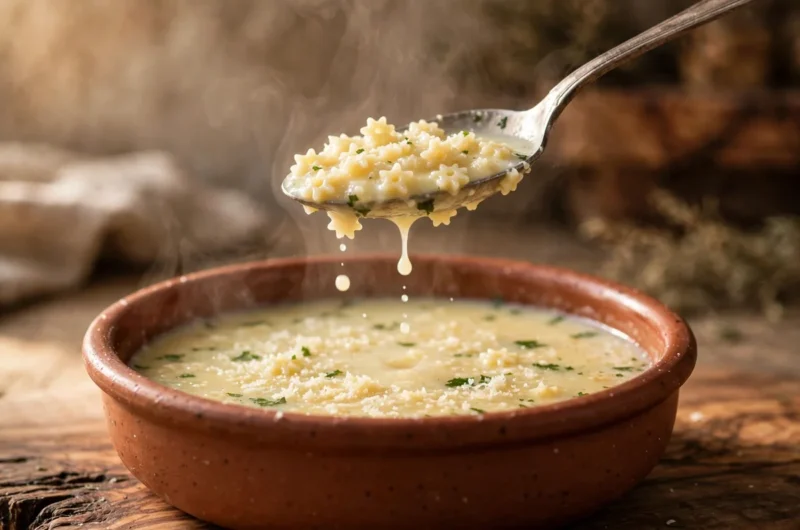
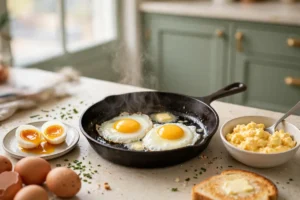
Pastina soup recipe success starts with one decision: toast the tiny pasta in butter, cook it in good broth, then finish the pot off the heat with egg and Parmesan. The pasta releases starch that turns the broth silky without cream. Follow the steps below and you will serve a warm, creamy bowl in 30 minutes.
Pastina means little pasta in Italian and covers many tiny shapes, such as stelline (stars) and acini di pepe. As the pasta cooks, its starch swells and thickens the broth. Egg whites set near 144°F (62°C) and yolks near 149°F (65°C), so an egg stirred into a gently hot pot thickens it, while an egg dropped into a boil scrambles.
In Italian homes, pastina in broth is a classic comfort food, often made for children and for anyone feeling unwell. The simplest version is pasta, broth, butter, and cheese.
What Is Pastina Soup?
Pastina soup is tiny pasta simmered in broth until soft and creamy, then finished with butter, Parmesan, and often an egg. Here is how it differs from similar dishes:
- Chicken noodle soup: has a thin broth, vegetables, and long noodles, where pastina is thick and smooth.
- Italian wedding soup: adds meatballs and greens to a clear broth.
- Stracciatella: is egg and cheese stirred into hot broth, with little or no pasta.
- Risotto: is rice stirred for a long time, where pastina needs only occasional stirring.
What Is the Best Pastina Shape?
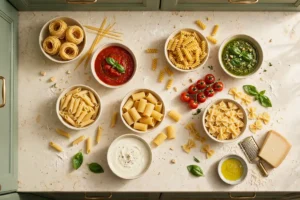
Use stelline (star pasta) or any pasta labeled pastina. Acini di pepe and orzo also work, though orzo is larger and takes 2 to 4 minutes longer. Check the package time, since shapes differ.
How Do Pastina, Orzo, and Acini di Pepe Compare?
Should You Use Water or Broth?
Use broth, chicken or vegetable. The pasta absorbs the liquid as it cooks, so water gives a bland bowl. Low-sodium broth lets you control the salt, since the cheese adds salt too.
What Is the Right Pasta to Broth Ratio?
Use 1 cup of pastina to 4 cups of broth for a soup, which makes 4 servings. Use 3 cups for a thick, porridge-like bowl. The pot thickens as it sits, so add a splash of broth if it tightens.
Should You Add the Egg?
It is optional but traditional in many homes. The egg makes the bowl richer and creamier. Stir it in off the heat so it thickens without scrambling.
Can You Make Pastina Without Egg and Still Get It Creamy?
Yes. Starch from the pasta already thickens the broth. Add an extra tablespoon of butter and a splash of milk or a spoonful of mascarpone for richness.
Why Do Some People Call It Italian Penicillin?
It is a cultural nickname for a warm, easy comfort food served to people who feel unwell. It is not a medical claim, and pastina does not treat illness.
Can Toddlers Eat Pastina?
Yes, it is a common first pasta because the pieces are small and soft. Use unsalted broth and skip added salt for babies and toddlers. Ask a pediatrician about introducing egg and cheese.
Can You Make Pastina in the Microwave or Instant Pot?
Yes. For the microwave, combine 1/2 cup pastina and 1 1/2 cups broth in a deep bowl, heat 5 to 6 minutes, and stir once. For the Instant Pot, use the sauté setting for 5 minutes, since pressure cooking turns tiny pasta mushy.
How Do You Make or Choose the Broth?
Broth is the base of the whole bowl, so it deserves attention.
- Homemade chicken broth: simmer 2 lb of chicken bones with an onion, carrot, celery, and bay leaf for 2 to 3 hours. It gives the richest body because bones release gelatin.
- Boxed low-sodium broth: works well and saves time. Taste it first and add a Parmesan rind to deepen it.
- Bouillon or base: convenient, but salty. Dilute it a little more than the label says, and skip added salt.
- Vegetable broth: makes a vegetarian bowl. Choose one without strong tomato or cabbage flavors, which can overpower the cheese.
What Equipment Do You Need?
- Medium saucepan: 3 quarts, so the broth can bubble without spilling.
- Wooden spoon: scrapes the bottom so the pasta does not stick.
- Small bowl and fork: beats the egg.
- Ladle: tempers the egg and serves the soup.
- Fine grater: shreds Parmesan so it melts smoothly.
- Measuring cups: the ratio sets the texture.
- Kitchen timer: pasta goes from tender to mushy fast.
- Warm bowls: keep the soup hot longer.
What Ingredients Do You Need?
Use real Parmesan grated fresh, because pre-grated cheese carries starch that melts grainy. Use good broth, since it is the base of the whole bowl. Use unsalted butter so you control the salt.
For the Soup
For Serving
Step by Step Process
Prepare Everything
Step 1. Grate the Parmesan on the fine side of a box grater and set it aside. Fine shreds melt into the soup in seconds, while coarse shreds clump and turn stringy. Cheese that is grated fresh also lacks the anti-caking starch found in bagged shreds, which can make the soup grainy.
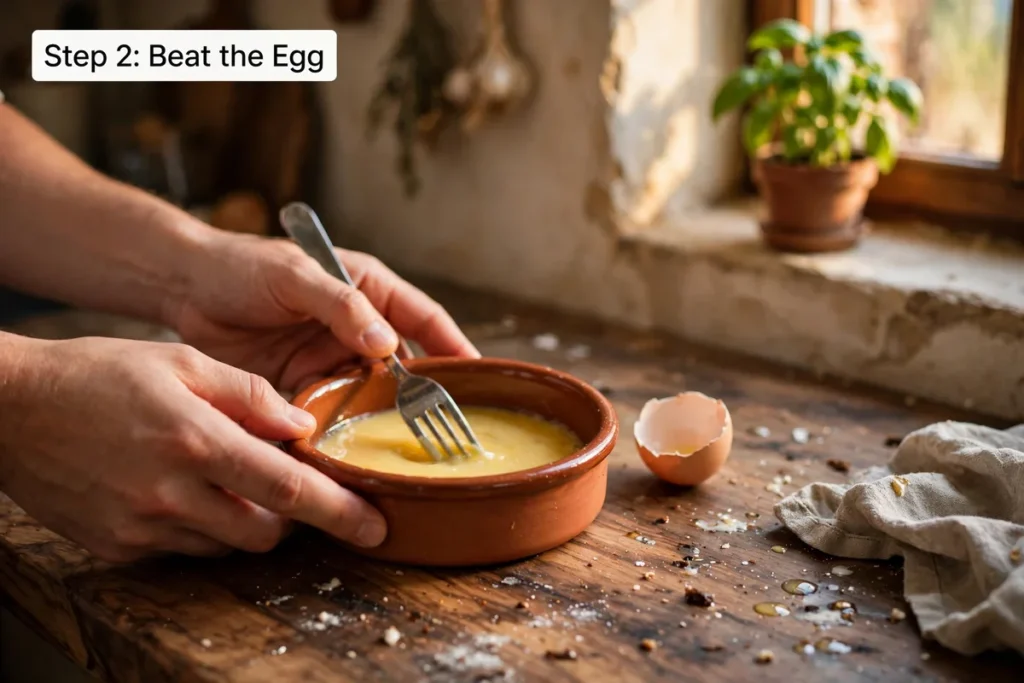
Step 2. Beat the egg in a small bowl with a fork for 20 seconds until the yolk and white blend into one smooth yellow liquid. Egg whites and yolks set at slightly different temperatures, so streaks of white cook into stringy bits. Beating now means the egg pours smoothly later.
Step 3. Measure the pastina and broth and set the ladle, spoon, and warm bowls within reach. The pot moves fast once the pasta goes in, and tiny pasta overcooks in under a minute. Having everything ready means you can pull the pot at exactly the right moment.
Toast the Pasta and Heat the Broth
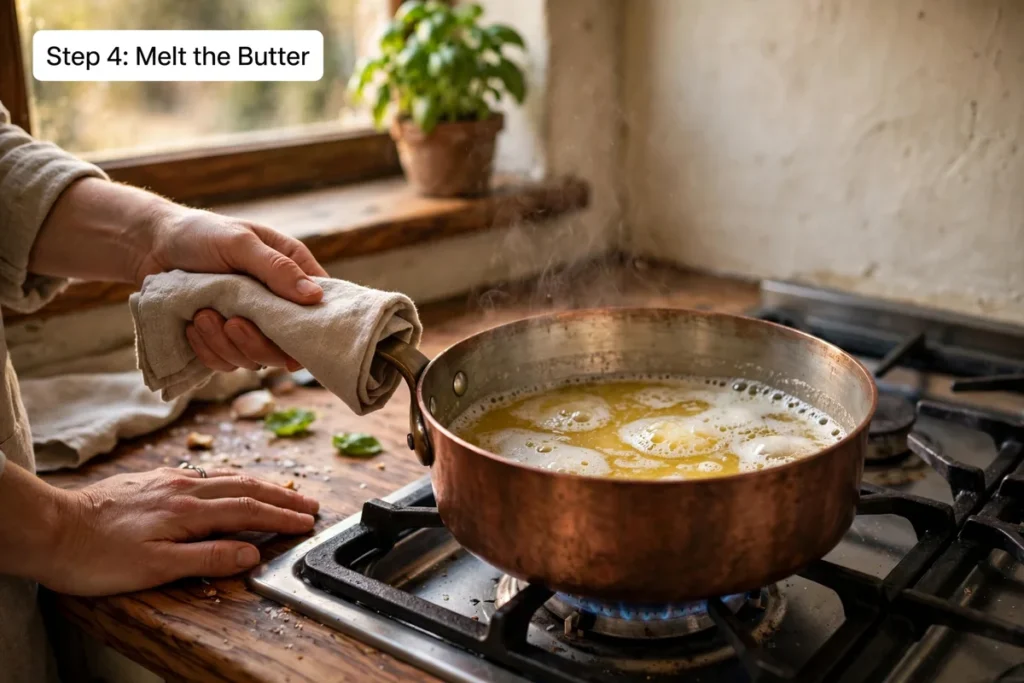
Step 4. Melt 1 tablespoon of the butter in the saucepan over medium heat until it foams and the loud sizzling stops. Foam settling means the water in the butter has cooked off, so the fat is hot enough to toast the pasta instead of steaming it.
Step 5. Add the dry pastina and stir for 1 to 2 minutes, until the pieces turn a shade golden and smell like toasted bread. Toasting browns the surface of each piece and adds a nutty flavor that boiling alone cannot give. (This is the Maillard reaction, a browning process.)
Step 6. Pour in the broth, add the Parmesan rind if using, and scrape the bottom of the pan. Bring to a gentle boil over medium-high heat. The rind softens in the hot broth and releases savory, cheesy flavor, and scraping lifts any toasted bits into the soup.
Simmer the Pasta
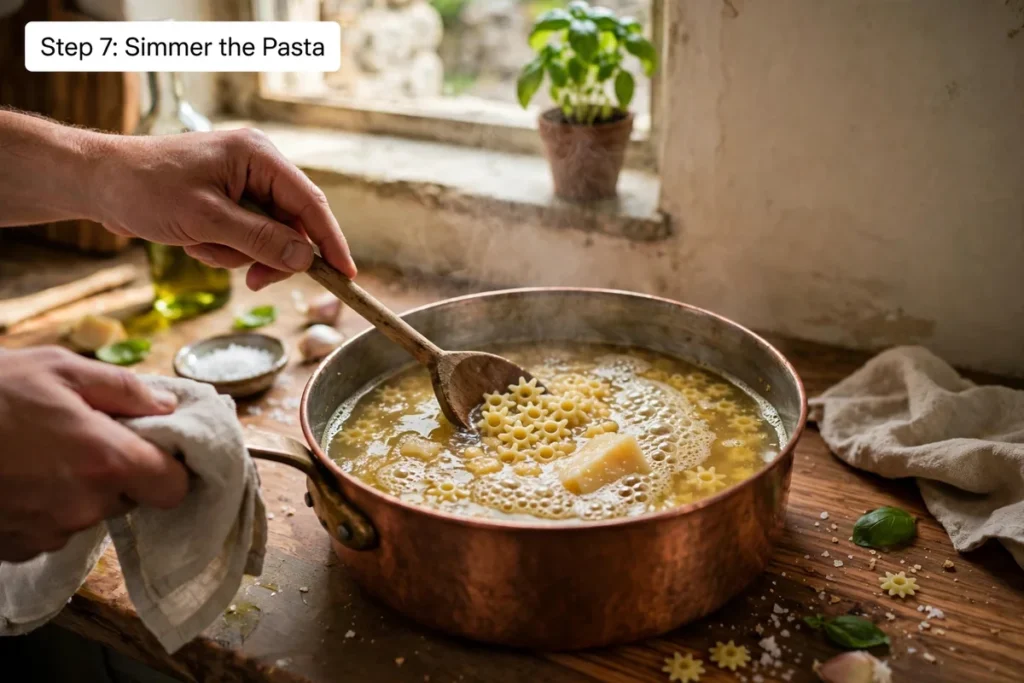
Step 7. Reduce the heat to medium-low and simmer 4 to 6 minutes, stirring every 30 to 45 seconds. Tiny pasta sinks and sticks to the pan, so frequent stirring prevents scorching. As the pasta cooks it releases starch, which thickens the broth into a silky body.
Step 8. Taste a piece at 4 minutes. It should be tender with no white, chalky center. Pastina keeps soaking up liquid after you stop cooking, so pull the pot while it still looks slightly loose. Overcooked pastina turns into paste.
Step 9. Fish out the Parmesan rind and discard it, or chop it and eat it as a chewy treat. The rind has given up most of its flavor, and leaving it in makes the pot hard to stir.
Finish Off the Heat
Step 10. Take the pot off the heat and let it rest 1 minute. This drops the temperature below a boil so the egg thickens gently instead of scrambling. Stir in the remaining 2 tablespoons of butter until it melts.
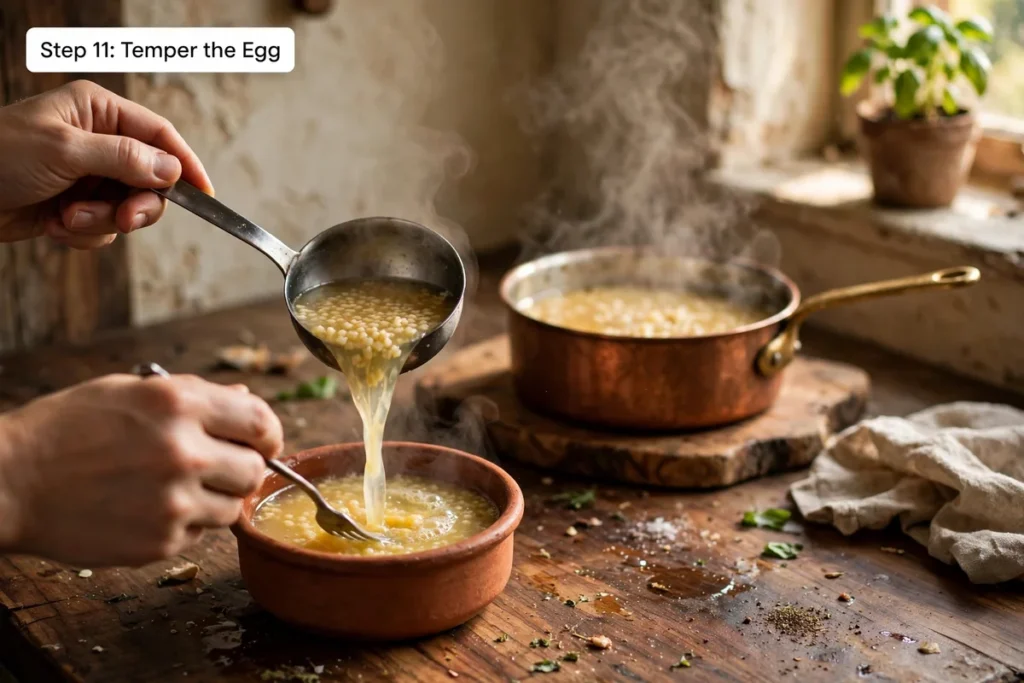
Step 11. Temper the egg: ladle 1/4 cup of hot soup into the beaten egg while whisking, then pour the mixture back into the pot in a slow stream, stirring the whole time. Adding hot liquid to the egg a little at a time raises its temperature slowly, so it blends smoothly instead of forming curds.
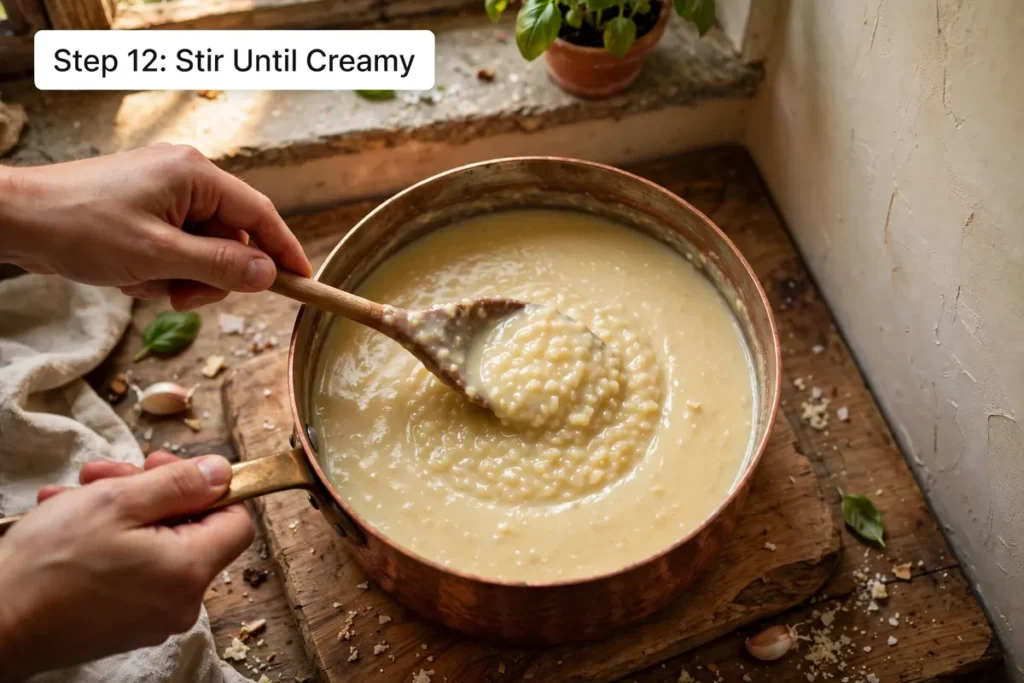
Step 12. Stir for 30 seconds until the soup thickens to a creamy, custard-like body. The egg and starch together hold the broth in a smooth suspension. Do not return the pot to the heat, since the residual warmth is enough.
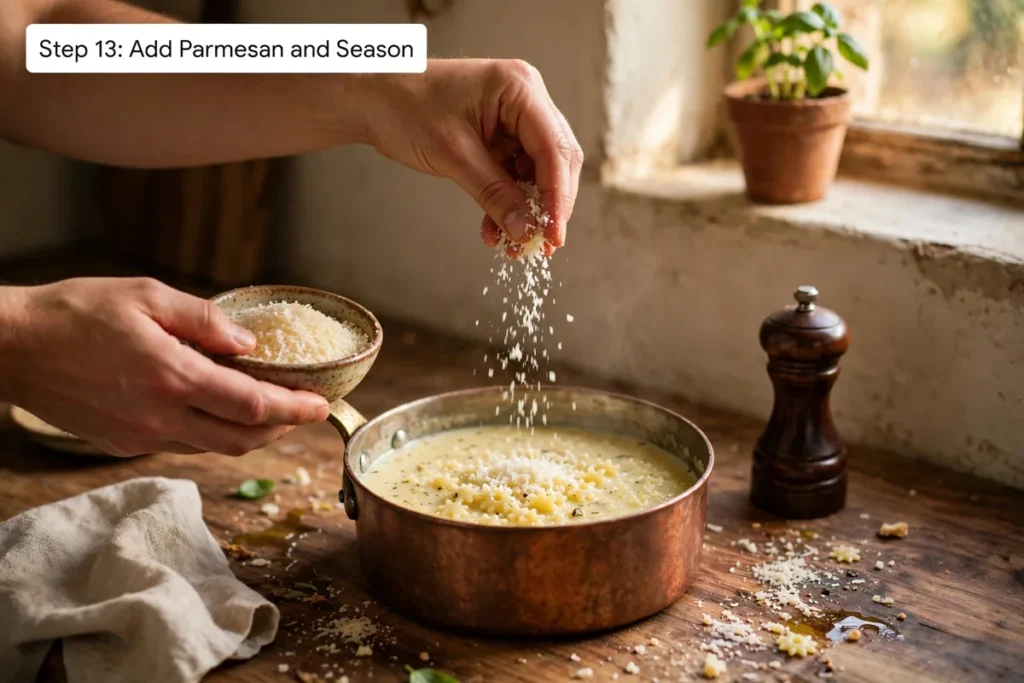
Step 13. Stir in the Parmesan, pepper, and nutmeg, if using. Taste and add salt in small pinches, since the cheese adds salt. Cheese melts best off the heat, where it stays smooth, but overheated cheese separates into stringy clumps and oily drops.
Serve
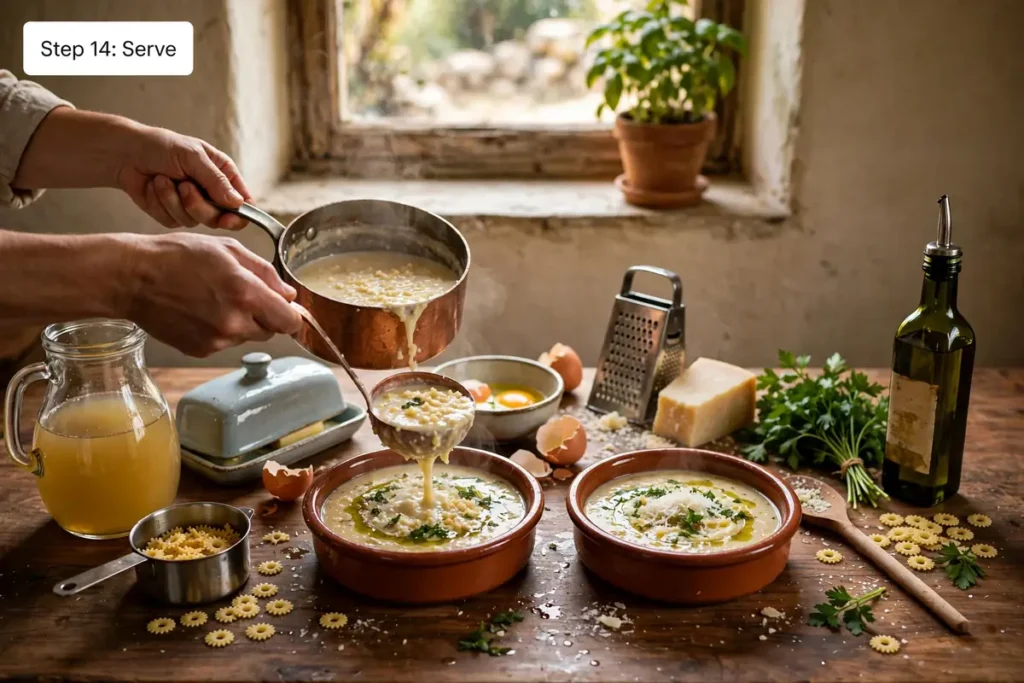
Step 14. Ladle into warm bowls and top with extra Parmesan, parsley, and a drizzle of olive oil. Serve right away, because the soup thickens quickly as it stands. Warm bowls keep it hot longer and keep the starch from setting too fast.
Why Does Cooking Pastina in Broth Make It Creamy?
Six points explain the method.
The pasta absorbs flavor. Tiny pasta soaks up the broth as it cooks, so the taste goes through the pasta, not just around it.
Starch swells and thickens the pot. Starch granules soak up water and swell as the broth warms, a process called gelatinization, which starts around 140°F to 160°F (60°C to 71°C) for wheat starch. [VERIFY: confirm wheat starch gelatinization range in a food science reference.]
Amylose makes the broth silky. As the pasta cooks, it leaks amylose, a starch chain that dissolves into the broth and gives it a smooth, slightly sticky body, which is why pastina turns creamy without cream.
Egg thickens gently in a diluted liquid. Broth dilutes the egg proteins, so they set at a slightly higher temperature than a plain egg and form a soft, silky body instead of firm curds. A boil breaks that into scrambled bits.
Cheese turns stringy when overheated. Parmesan proteins tighten and squeeze out fat when the pot is too hot, which makes clumps and oil drops. Off the heat, the cheese melts smoothly.
Fat carries flavor. Butter and cheese coat the tongue and carry savory flavor, so the bowl tastes rich and round.
The order follows: toast for flavor, simmer in broth, pull the pot slightly loose, cool it for a minute, then add egg, butter, and cheese.
How Does Pastina Compare to Similar Soups?
Pastina is the fastest comfort soup, and it needs only a few ingredients.
What Toppings Go Best on Pastina?
Pick a flavor and build the bowl:
- Classic: extra Parmesan, black pepper, and a drizzle of olive oil.
- Fresh and green: chopped parsley, basil, or chives.
- Bright: lemon zest and a squeeze of lemon.
- Warm and savory: a pinch of nutmeg or red pepper flakes.
- Hearty: crispy beef bacon bits or shredded chicken. or shredded chicken.
What Variations Can You Make?
Lemon Pastina
Stir in 1 tablespoon (15ml) of lemon juice and 1 teaspoon of lemon zest after the cheese. Lemon cuts the richness and wakes up the broth. Add it last, because heat dulls its fresh aroma and can make the egg curdle.
Spinach Pastina
Stir 2 cups (60g) of baby spinach into the pot in the last minute of simmering. Spinach wilts in seconds and adds color and iron. Spinach releases water as it wilts, so cook it only until just limp to keep the soup from thinning.
Chicken and Vegetable Pastina
Add 1 cup (140g) of shredded cooked chicken and 1/2 cup (60g) of small-diced carrot in Step 6. The carrot needs the full 5 minutes of simmering to soften, and the chicken only needs to heat through. This makes a filling one-pot meal.
Garlic and Herb Pastina
Sauté 2 cloves of minced garlic in the butter for 30 seconds before the pasta in Step 5. Add 1 teaspoon of chopped fresh thyme with the broth. Garlic burns in under a minute, so keep the heat at medium-low. The herbs release aroma into the fat, which carries it through the bowl.
Tomato Pastina
Stir in 2 tablespoons (32g) of tomato paste with the pasta in Step 5 and cook for 1 minute until it darkens. Tomato paste adds a sweet, savory depth. Skip the egg and use a little extra Parmesan, since tomato and egg can curdle together.
Mushroom Pastina
Sauté 4 oz (115g) of sliced mushrooms in the butter for 5 minutes until the liquid cooks off, then add the pasta. Mushrooms are mostly water, so they must dry out before they brown. They add an earthy, meaty flavor that suits vegetarian bowls.
Vegan Pastina
Use vegetable broth, olive oil in place of butter, and 3 tablespoons of nutritional yeast in place of the egg and Parmesan. Nutritional yeast adds a cheesy, savory taste, and the starch still thickens the pot. Add 1 tablespoon of white miso off the heat for extra depth.
What Dietary Adjustments Can You Make?
Vegetarian Version
Use vegetable broth and check that the Parmesan uses vegetarian rennet, since traditional Parmesan does not.
Gluten-Free Version
Use gluten-free small pasta or rice-based stars. Gluten-free pasta cooks differently and can turn mushy, so check it at 3 minutes.
Dairy-Free Version
Use olive oil and nutritional yeast, and skip the cheese and butter.
Lower-Sodium Version
Use unsalted broth and cut the added salt. Parmesan is salty, so taste before adding any salt.
Why Is My Pastina Gluey, Bland, or Curdled?
Gluey soup is a timing problem, and curdled egg is a heat problem.
How Do You Store, Freeze, and Reheat It?
Serve with a Breakfast Sausage Patties or a side salad.
Scaling
Larger batches take 1 to 2 minutes longer.
Nutritional Information
Per serving: about 1 cup. Estimates based on USDA FoodData Central values.
Frequently Asked Questions
Pastina soup is an Italian comfort bowl of tiny pasta toasted in butter, cooked in good broth, and finished off the heat with egg and Parmesan. Pull the pot slightly loose and cool it for a minute before adding the egg, because that order gives a silky, creamy bowl instead of a gluey or curdled one. Save this recipe for the next cold day.