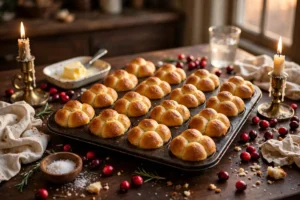
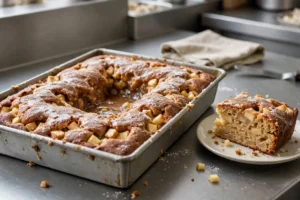
Coffee cake bread is an American yeasted sweet bread in which the enriched dough, softened with butter, eggs, and milk in the same tradition as brioche and challah, is filled with a cinnamon brown sugar swirl and topped with a streusel crumb before baking in a loaf pan, producing a bread that occupies the specific intersection between a pull-apart coffee cake and a sliceable breakfast loaf and that delivers the warm cinnamon-streusel flavor identity of a classic American coffee cake in a format that slices cleanly for a weekday breakfast or toasts to a caramelised, crunchy surface that no standard coffee cake achieves.
The streusel application timing is the single most critical technique decision. Streusel pressed firmly into the shaped, proofed loaf before baking (not applied to the raw dough before the final proof) adheres to the slightly tacky, fully expanded dough surface without sinking through it during the proof, and the streusel’s butter partially melts into the surrounding dough surface during baking to create the half-embedded, half-crispy crumb texture that defines coffee cake bread rather than a coffee cake with a separate topping layer that sits on rather than integrates with the bread’s surface.
Coffee cake as a distinct American baked good category is documented in American cookbooks from the late 19th century, where German-American communities in the Midwest adapted the German Kaffeekuchen, a yeasted sweet cake enriched with butter and eggs and served with coffee, into the American baking tradition, eventually producing the streusel-topped, cinnamon-swirled format that American food culture identifies as coffee cake by the mid-20th century. The bread format, shaping a coffee cake dough into a loaf rather than baking it in a round or square pan, is a home baking adaptation that gained traction in American food blogs and community cookbooks from approximately 2010 onward as home bakers sought the familiar coffee cake flavor in a more versatile format that functions as both a breakfast bread and a dessert bread sliced for afternoon guests alongside coffee or tea.
What Is Coffee Cake Bread?
Coffee cake bread is a yeasted enriched sweet bread (not a quick bread leavened with baking powder, and not a standard coffee cake baked in a round or square pan) that combines the structural characteristics of a loaf bread with the flavoring elements of a classic American coffee cake: a cinnamon brown sugar filling swirled through the crumb and a butter-streusel crumb topping baked into the loaf’s surface.
It differs from a babka, the closest structural relative in the enriched sweet bread category, in that babka’s filling is twisted through the loaf in a spiral pattern that produces visible filling layers in every slice, where coffee cake bread’s filling is applied as a single flat layer to the rolled dough before rolling into a log and slicing to reveal a single swirl per slice. It differs from a standard coffee cake in that the yeasted dough produces a more complex, more developed flavor through fermentation (the yeast’s production of ethanol, organic acids, and ester aromatic compounds during the rise period contributes a subtle depth that no chemical-leavened coffee cake achieves) and a chewier, more substantial texture that slices and toasts where a standard coffee cake crumbles.
What Equipment Do You Need?
What Ingredients Do You Need?
Use active dry yeast rather than instant yeast; active dry yeast produces a longer, slower fermentation at the same quantity that develops more complex flavor compounds through the extended yeast activity period. Activate the yeast in warm milk at 105 to 110°F before incorporating into the dough; this proofing step verifies that the yeast is viable before the full dough is made and ensures the yeast granules are fully hydrated and active before contact with the butter-enriched dough. Use bread flour rather than all-purpose flour for the loaf structure; bread flour’s higher protein content at 12 to 14 percent produces a stronger gluten network that holds the loaf’s shape against the weight of the enriching ingredients and the streusel topping.
For the Enriched Bread Dough
For the Cinnamon Brown Sugar Filling
The dark brown sugar in the filling rather than granulated or light brown sugar is the most important filling ingredient decision. Dark brown sugar’s 6.5 percent molasses content contributes furfural, hydroxymethylfurfural, and phenolic compounds that sit in the same warm aromatic family as the cinnamon’s cinnamaldehyde; they reinforce rather than compete with the spice character and produce a filling that tastes of complex warm caramel-spice rather than simply sweet cinnamon. The same molasses compounds that deepen the dark brown sugar’s pumpkin cupcake character perform the identical flavor-deepening function in the coffee cake bread filling.
For the Streusel Crumb Topping
Cold butter for the streusel is mandatory. The cold butter’s fat must be cut into the flour and sugar in a way that leaves distinct butter pieces coated in flour-sugar rather than a fully incorporated paste. These distinct butter pieces melt during baking and create the streusel’s characteristic crumbly, sandy texture with pockets of crunch from the caramelised sugar. Room-temperature or melted butter produces a paste that bakes into a uniform, flat layer rather than the crumbly, irregular streusel that defines the coffee cake topping.
For the Glaze
Optional Additions
Step by Step Process
Activate the Yeast and Make the Dough
Step 1. Warm the whole milk to exactly 105 to 110°F, verified with the instant-read thermometer. Combine the warm milk, yeast, and 1 tablespoon of the granulated sugar in the stand mixer bowl. Stir briefly and allow to proof for 5 to 8 minutes undisturbed until the mixture is foamy and visibly active: small bubbles forming and the surface developing a foam layer.
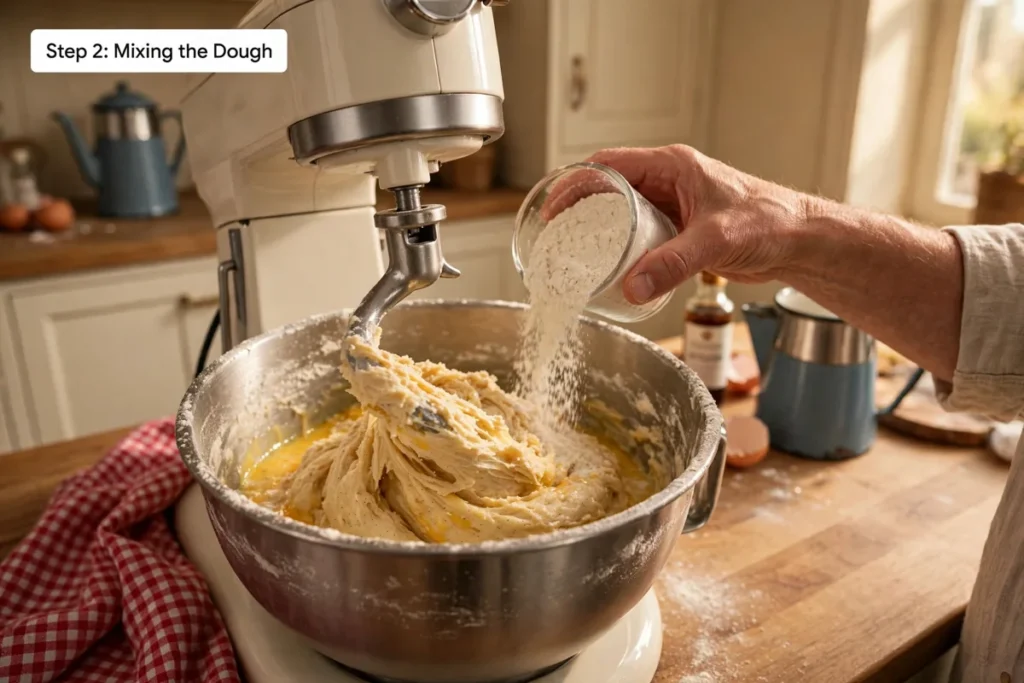
Step 2. Add the bread flour, remaining granulated sugar, and salt to the yeast mixture. Add the eggs and vanilla extract. Mix with the dough hook at low speed for 2 minutes until a shaggy dough forms. Increase to medium speed and knead for 5 minutes until the dough is smooth and beginning to pull away from the bowl sides.
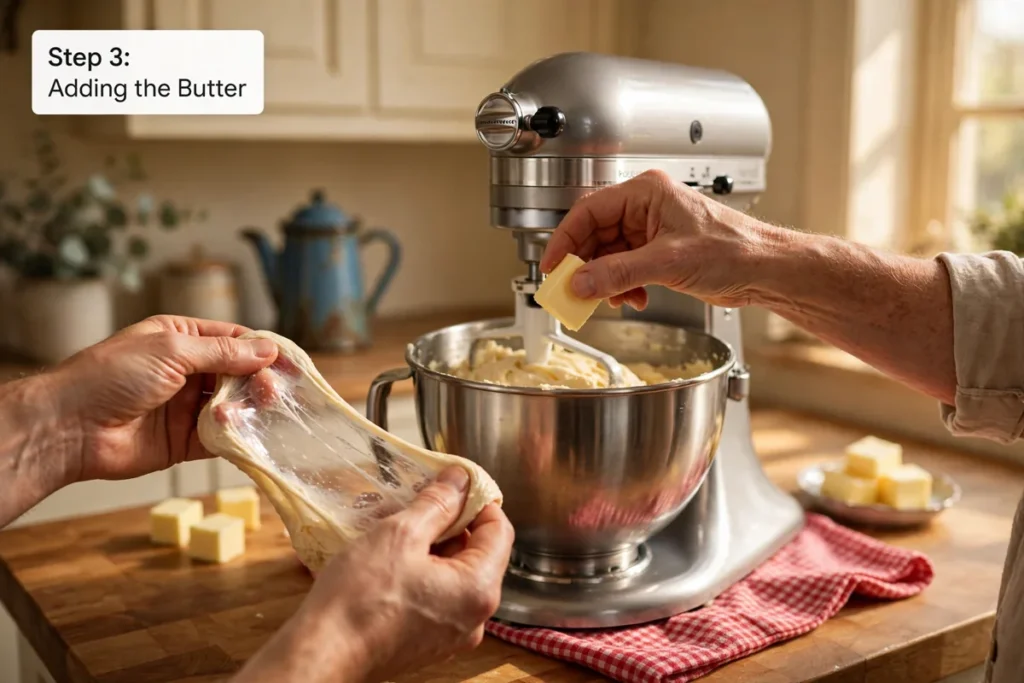
Step 3. With the mixer running at medium speed, add the room-temperature butter one cube at a time, one cube every 20 to 30 seconds, allowing each piece to incorporate before the next is added. After all butter is incorporated continue kneading at medium speed for 5 to 7 additional minutes until the dough is smooth, glossy, and passes the windowpane test: a small piece of dough stretched between two hands becomes thin enough to be translucent without tearing.
The butter incorporation technique mirrors the Swiss meringue buttercream butter addition technique: sequential small additions allow the fat to emulsify into the existing protein network rather than breaking the network by overwhelming its emulsification capacity with a full fat addition simultaneously. In enriched dough this sequence allows the gluten strands to coat with butter gradually, producing a more extensible, more uniformly supple dough than adding all butter simultaneously would achieve.
Bulk Fermentation
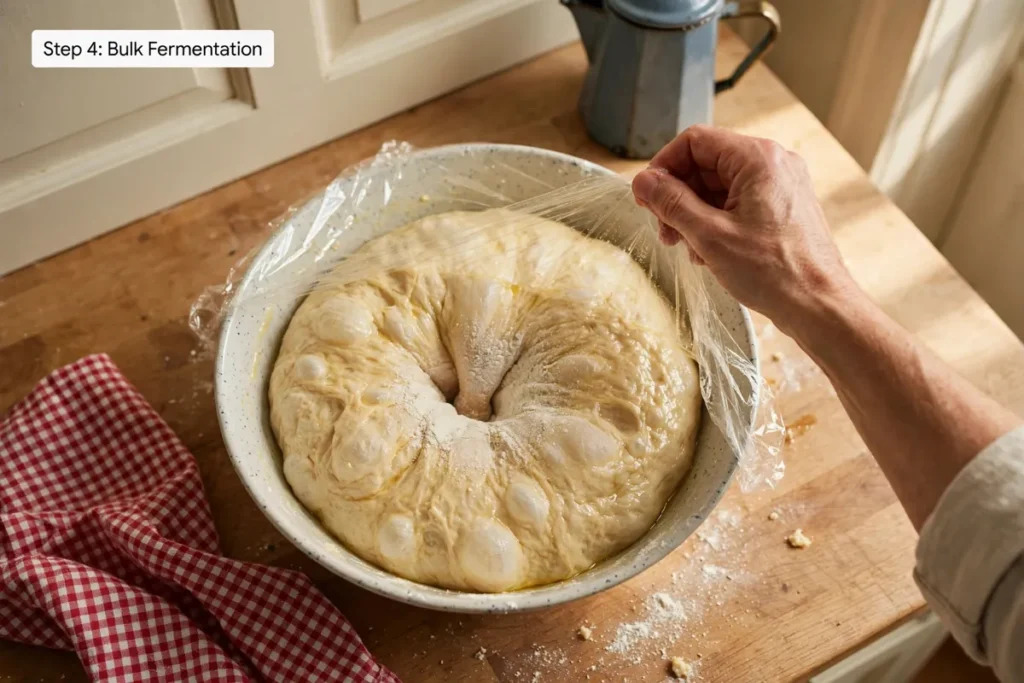
Step 4. Form the dough into a smooth ball and place in a lightly oiled bowl. Cover with plastic wrap pressed gently against the surface. Allow to rise at room temperature (70 to 75°F) for 1 to 1.5 hours until doubled in size. Alternatively, place the covered bowl in the refrigerator overnight for a slow, cold fermentation of 8 to 12 hours; the cold fermentation develops significantly more complex flavor through the extended yeast activity period and the dough is easier to shape when cold.
Make the Filling and Streusel
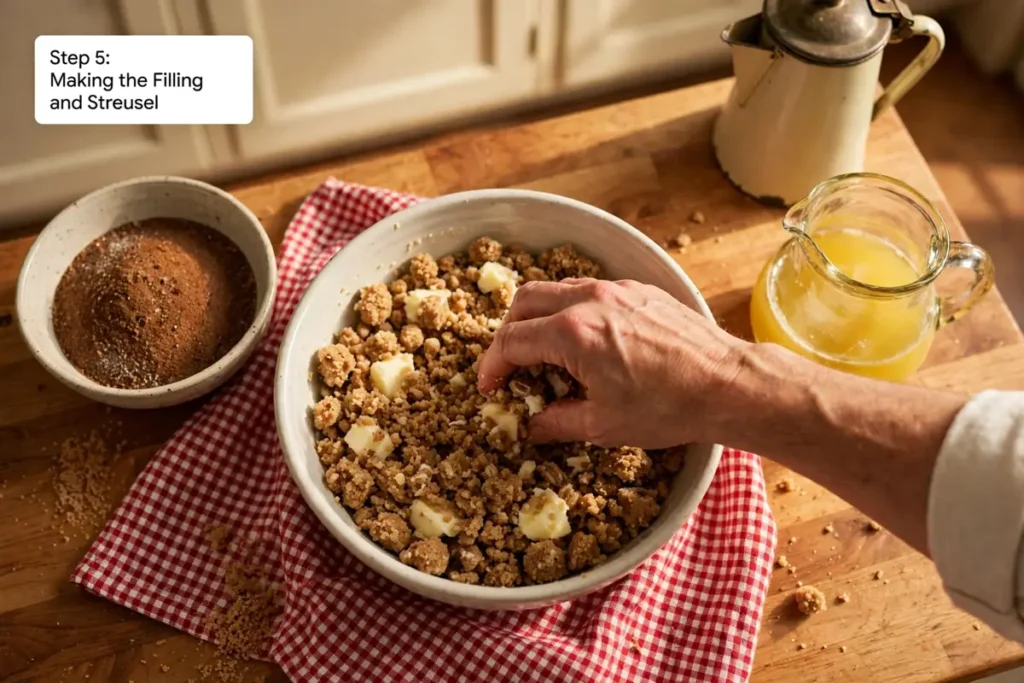
Step 5. Combine the dark brown sugar, cinnamon, nutmeg, and salt in a small bowl. Mix thoroughly until completely uniform. Melt the filling butter separately and set aside. Prepare the streusel: combine the all-purpose flour, dark brown sugar, cinnamon, and salt in a medium bowl. Add the cold butter cubes and work them into the flour mixture with fingertips until the mixture resembles coarse sand with pea-sized butter pieces visible throughout, approximately 2 minutes. Refrigerate the streusel until needed.
Shape, Fill, and Final Proof
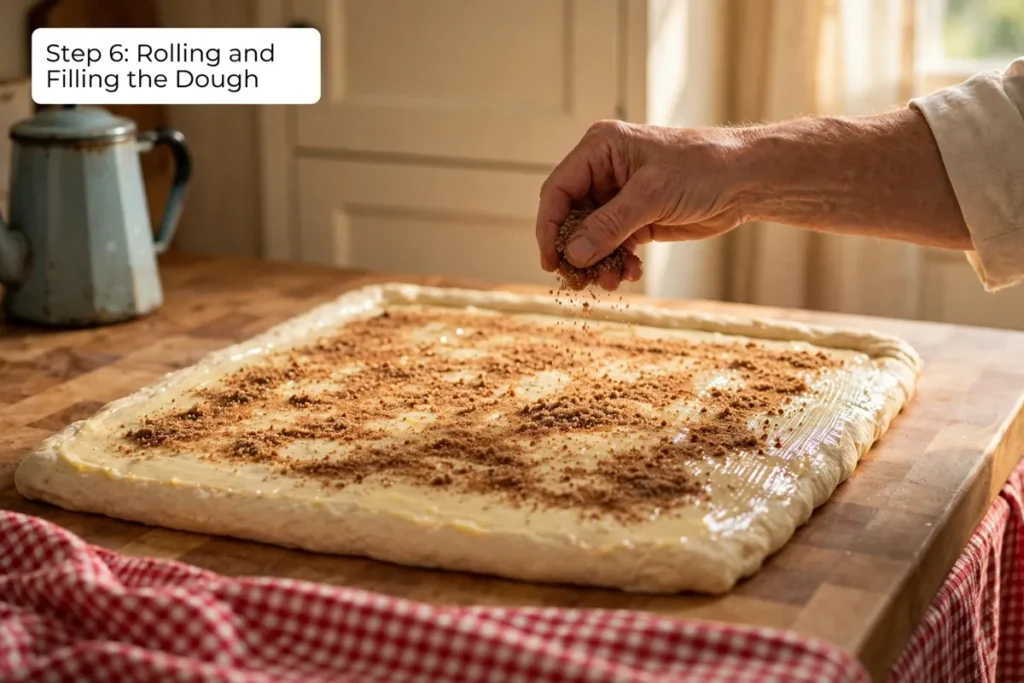
Step 6. Turn the risen dough out onto a lightly floured surface. Roll into a 12×18-inch rectangle approximately 1/4 inch thick; the longer dimension should be parallel to the edge of the work surface closest to you. Brush the melted filling butter evenly across the full dough surface leaving a 1/2-inch border at the far long edge. Sprinkle the cinnamon brown sugar mixture evenly over the buttered surface, pressing gently to adhere.
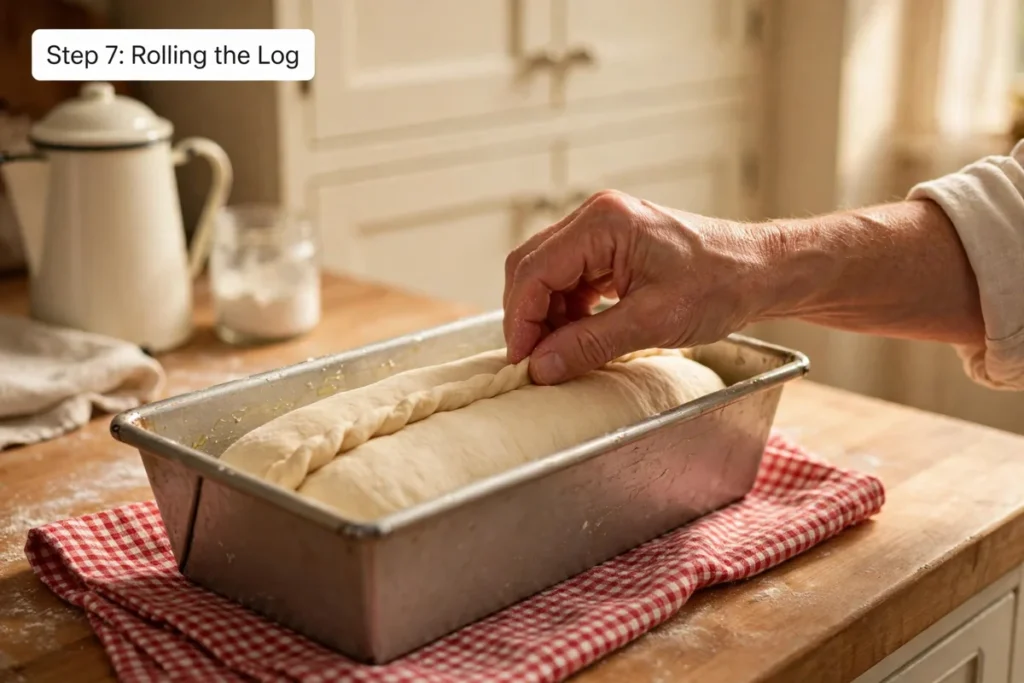
Step 7. Starting from the long edge closest to you, roll the dough into a tight, uniform log, rolling away from you, keeping even tension across the full width with each roll. Pinch the seam firmly along the full length of the log and place the log seam-side down in the greased loaf pan. The log should fill the loaf pan from end to end with minimal gap at each end.
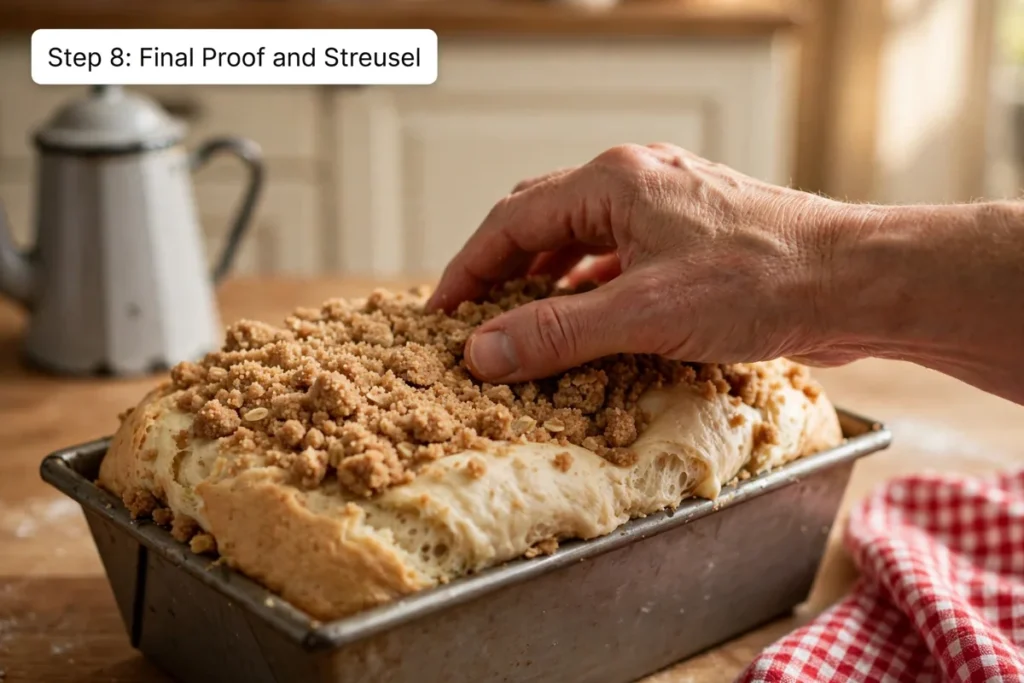
Step 8. Cover the loaf pan loosely with plastic wrap and allow to proof at room temperature for 45 to 60 minutes until the dough has risen approximately 1 inch above the pan rim. Remove the streusel from the refrigerator. Press the cold streusel firmly over the full surface of the proofed loaf, pressing firmly enough that the streusel pieces embed slightly into the dough surface rather than sitting on top of it. The pressing creates the adhesion between streusel and dough that prevents the topping from sliding off the loaf during baking.
Bake and Glaze
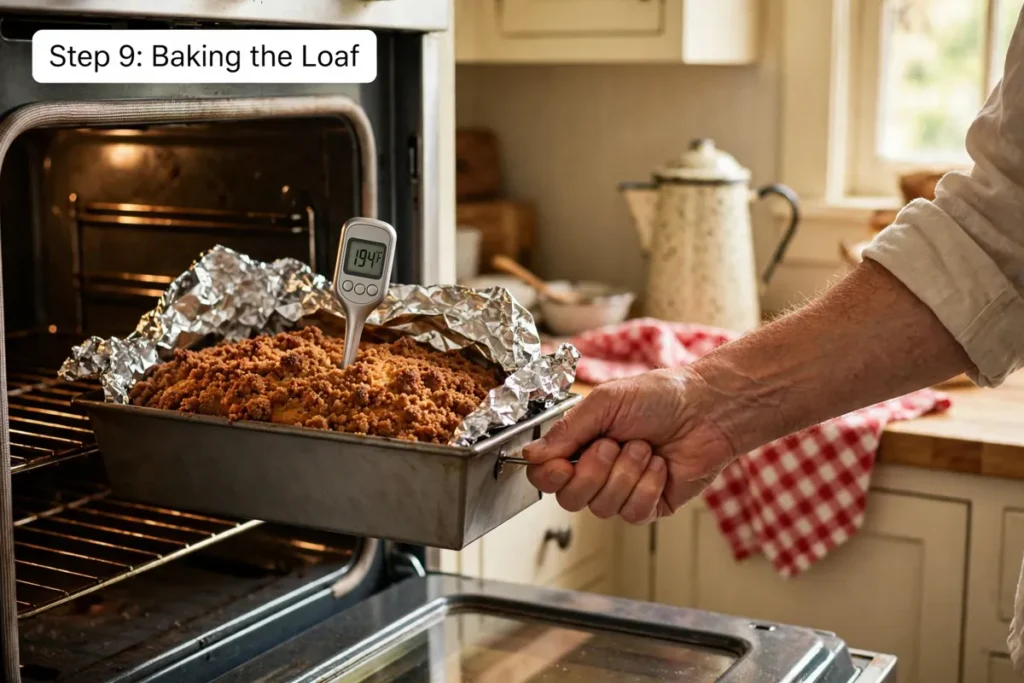
Step 9. Preheat the oven to 350°F (177°C). Bake the streusel-topped loaf for 40 to 48 minutes until deep golden-brown and the internal temperature at the loaf centre reads 190 to 195°F. Tent loosely with aluminium foil after 25 minutes if the streusel is browning too rapidly before the loaf interior is fully baked; the streusel’s dark brown sugar caramelises faster than the loaf’s pale enriched dough surface would brown at the same temperature.
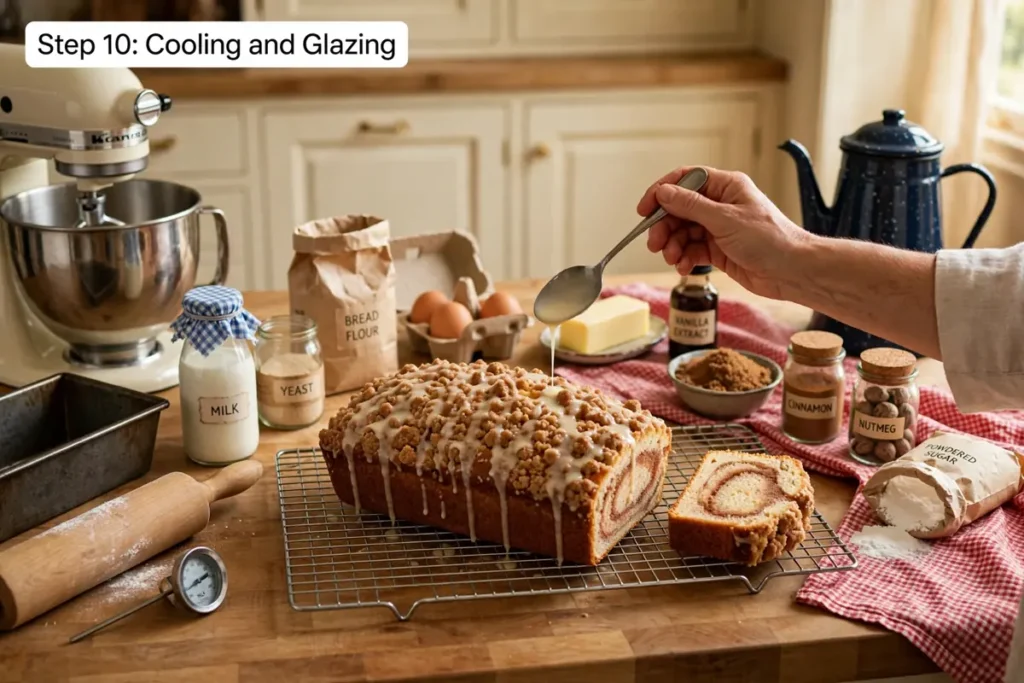
Step 10. Cool in the pan for 15 minutes; the enriched dough’s high butter content makes the loaf fragile when very hot. Remove from the pan and transfer to a wire rack. Cool for a minimum of 20 additional minutes before glazing; glazing a hot loaf causes the glaze to run off the surface before setting rather than pooling in the streusel’s crevices.
Prepare the glaze: whisk the sifted powdered sugar, milk or cream, and vanilla extract until completely smooth and fluid; the glaze should be thick enough to coat a spoon but thin enough to drizzle. Drizzle over the cooled loaf in a thin, irregular pattern using a spoon or a small piping bag with the corner snipped. Allow the glaze to set for 10 minutes before slicing.
Why Yeasted Enriched Dough Produces More Complex Coffee Cake Flavor Than Baking Powder Quick Bread
The decision to make coffee cake bread with yeasted enriched dough rather than the baking-powder-leavened quick bread formula used in most home-baked coffee cakes is the technique decision that produces the most significant difference in the finished loaf’s flavor complexity, and the mechanism behind this difference explains why professional bakery coffee cakes have a depth of flavor that home quick-bread coffee cakes consistently lack despite identical filling and streusel recipes.
Yeast fermentation, the conversion of the dough’s sugars to carbon dioxide and ethanol by Saccharomyces cerevisiae, produces more than 600 aroma-active compounds as metabolic byproducts beyond the carbon dioxide responsible for leavening. The most flavor-significant of these are the organic acids (primarily lactic acid and acetic acid produced by the lactic acid bacteria that co-exist with yeast in a fermented dough) and the esters produced when these organic acids react with the fermentation-produced ethanol. Ethyl acetate, isoamyl acetate, and ethyl hexanoate are among the most abundant fermentation esters in a yeasted enriched dough, contributing fruity, slightly complex aromatic notes that most tasters describe as “bakery flavor” without being able to identify their source, the same compounds produced in wine, cheese, and sourdough that the brain associates with fermented, complex food products rather than simple chemically leavened preparations.
The extended bulk fermentation period (1 to 1.5 hours at room temperature, or 8 to 12 hours cold) multiplies these fermentation compound concentrations progressively. A longer, cooler fermentation produces more lactic acid and fewer acetic acid compounds, generating a rounder, more complex flavor profile rather than the sharper, more sour character of a warm-fermented dough. The overnight cold fermentation specified as an option in Step 4 produces the most flavor-complex coffee cake bread in the collection because the cold temperature slows the yeast’s gas production relative to its flavor compound production; the dough ferments slowly enough that the organic acids and esters accumulate to high concentration without the rapid gas production that would over-proof the dough before baking.
Baking powder leavening, the acid-base reaction between sodium bicarbonate and cream of tartar or calcium acid phosphate, releases carbon dioxide instantaneously when activated by moisture and heat, producing leavening with no fermentation period and therefore no fermentation-derived aromatic compounds. The quick bread coffee cake’s flavor depends entirely on the butter, eggs, vanilla, and spice contributions because the leavening system contributes no flavor compounds of its own. The yeasted coffee cake bread’s flavor includes all of these same contributions plus the fermentation-derived organic acids, esters, and their interaction with the Maillard compounds produced from the cinnamon filling and streusel during baking, a significantly more complex aromatic profile that most tasters immediately describe as tasting “more like a real bakery product” than the quick bread version at identical spice and filling quantities.
How Does Coffee Cake Bread Compare to Related Enriched Sweet Breads?
What Variations Can You Make?
Apple Cinnamon Coffee Cake Bread
Add 1 medium Granny Smith apple, peeled, cored, and diced into 1/4-inch pieces, tossed with 1 teaspoon of cinnamon and 1 tablespoon of dark brown sugar, to the filling alongside the cinnamon sugar layer in Step 6. Spread the apple pieces over the buttered dough surface before the cinnamon sugar, distributing them in a single, even layer rather than piling. The apple’s pectin softens during baking and releases moisture into the surrounding dough, producing a slightly more moist crumb in the swirl layer adjacent to the apple pieces. Granny Smith apple’s malic acid content, approximately 0.8 percent by weight, provides tartness that contrasts the dark brown sugar filling’s sweetness through the same acid-sugar complementarity that makes apple pie’s tart filling work against a sweet pastry. Add 1/4 teaspoon of cardamom and 1/8 teaspoon of ground cloves to the streusel for an apple-spice streusel that reinforces the filling’s spice complexity.
Cream Cheese Swirl Coffee Cake Bread
Beat 4 oz (113g) of room-temperature full-fat block cream cheese with 3 tablespoons (38g) of granulated sugar and 1/2 teaspoon of vanilla extract until completely smooth. Spread the cream cheese mixture over the buttered dough surface before the cinnamon sugar layer; the cream cheese layer sits between the dough surface and the cinnamon sugar, producing a three-layer swirl when sliced: dough, cream cheese, cinnamon sugar. The cream cheese’s casein protein partially sets during baking and remains as a distinct, slightly tangy, creamy layer within the crumb; the same acid-dairy character that makes cream cheese frosting complement cinnamon baked goods produces the same complementarity as a swirl layer within the bread itself.
Pecan Praline Coffee Cake Bread
Replace the standard streusel with a pecan praline streusel: add 1/2 cup (60g) of roughly chopped toasted pecans to the streusel mixture alongside the flour and sugar before the cold butter is worked in. Add 1 tablespoon of maple syrup drizzled over the pecan-streusel layer immediately after pressing it onto the proofed loaf; the maple syrup’s sucrose and fructose caramelise around the pecan pieces during baking, producing a crunchy praline crust rather than a standard sandy streusel. The pecan’s oleic acid-rich fat contributes its own roasted Maillard compounds from the toasting stage, primarily pyrazines and furanones in the same warm roasted aromatic family as the dark brown sugar’s molasses compounds and the cinnamon’s cinnamaldehyde. Replace the vanilla glaze with a maple glaze: 1 cup (120g) of powdered sugar whisked with 2 tablespoons of pure maple syrup and 1 tablespoon of heavy cream.
Blueberry Lemon Coffee Cake Bread
Replace the cinnamon brown sugar filling with a lemon-cream cheese filling: 4 oz (113g) of cream cheese beaten with 3 tablespoons (38g) of sugar, 1 tablespoon (6g) of lemon zest, and 1 tablespoon (15ml) of fresh lemon juice. Scatter 1/2 cup (75g) of fresh blueberries over the cream cheese layer before rolling. Add 1 tablespoon (6g) of lemon zest to the streusel alongside the flour and sugar. Replace the vanilla glaze with a lemon glaze: 1 cup (120g) of powdered sugar whisked with 2 tablespoons (30ml) of fresh lemon juice. The blueberry-lemon-cream cheese combination in a yeasted enriched bread produces a spring and summer-appropriate coffee cake bread that contrasts the autumn cinnamon spice version while maintaining the same structural three-component format of filling, enriched dough, and streusel.
Dietary Adjustments and Substitutions
Dairy-Free Version
Replace the whole milk in the dough with full-fat oat milk at the same volume (180ml); oat milk’s beta-glucan content provides sufficient viscosity to activate and hydrate the yeast granules in the same way dairy milk does. Replace the dough butter with Miyoko’s Creamery dairy-free butter sticks at the same weight (57g). Replace the filling butter with refined coconut oil at the same weight (42g); coconut oil’s solid-at-room-temperature fat provides the same binding function as dairy butter for the cinnamon sugar filling layer. Replace the streusel butter with very cold refined coconut oil at the same weight (57g), cut into the flour and sugar while solid for the same coarse-crumb texture as dairy butter streusel. For the glaze, replace the milk with oat milk at the same volume. The dairy-free coffee cake bread is structurally identical to the dairy version; the enriched dough’s gluten network is developed by the mechanical kneading rather than by the dairy proteins, and the flavor difference from the dairy-free substitutes is minimal at the dough stage where the fermentation-derived aromatic compounds dominate the flavor profile.
Reduced-Sugar Version
Reduce the granulated sugar in the dough to 2 tablespoons (25g); the remaining sugar is necessary for yeast activation and Maillard browning of the loaf exterior and cannot be reduced further without affecting both fermentation activity and crust color. In the filling, reduce the dark brown sugar to 1/3 cup (71g) and increase the cinnamon to 2.5 teaspoons to compensate for the reduced sweetness with additional spice aromatic intensity. In the streusel, reduce the dark brown sugar to 1/4 cup (53g); the streusel still produces a crumbly texture at this reduced sugar level but with less caramelisation and a paler, less amber finish. The glaze can be omitted entirely in the reduced-sugar version; the streusel’s caramelised surface provides sufficient surface sweetness without the additional sugar of the glaze layer.
What Are the Most Common Problems When Making Coffee Cake Bread?
How Do You Store Coffee Cake Bread?
Scaling
Nutritional Information
Per serving: 1 slice approximately 85g including enriched dough, cinnamon filling, streusel, and vanilla glaze, based on 10 slices. Values calculated using USDA FoodData Central reference data.
Frequently Asked Questions
Coffee cake bread is an American yeasted enriched sweet bread that delivers the cinnamon brown sugar swirl and butter streusel crumb topping of the classic American coffee cake format, rooted in the German-American Kaffeekuchen tradition documented in American cookbooks from the late 19th century, in a sliceable loaf format whose flavor complexity exceeds any baking-powder-leavened coffee cake at identical spice and filling quantities because the yeasted dough’s 1 to 12 hour fermentation period produces organic acids from lactic acid bacteria and fermentation esters from the reaction of those acids with yeast-generated ethanol, aromatic compounds absent from any baking-powder preparation that together constitute the layered, bakery-complex flavor profile most tasters immediately identify as superior to the quick bread version without being able to name the mechanism. The cold butter in the streusel, the dark brown sugar in both filling and streusel, and the firm pressing of the streusel into the fully proofed loaf surface immediately before baking are the three simultaneous technique decisions that together produce the coffee cake bread’s defining visual and textural characteristics: the caramelised irregular crumb topping half-embedded in and half-standing above the enriched dough surface.