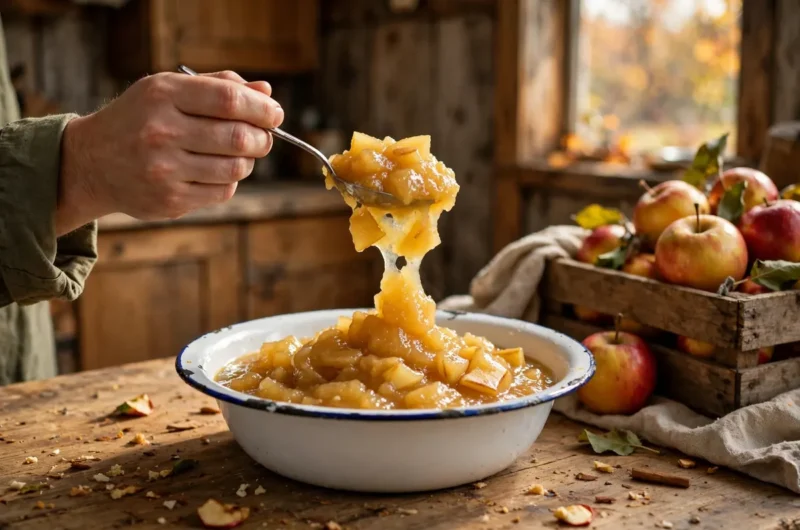
The applesauce recipe comes down to one decision: cook a mix of tart and sweet apples in just a little water, covered, then mash to your preferred texture. That gives a thick, fragrant sauce that tastes of apples, not sugar, in 40 minutes. Follow the steps below and you will make about 3 cups from 3 pounds of apples.
Applesauce is cooked apples, mashed or pureed, and it can be made with peeled or unpeeled apples and may be spiced or sweetened. Apples are about 85 percent water, so they release most of the liquid they need as they cook.
Where Did Applesauce Come From?
Applesauce has no single inventor, and its history is older than most sources can pin down. Apples were likely first domesticated in Central Asia, and the only apples native to North America before European colonization were crab apples. Colonists brought European apple seeds and cuttings with them, and by the 1600s international trade had brought apple trees to the colonies, where raising orchards became common.
Sauces made from apples are old in Europe. One food history writer says the practice of preparing sauces with apples dates back to medieval times, even though applesauce as we know it is said to have originated in the mid-1700s. Many early apple sauces were made to go with fatty meats, because the sharp apple flavor balanced the fat. Another source says an applesauce recipe appears in The Forme Cury, the first known English-language cookbook, but that claim comes from a single food site.
The first printed use of the word is better documented. According to The Nibble, which cites the Oxford English Dictionary, the first extant print citation of the word applesauce is in Eliza Smith’s The Compleat Housewife, 9th edition, London, 1739. TasteAtlas gives the same book and year, and adds that the origin of applesauce is often associated with Central Europe.
The sauce spread across northern Europe and North America as an inexpensive side dish. In Dutch and Belgian cooking, apple sauce is part of the common dish of chicken, fries, and apple sauce, and it is especially popular with children. Apple sauce is also served as a dessert in many European cuisines and is used as an ingredient in applesauce cake, a moist cake that dates to early colonial times in New England. Wikipedia lists Mark Rosenstein’s In Praise of Apples: A Harvest of History, Horticulture and Recipes (1999) as a source on apple butter, the concentrated cousin of applesauce.
Source note: The 1739 date is the first print citation of the word, not the first time anyone cooked apples into a sauce, and sources treat the medieval and mid-1700s dates differently. Most of the history above comes from food media, a food history blog, and Wikipedia, not from a historian or a primary cookbook. The Forme Cury claim has a single source. Confirm the dates in the Oxford English Dictionary entry, The Compleat Housewife, and The Food Timeline before citing this page.
What Is Applesauce?
Applesauce is a sauce made of cooked apples, mashed or pureed, with water or cider, and sometimes sugar, lemon, and spices. Here is how it differs from related foods:
- Apple butter: is a highly concentrated version of apple sauce, cooked for hours, with a long shelf life from its sugar.
- Apple compote: keeps apple pieces whole in a light syrup.
- Apple puree for babies: is plain and unsweetened, and it is usually smoother.
- Apple jam or jelly: is cooked with a lot of sugar and set with pectin.
- Apple pie filling: keeps slices and is thickened with starch.
Which Apples Make the Best Applesauce?
Use a mix of tart and sweet apples. Good tart choices are Granny Smith and Bramley, and good sweet choices are Honeycrisp, Gala, Fuji, and Golden Delicious. McIntosh breaks down fast into a smooth sauce. Tart apples bring acid and structure, and sweet apples bring natural sugar, so a blend tastes balanced.
Should You Peel the Apples?
Peeling is optional. Peeled apples give a pale, smooth sauce. Unpeeled red apples give a pink sauce with more fiber, and you can strain or blend out the skins afterward. Peel the apples if you want a baby-smooth sauce.
Do You Need to Add Sugar?
No. Ripe apples are sweet enough, and sugar is optional. Tart apples may need 1 to 2 tablespoons of sugar or honey per pound. Taste before you sweeten, and taste again once it cools, because cold dulls sweetness and the sauce will seem less sweet than it did hot.
How Much Water Do You Need?
Use 1/2 cup of water for 3 pounds of apples. Apples release a lot of their own liquid, so more water gives thin sauce. Add water only if the pot looks dry.
Chunky or Smooth: How Do You Choose?
Mash with a potato masher for a chunky sauce, or blend or run through a food mill for a smooth one. A food mill also removes peels and cores, so you can skip peeling.
Why Does Applesauce Turn Brown?
Cut apples contain enzymes and phenolic compounds that react with air and turn brown. Lemon juice and heat slow or stop the change. Cooking inactivates the enzymes, so the cooked sauce browns far less than cut raw apples.
Is Applesauce Halal?
Yes, as written. It contains no alcohol or animal products. Check the vanilla and any spice blends for alcohol or animal-derived additives.
Can You Make It in a Slow Cooker or Instant Pot?
Yes. In a slow cooker, cook 4 to 6 hours on low or 2 to 3 hours on high, with 1/4 cup of water. In a pressure cooker, cook 5 minutes at high pressure with 1/2 cup of water and let the pressure release naturally.
What Equipment Do You Need?
- Heavy, wide pot with a lid: 4-quart, so the apples cook in an even layer and do not scorch.
- Vegetable peeler and sharp knife: peels and cores the apples.
- Cutting board: holds the apples.
- Potato masher, immersion blender, or food mill: makes the final texture.
- Wooden spoon: stirs and scrapes the bottom.
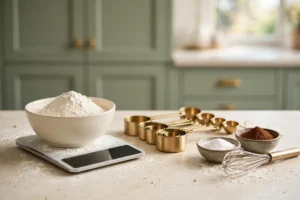
- Measuring cups and spoons: water and sweetener amounts are small and matter.
- Large bowl of lemon water: keeps cut apples from browning while you work.
- Airtight jars or containers: stores the sauce.
-
What Ingredients Do You Need?
Use firm, fresh apples with no soft spots, and fresh lemon juice. Choose at least two varieties.
Honey is not safe for infants under 1 year old, so use sugar if the sauce is for a baby.
Step by Step Process
Prepare the Apples
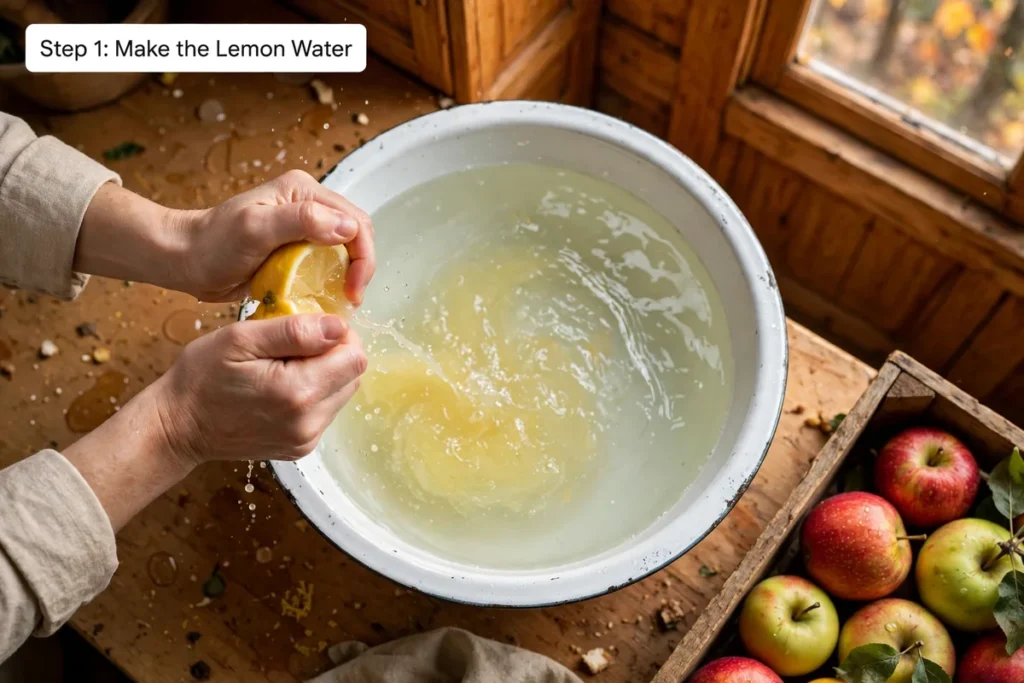
Step 1. Fill a large bowl with cold water and stir in 1 tablespoon of the lemon juice. Cut apples brown within minutes, and the lemon water slows the browning while you work. The acid lowers the pH enough to slow the enzymes that cause the color change.
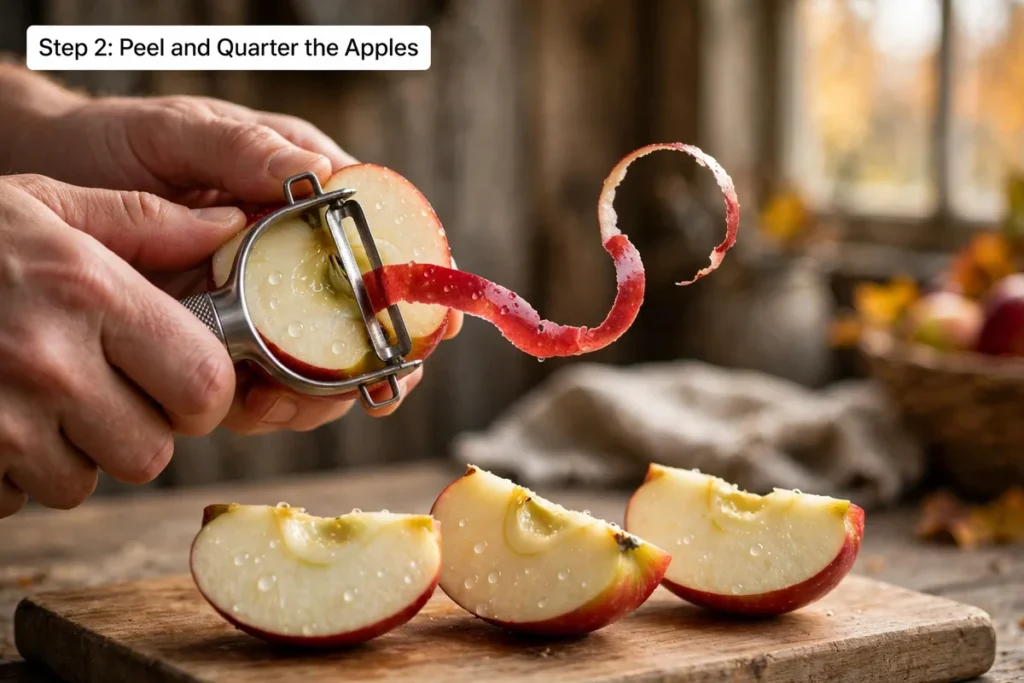
Step 2. Wash the apples, peel them if you want a smooth, pale sauce, and cut them into quarters. Cut out the cores and seeds. Washing removes surface wax and dirt, and peeling removes the skin, which adds fiber and color but can leave tough pieces if you plan to mash rather than blend.
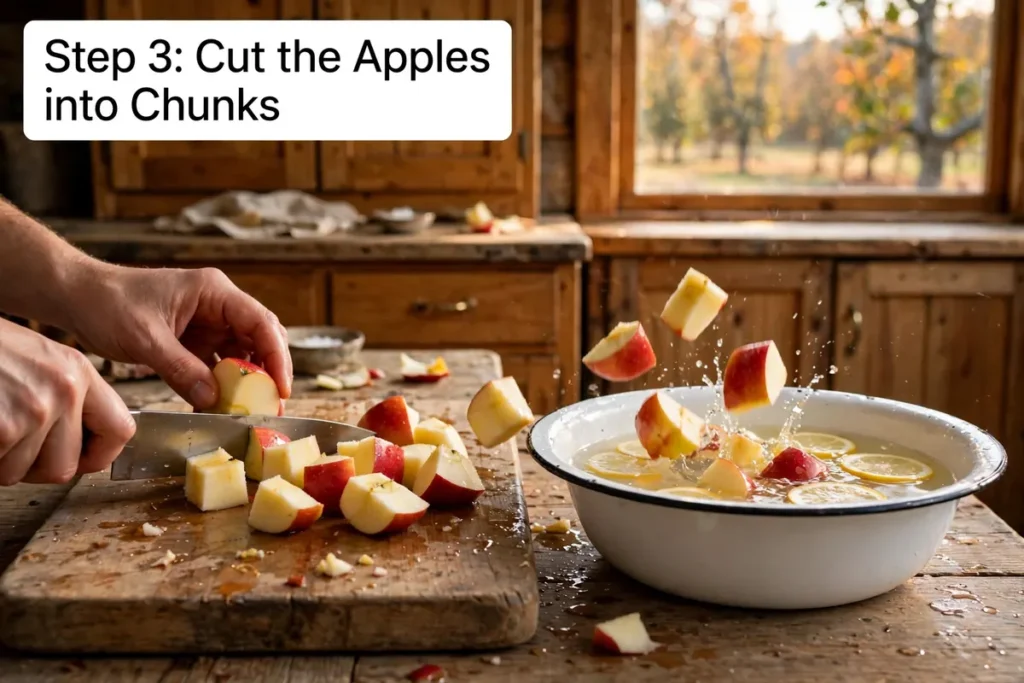
Step 3. Cut each quarter into 1-inch chunks and drop them into the lemon water. Chunks of even size cook at the same rate, so no piece stays hard while others dissolve. Smaller pieces cook faster, but do not cut them smaller than 1/2 inch, or they scorch.
Cook the Apples
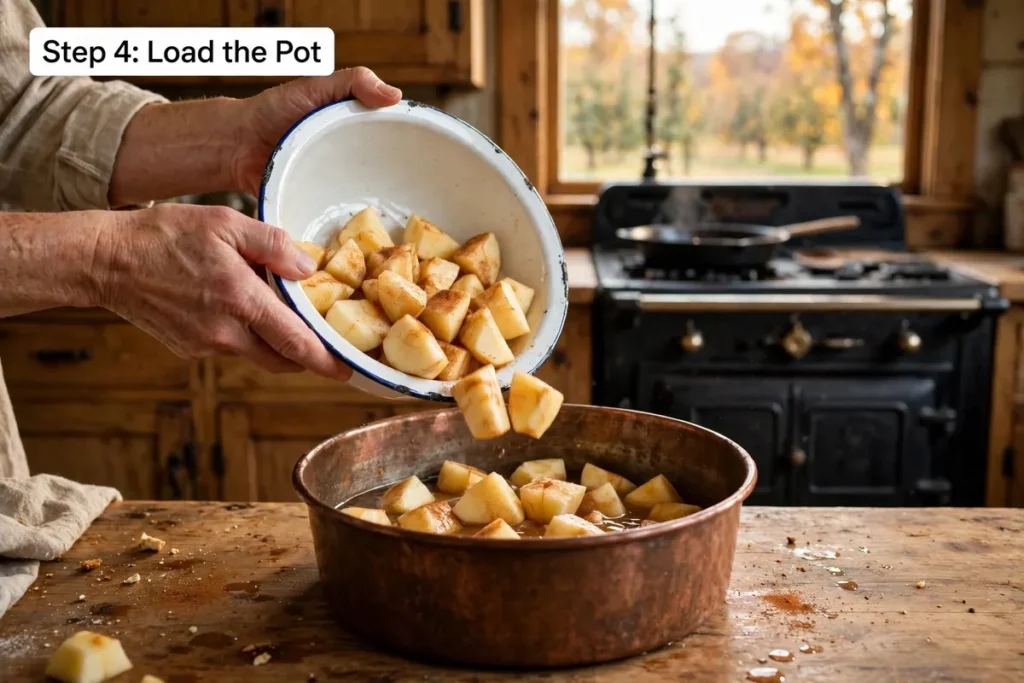
Step 4. Drain the apples and place them in the pot with the 1/2 cup of water, 1/2 tablespoon of the lemon juice, the cinnamon stick (if using ground cinnamon, stir it in at Step 9), and the salt.. A little water creates steam at the start so the apples do not stick before they release their own juice. The salt makes the apples taste sweeter and fruitier.
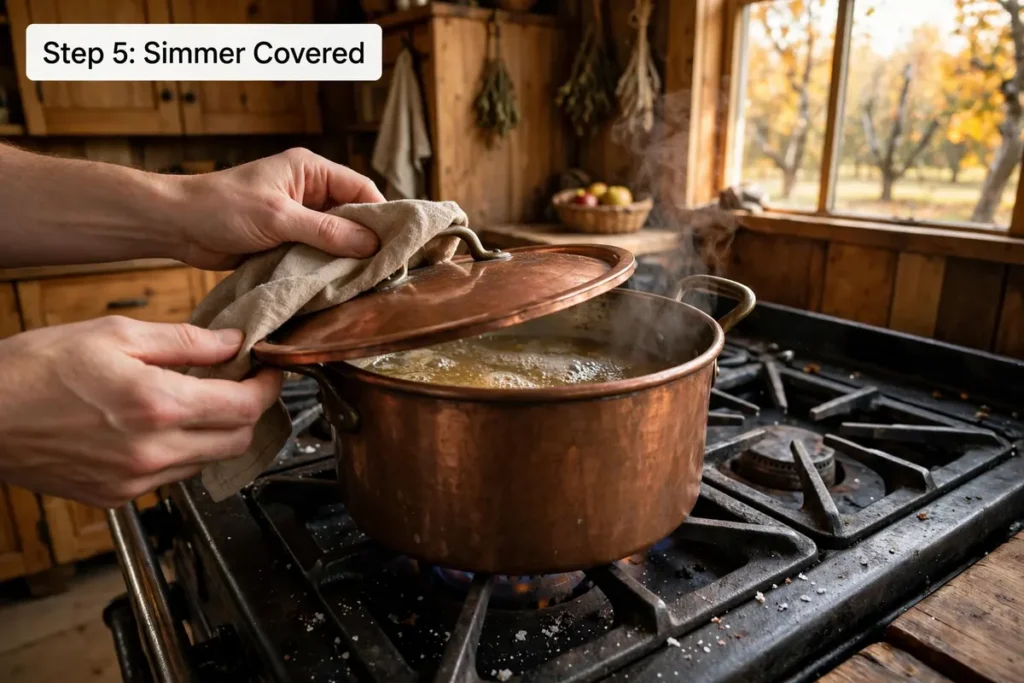
Step 5. Cover the pot, bring it to a gentle simmer over medium heat, then immediately reduce the heat to low and cook for 10 minutes, stirring once or twice. Covered cooking traps steam, which softens the apples quickly and keeps them moist. Apples release liquid as their cell walls break down, so the pot fills with juice.
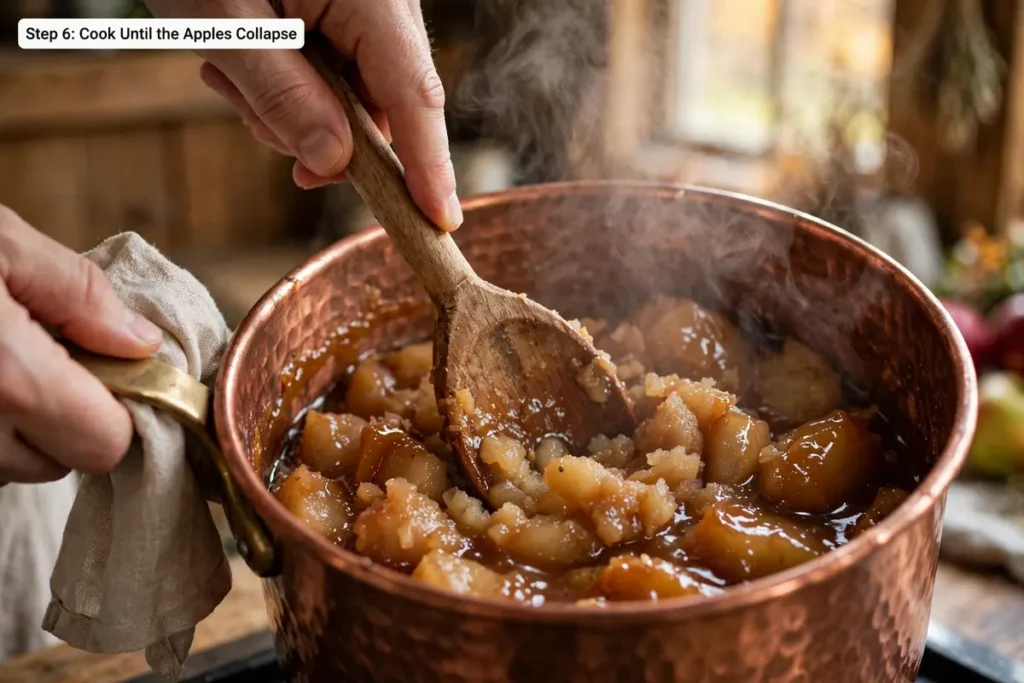
Step 6. Uncover, stir, and cook 8 to 12 more minutes, until the apples fall apart when pressed with a spoon. As apples cook, pectin, the fiber that holds the cell walls together, softens and dissolves, which thickens the sauce. Uncovering lets extra water evaporate.
Mash and Season
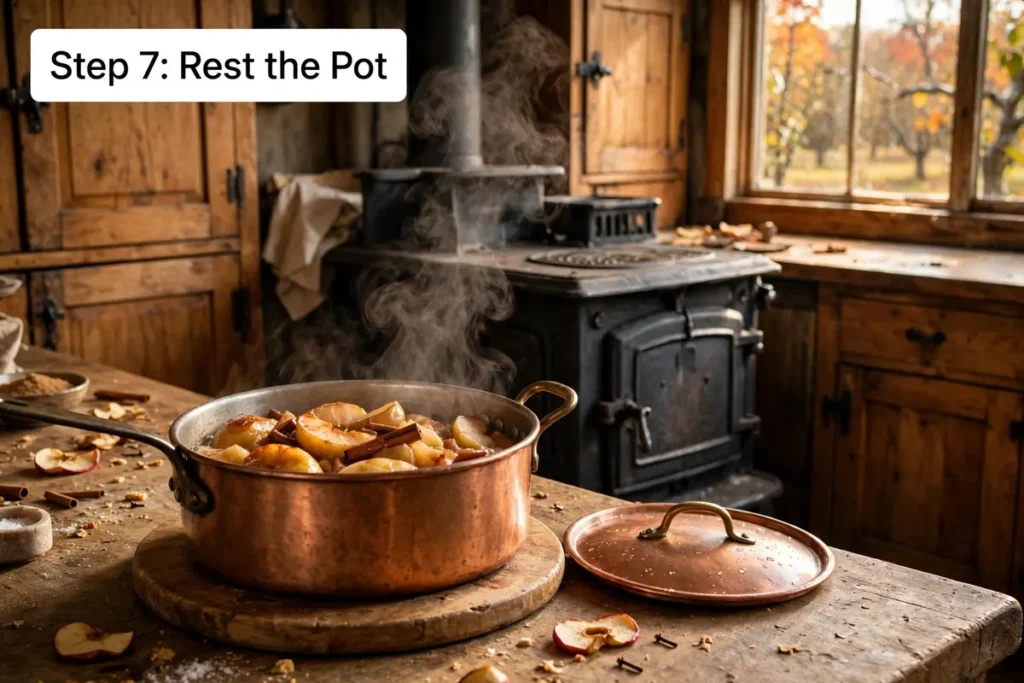
Step 7. Take the pot off the heat and let it sit 5 minutes. Steam rises quickly from hot applesauce, and a short rest makes it safer to handle. The apples also continue to soften slightly in the residual heat.
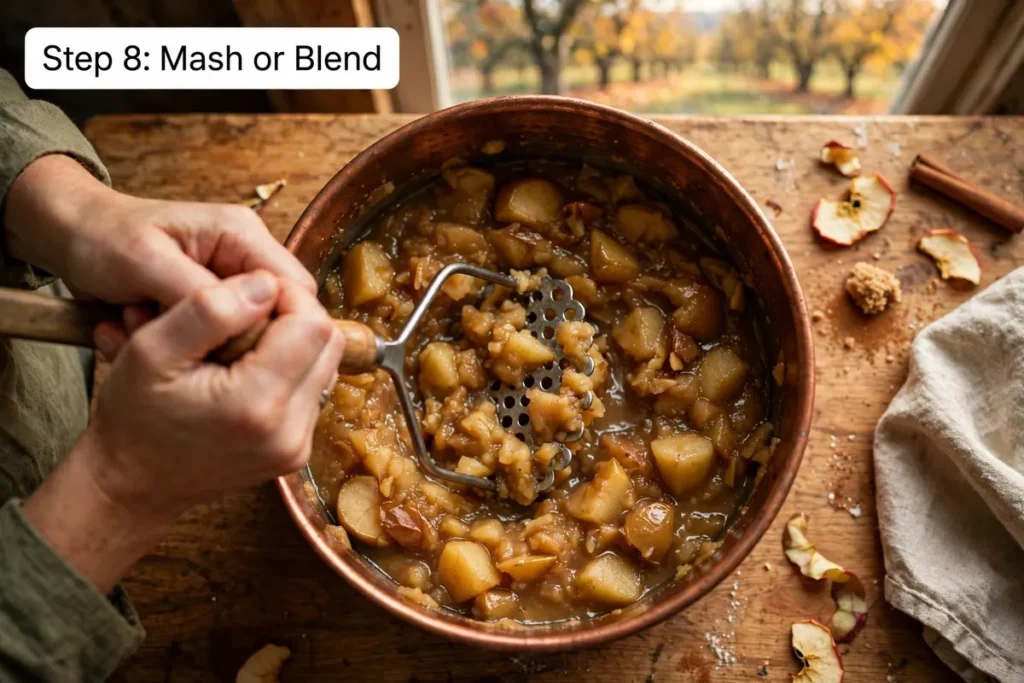
Step 8. Remove the cinnamon stick. For chunky sauce, mash with a potato masher until you reach the texture you like. For smooth sauce, pulse an immersion blender briefly for 15 to 20 seconds (avoid continuous blending, which can make the texture gluey), or run the apples through a food mill. A masher leaves pieces, a blender makes a puree, and a food mill removes skins and seeds while it purees.
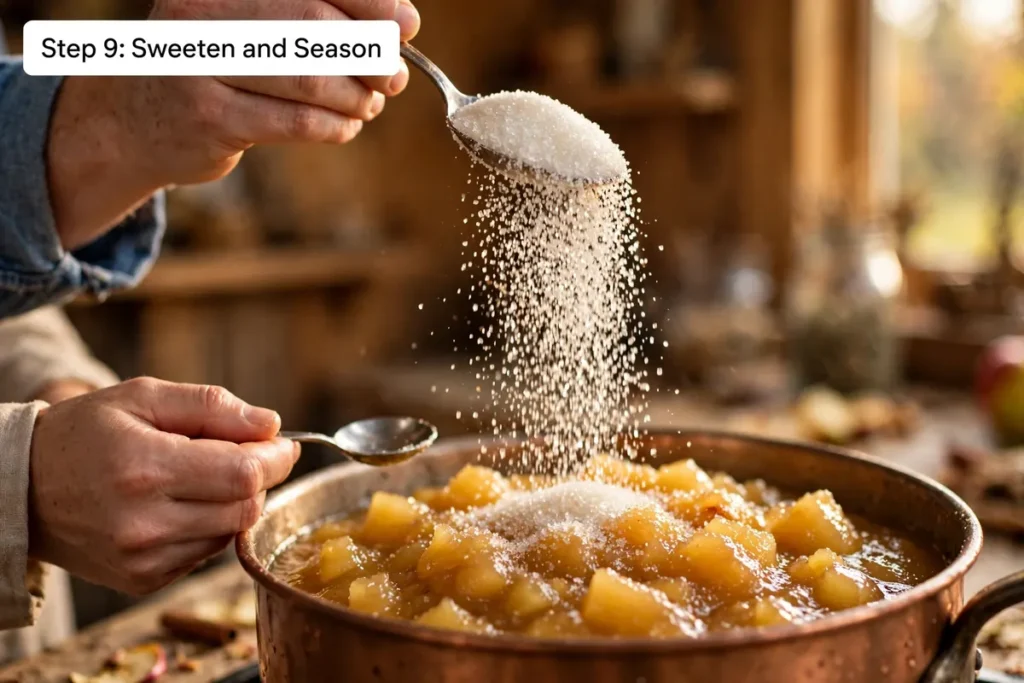
Step 9. Taste the sauce, then stir in the sugar or honey a spoonful at a time if it needs sweetness, along with the remaining 1/2 tablespoon of lemon juice, the vanilla, and ground cinnamon (if not using a stick). Sweetness tastes stronger when the sauce is hot and weaker when it is cold, so season slightly sweeter than you want. Add sweetener and fresh lemon last to balance the apples’ natural sugar and brighten the flavor.
Cool and Store
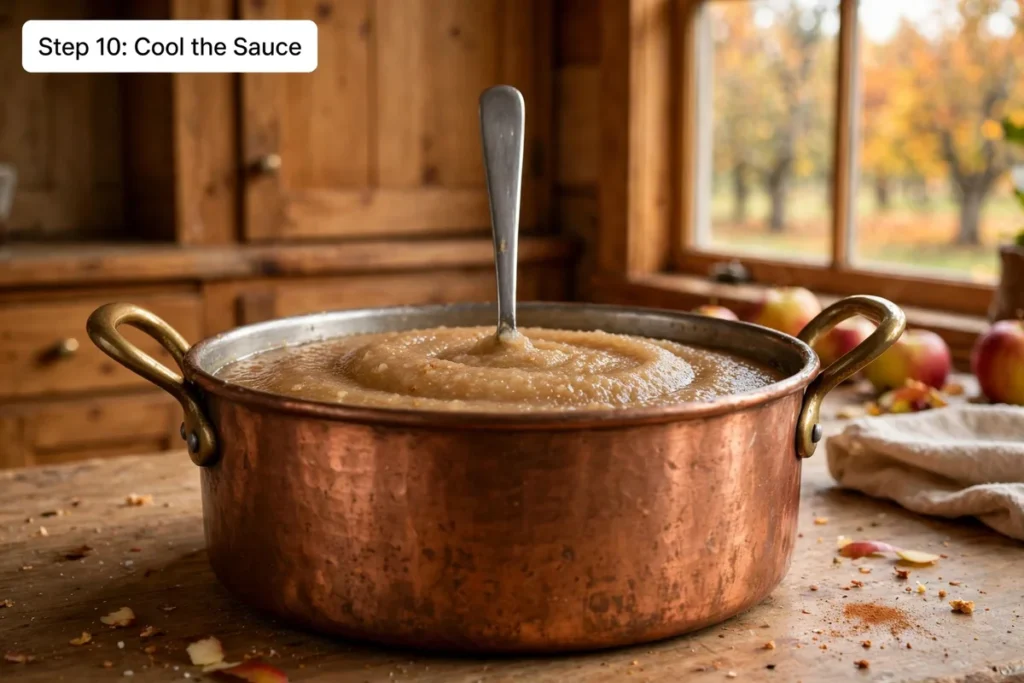
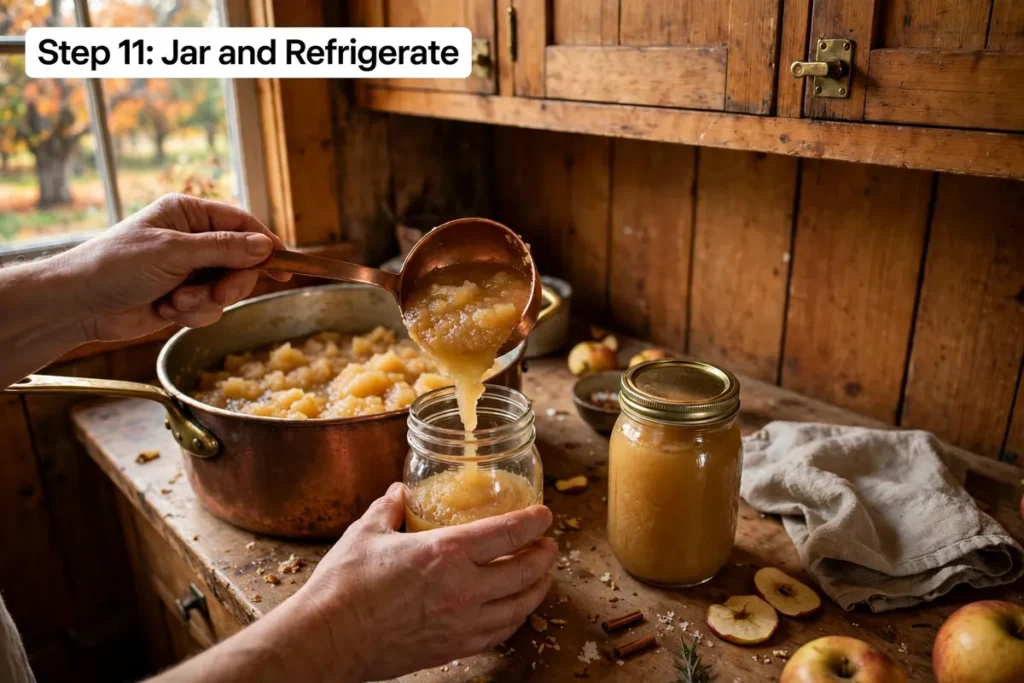
Step 10. Let the sauce cool for 30 minutes at room temperature, then transfer it to clean jars or containers. Cooling in the pot lets the sauce thicken as pectin sets, and it prevents steam from condensing in a closed jar.
Step 11. Refrigerate within 2 hours of cooking, and serve warm, room temperature, or cold. Cold sauce tastes less sweet, so adjust with a squeeze of lemon if needed. Leave 1 inch of space at the top of containers for freezing.
Why Does the Mix of Apples Matter?
Seven points explain the method.
Tart apples bring acid. Malic acid gives the sauce brightness and balance, so it does not taste only sweet.
Sweet apples bring sugar. Fructose, glucose, and sucrose give natural sweetness that makes added sugar unnecessary.
Pectin sets the body. Apples are rich in pectin, and cooking dissolves it into the liquid, which thickens the sauce as it cools. Tart, firm apples hold more pectin than very ripe, soft ones.
Variety changes texture. McIntosh and Golden Delicious break down fast into a smooth sauce, and firmer varieties such as Granny Smith and Honeycrisp keep some structure.
Steam cooks without scorching. A small amount of water produces steam under the lid, which softens apples without burning them.
Browning needs air and enzymes. Raw apple browns when enzymes meet oxygen, and heat and acid stop the enzymes. Lemon juice protects the color of the cut apples, and cooking sets it.
Salt lifts sweetness. A tiny pinch makes sweet and fruity flavors taste stronger without making the sauce salty.
The sequence follows: protect the cut apples, cook covered with little water, uncover to thicken, rest, mash, sweeten last, and cool.
How Does Applesauce Compare to Similar Foods?
Applesauce is the quickest of these and the most flexible in cooking and baking.
What Variations Can You Make?
Cinnamon Applesauce
Use 2 cinnamon sticks in Step 4 and stir in 1/2 teaspoon of ground cinnamon at the end for extra warmth.
Chunky Applesauce
Use a potato masher and leave about a quarter of the apples in small pieces. Chunky sauce feels more like a fruit side dish, and it holds up better as a topping for pancakes.
Unsweetened Applesauce
Skip the sugar and use sweet apples such as Fuji, Gala, and Honeycrisp, with a splash of lemon. This is the version to use in baking, since the recipe controls the sugar.
Strawberry Applesauce
Add 1 cup (150g) of chopped strawberries to the pot in Step 4. Strawberries add color and a fresh berry flavor, and they release more liquid, so reduce the water to 1/4 cup.
Pear Applesauce
Replace 3 apples with 3 ripe pears. Pears are softer and sweeter, so the sauce is smoother and less tart. Skip added sugar.
Spiced Fall Applesauce
Add 1/4 teaspoon of nutmeg, 1/8 teaspoon of ground cloves, and 1/4 teaspoon of ground ginger. These warm spices pair with cinnamon and suit autumn.
Slow Cooker Applesauce
Place the apples, 1/4 cup of water, lemon, and spices in a slow cooker and cook on low for 4 to 6 hours. The slow, gentle heat gives deep apple flavor with little attention. Mash at the end.
What Dietary Adjustments Can You Make?
- Vegan: vegan as written. Use sugar, not honey, if you avoid honey.
- Gluten-free: gluten-free as written.
- Nut-free: nut-free as written.
- Lower sugar: skip the sugar and use sweet apples.
- Halal: no alcohol or pork. Use alcohol-free vanilla.
- Baby-friendly: skip the sugar, honey, and salt, and blend until completely smooth.
Why Is My Applesauce Watery, Bland, or Brown?
Watery applesauce is a water problem, and bland applesauce is an apple choice problem.
How Do You Store, Freeze, and Can It?
Serve warm with Chickpea Tacos on the side, or stir into oatmeal.
Scaling
Larger batches take 5 to 10 minutes longer. Use a wide pot so the apples cook in an even layer.
Nutritional Information
Per serving: 1/2 cup, with 2 tablespoons of sugar in the whole batch. Estimates based on USDA FoodData Central values.
Frequently Asked Questions
Applesauce is a simple, old European dish of cooked apples, and the first print citation of its name dates to 1739. Mix tart and sweet apples, cook them covered in little water, mash, and sweeten last, because that order gives a thick, bright sauce instead of a watery, flat one. Save this recipe for your next batch of apples.