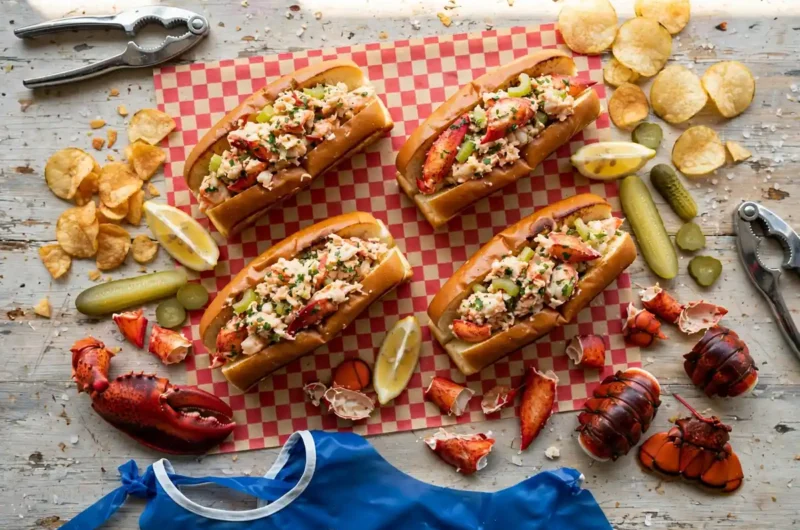
The lobster roll recipe that works starts with one decision: cook the lobster gently, chill it, and dress it lightly so the sweet meat stays the star. Lobster is expensive and delicate, so technique matters more than ingredients. Follow the steps below and you will serve a cold or warm lobster roll in a golden, buttery bun in 40 minutes.
Lobster meat is made of muscle proteins that tighten as they heat. Cooked to about 140°F (60°C), the meat turns opaque and stays tender, while pushing it far past that squeezes out moisture and makes it tough and rubbery. The shell color is the practical signal, since it turns bright red when cooked.
The lobster roll is a New England dish, tied closely to Maine and Connecticut, and it comes in two main styles. The Maine style is cold lobster with mayonnaise, and the Connecticut style is warm lobster with melted butter. Lobster is shellfish, which is considered halal by some schools of thought and not others, so check with your own scholar or tradition.
What Is a Lobster Roll?
A lobster roll is chunks of cooked lobster meat served in a split, toasted, buttered bun, either dressed cold with mayonnaise or warm with butter. Here is how the two styles differ:
- Maine style: cold lobster tossed in a little mayonnaise, with celery, lemon, and chives.
- Connecticut style: warm lobster tossed in melted butter, with no mayonnaise.
- Lobster salad sandwich: uses far more filler and dressing, and less lobster.
- Shrimp roll: uses shrimp, which is milder and less sweet.
Which Lobster Should You Buy?
Buy live Maine lobsters of 1 1/4 to 1 1/2 lb each. You need about 1 1/4 lb of live lobster per roll for 4 to 5 oz of picked meat, including claw and knuckle meat. Frozen cooked lobster meat also works when live lobster is not available.
How Much Lobster Meat Per Roll?
Plan on 4 to 5 oz (115 to 140g) of picked meat per roll. A generous roll is mostly lobster, with only enough dressing to coat it.
Cold or Warm: Which Style Is Better?
It is a matter of taste. Cold Maine style is crisp and refreshing, with a clean lobster flavor. Warm Connecticut style is rich and buttery. This recipe covers both, so you can choose.
What Is the Best Bun?
Use a New England split-top bun. Its flat sides toast golden in butter and give a crisp, buttery outside with a soft inside. Brioche hot dog buns are a good substitute. Avoid hard rolls, which crack when you bite.
Can You Use Frozen Lobster?
Yes. Thaw it overnight in the refrigerator, drain it, and pat it dry. Frozen cooked meat is already tender, so only warm it gently for the warm version. Do not cook it again.
How Do You Pick Lobster Meat Without Breaking It?
Twist off the claws and tail, crack the claws, and slide the meat out whole. Chill the lobster first, because cold meat releases cleanly. Remove the dark vein along the tail before chopping.
How Long Do You Cook the Lobster?
Steam a 1 1/4 lb lobster for 10 to 12 minutes, until the shell is bright red and the tail curls tightly. Boiling works too, though steaming gives sweeter, less waterlogged meat.
What Equipment Do You Need?
- Large pot with a lid and steamer rack: holds the lobsters over a few inches of water.
- Tongs: move hot lobsters without piercing them.
- Large bowl of ice water: stops the cooking.
- Lobster crackers or kitchen shears: open the claws and tail.
- Small pick or fork: removes meat from the claw.
- Medium mixing bowl: holds the filling.
- Large skillet or griddle: toasts the buns.
- Sharp knife and cutting board: chops the meat into chunks.
- Instant-read thermometer: checks the water and the warmed meat.
What Ingredients Do You Need?
Use cold, fresh lobster and a good mayonnaise. Use real butter for the buns. Use fresh lemon and chives, which are the brightest part of the dish.
For the Lobster
For the Maine-Style Filling
For the Connecticut-Style Filling
For the Buns
Step by Step Process
Set Up the Station and Cook the Lobster
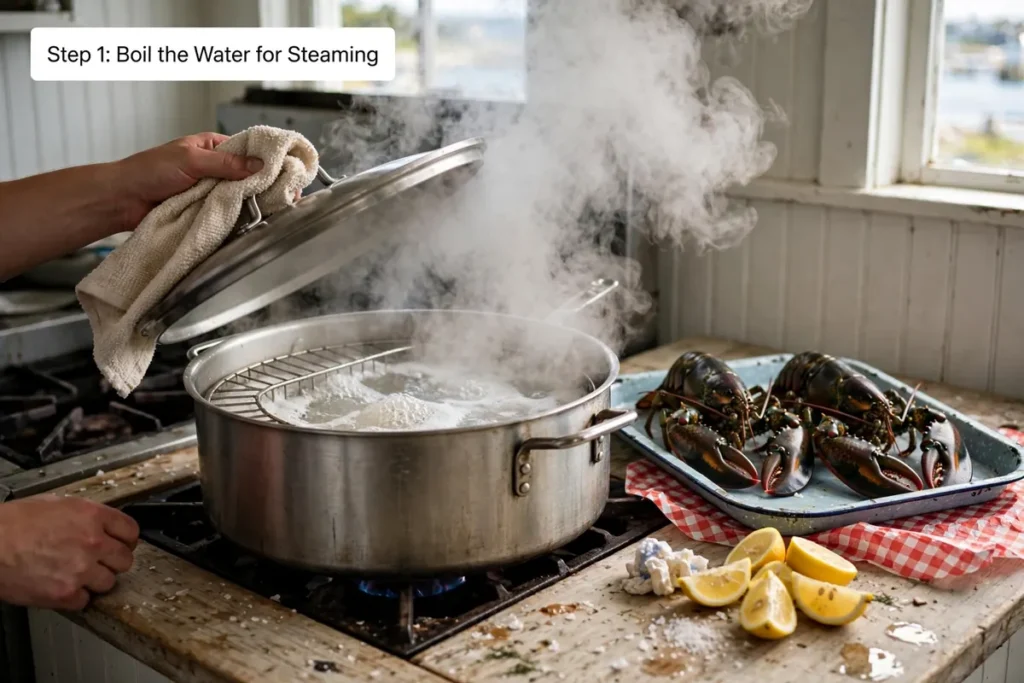
Step 1. Fill a 12-quart pot with 2 inches (5 cm) of water, add 1 tablespoon of sea salt, set a steamer rack inside, and bring it to a rolling boil over high heat. Set a large bowl of ice water and a rimmed sheet pan beside the stove before the lobsters go in. Steaming cooks lobster in moist heat without soaking the meat, so the claws and tail stay sweet instead of waterlogged. A full head of steam from the start means the shell heats at once and the meat cooks evenly.
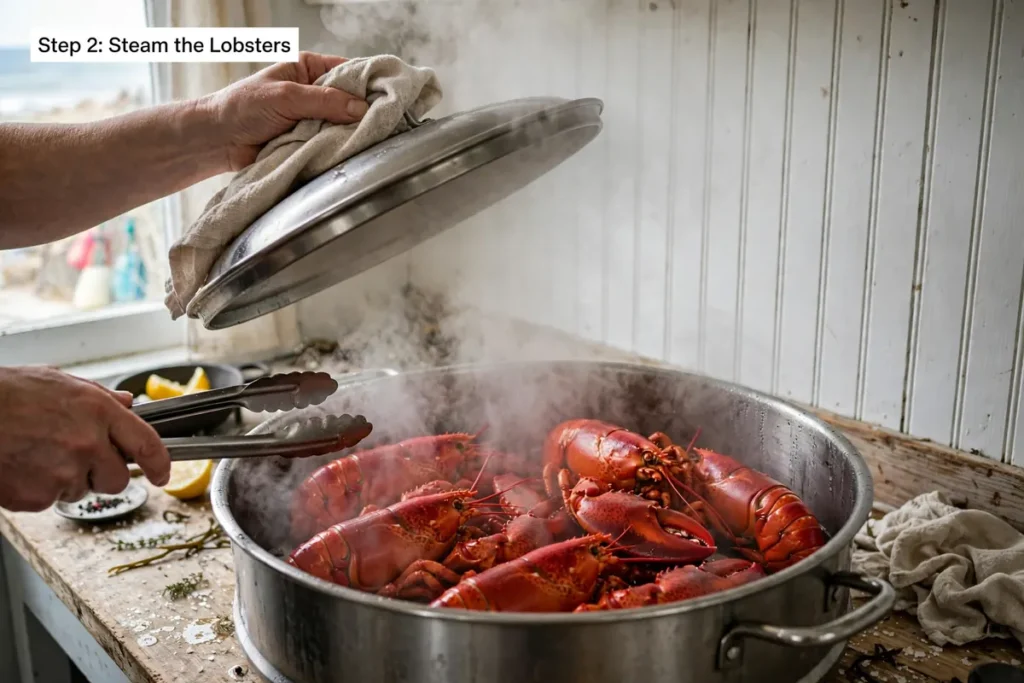
Step 2. Lay the live lobsters headfirst on the rack, cover the pot tightly, and steam 10 to 12 minutes for 1 1/4 lb lobsters, or 12 to 14 minutes for 1 1/2 lb. Add 2 minutes per extra 1/4 lb. Placing them headfirst is the fastest and most humane method, and a tight lid keeps the steam in. Lobster meat sets as its muscle proteins tighten with heat, and the target is meat that is just opaque, around 140°F (60°C).
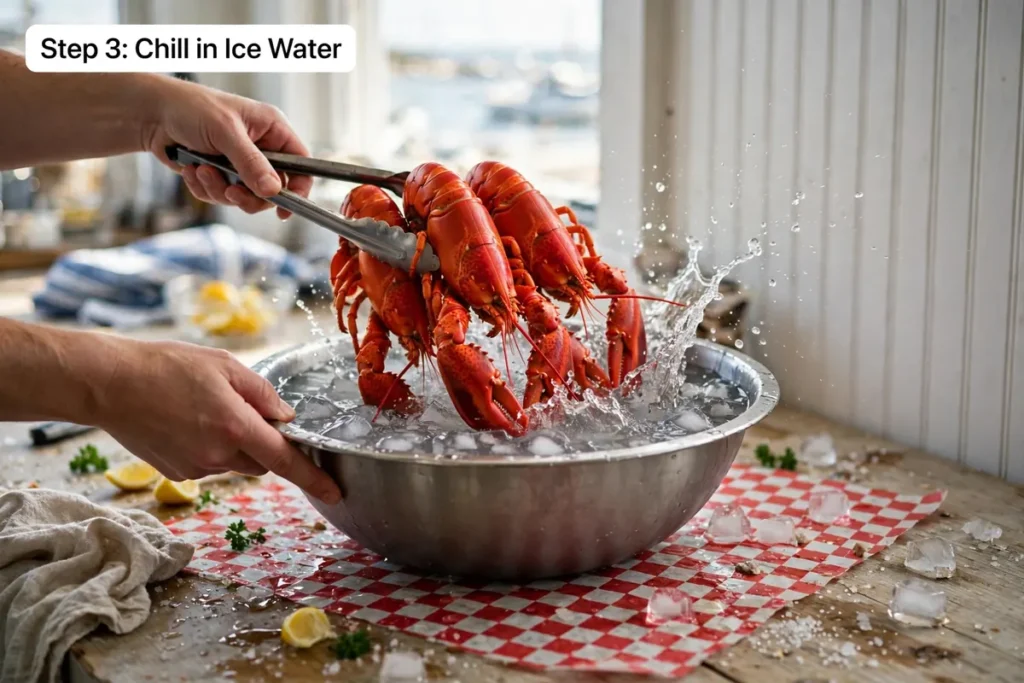
Step 3. Move the lobsters straight into the ice water with tongs and chill them for 5 minutes, then lay them on the sheet pan. Cold water stops the cooking so residual heat does not carry the meat from tender to tough. Chilling also firms the meat, which makes it release from the shell in clean, whole pieces.
Pick the Meat
Step 4. Twist the claws and knuckles off the body, then twist the tail away. Crack each claw with the crackers or the back of a heavy knife, and slide the meat out in one piece. Claw meat is the sweetest and most tender part of the lobster, and one whole claw piece makes a showpiece topping.
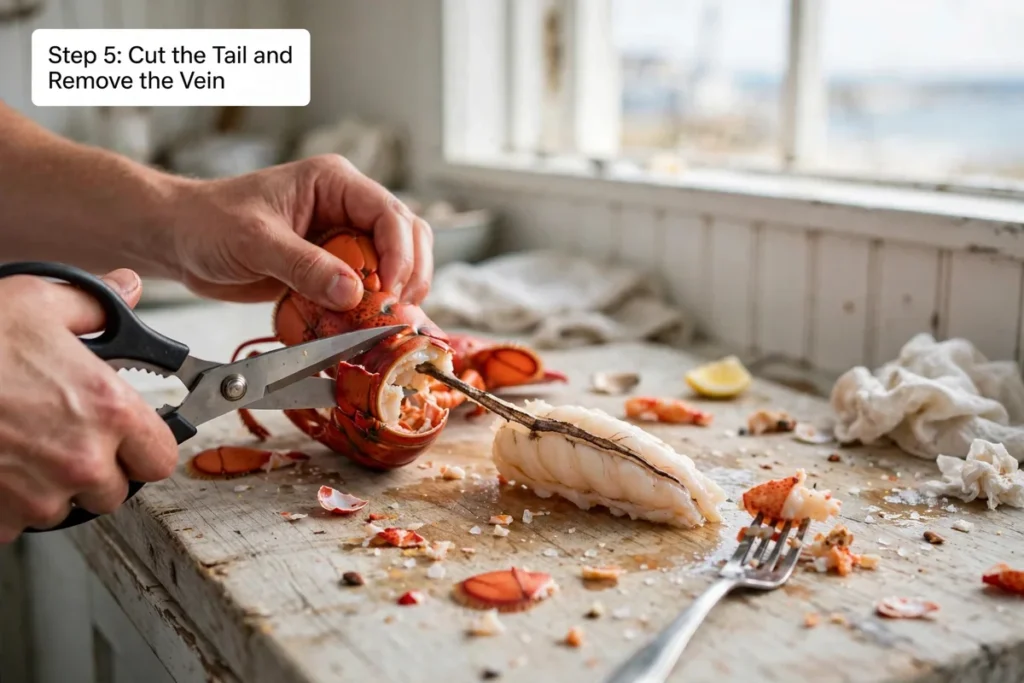
Step 5. Cut down the underside of the tail with kitchen shears and pull the meat out in one piece. Remove the dark vein along the top of the tail, which is the digestive tract and tastes gritty. Pick the knuckles with a small fork or pick, since they hold some of the sweetest meat.
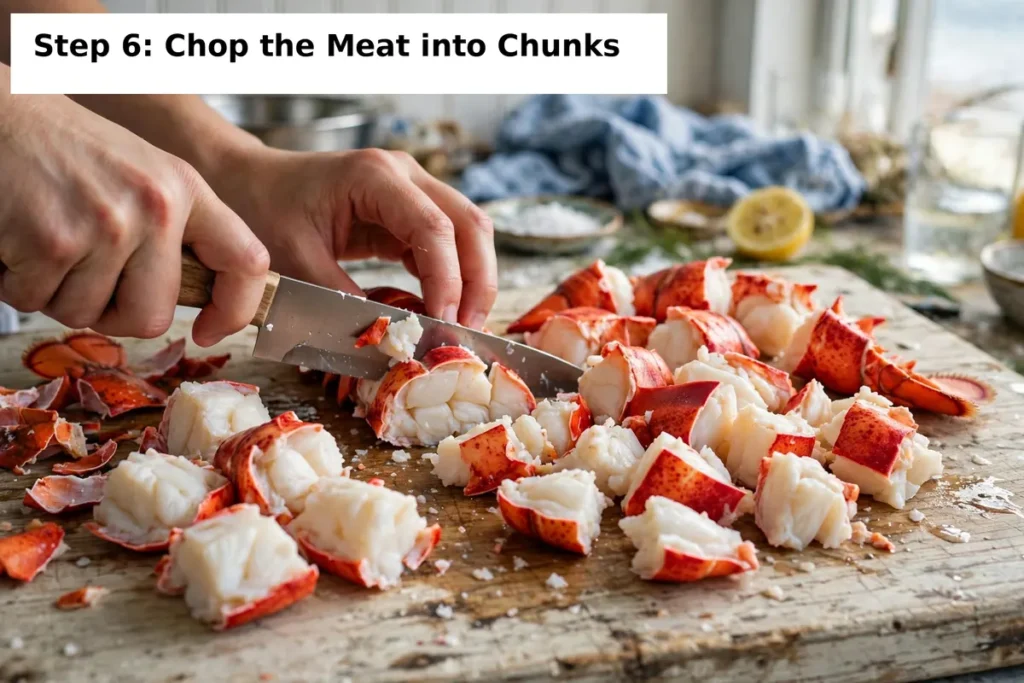
Step 6. Chop the meat into 3/4-inch (2 cm) chunks and set aside a few whole claw pieces for the top. Large chunks look generous and stay juicy. Tiny pieces turn mushy and soak up too much dressing, which hides the lobster flavor.
Prepare the Filling
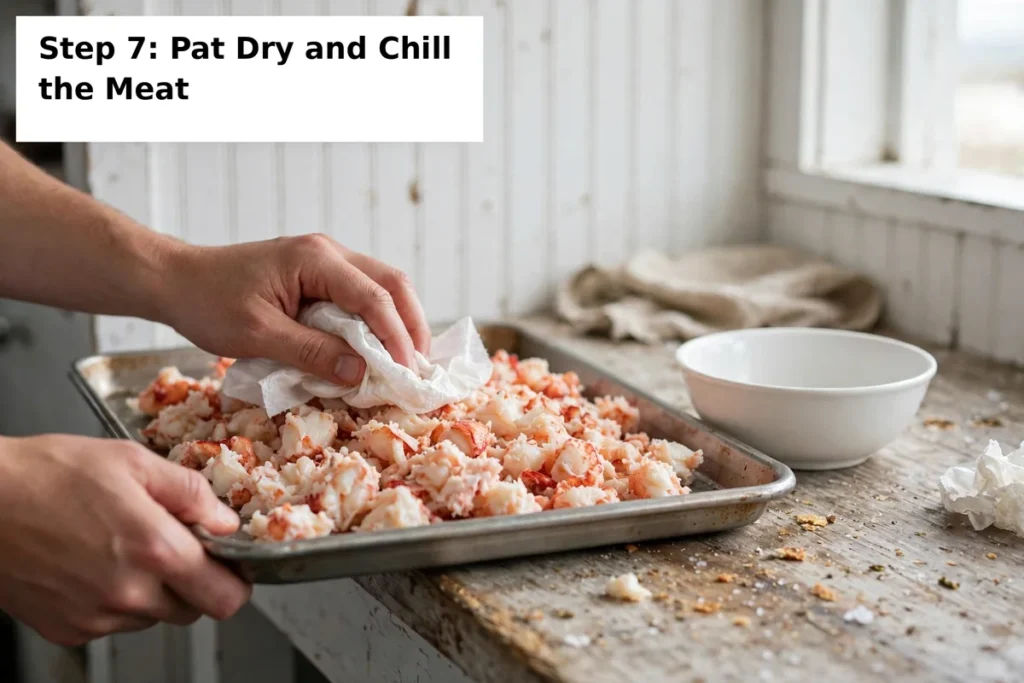
Step 7. Pat the meat dry on a paper towel and refrigerate it uncovered on a plate for 30 minutes. Water clinging to the meat thins the dressing and makes the filling watery and the bun soggy. Chilling also firms the chunks so they hold together when you fold in the dressing.
Step 8. For the Maine style, fold the chilled meat with the mayonnaise, celery, lemon juice, chives, salt, and pepper using a rubber spatula until just coated. Use only enough mayonnaise to bind, about 3 tablespoons per pound. Too much dressing masks the sweetness, and lemon brightens the rich meat with acid.
Toast the Buns
Step 9. For the Connecticut style, melt the butter in a small saucepan over low heat, add the lobster, and warm it 1 to 2 minutes, stirring gently, until just warm. The lobster is already cooked, so you are only warming it. High heat shrinks the proteins and makes the meat tough.
Step 10. Spread softened butter in a thin, even layer on the flat outer sides of each bun. Butter on the outside browns in the pan, and the milk solids turn nutty and golden. The butter layer also slows moisture from the filling soaking in.
Assemble and Serve
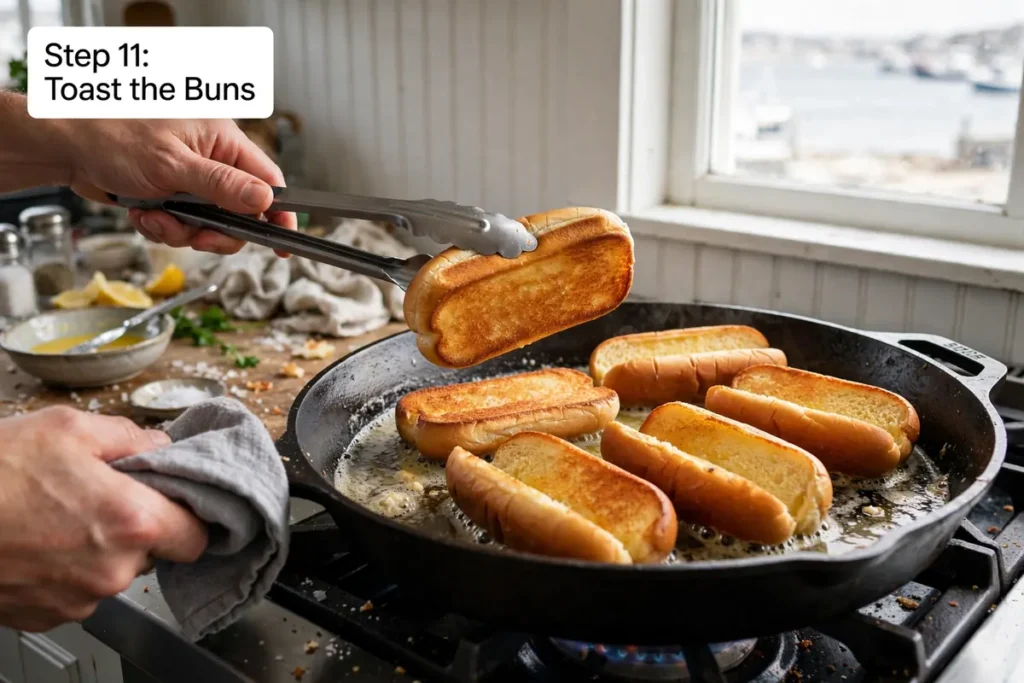
Step 11. Toast the buns in a skillet over medium heat for 2 to 3 minutes per side, until deep golden brown. Medium heat browns the sugars and milk solids without burning the butter. The crisp exterior stays firm under the filling, and the inside stays soft.
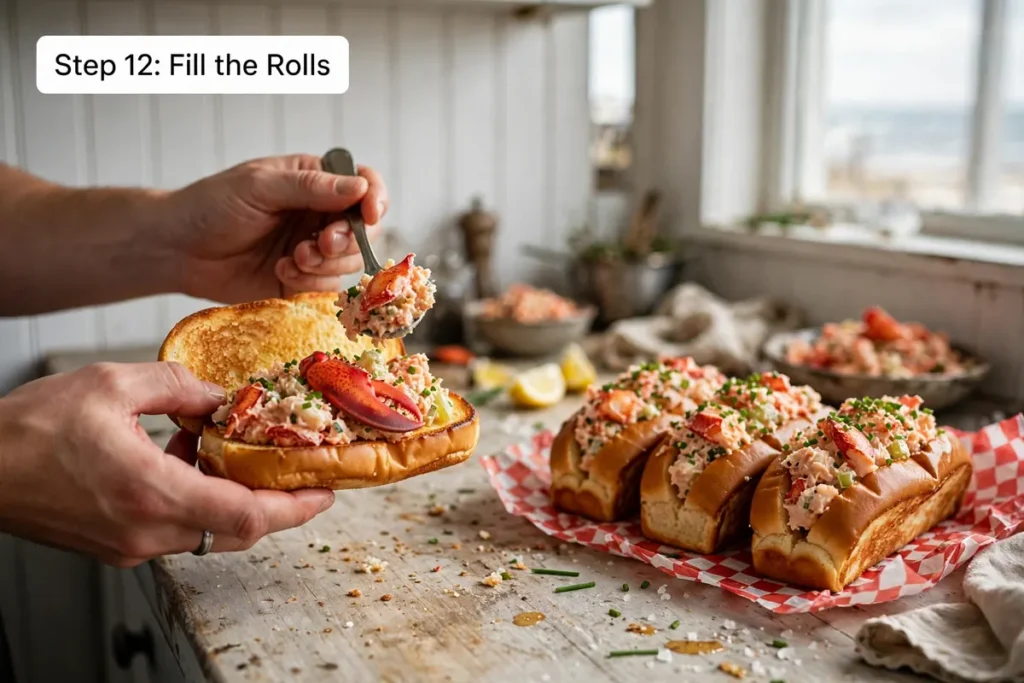
Step 12. Open each bun and mound 4 to 5 oz (115 to 140g) of filling into it, then top with a whole claw piece. Sprinkle with chives and a pinch of paprika. Assemble at the last moment, because the bun softens quickly under a wet filling.
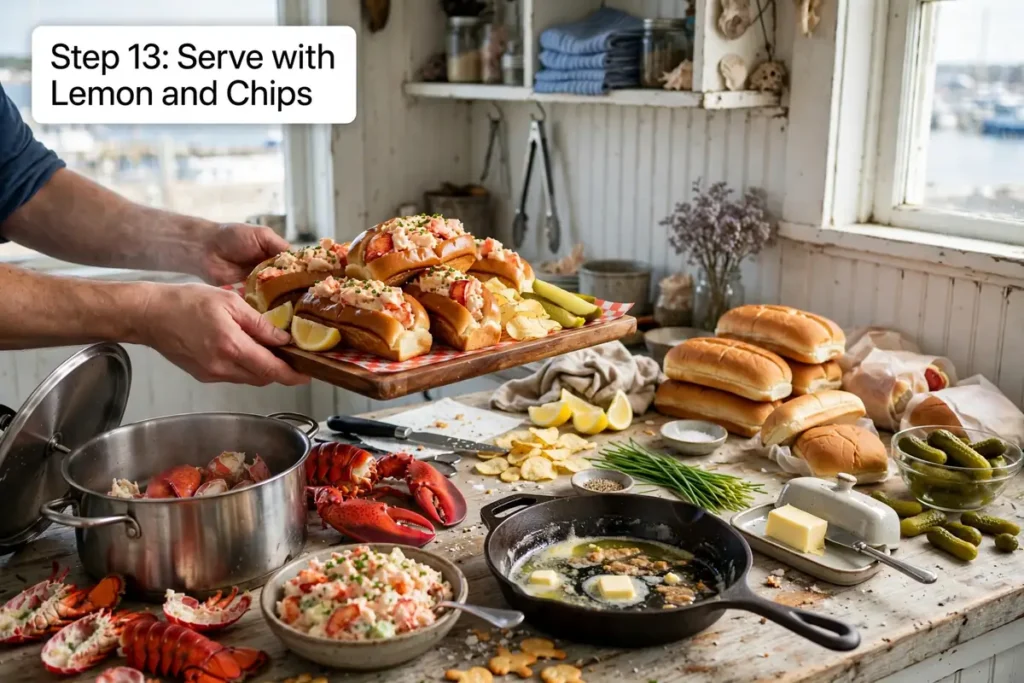
Step 13. Serve right away with lemon wedges, kettle chips, and pickles. A squeeze of lemon brightens the sweet, rich lobster, and the chips and pickles add crunch and tang beside the soft filling.
Why Does Gentle Cooking Make Better Lobster?
- Heat tightens the protein. Lobster muscle turns opaque and tender at moderate heat, but extra heat squeezes out water and makes it rubbery.
- Steam is gentle. It cooks evenly without soaking the meat in water.
- Ice water stops cooking. It prevents carryover heat from overcooking the meat.
- Chilled meat picks cleanly. Firm, cold meat releases from the shell whole.
- Dry meat holds dressing. Water on the surface thins mayonnaise and makes a soggy filling.
- Fat carries flavor. Butter and mayonnaise coat the meat, so its sweetness lingers on the tongue.
- Butter on the bun adds crispness. The milk solids brown and form a barrier against moisture.
The order follows: steam gently, chill fast, pick carefully, dry well, dress lightly, toast the bun, and assemble last.
How Does a Lobster Roll Compare to Similar Sandwiches?
The lobster roll is the most expensive and the simplest in method.
What Variations Can You Make?
Classic Maine Lobster Roll
Use the Maine filling as written, cold, in a buttered, toasted bun. It is the most common style and the most refreshing in summer.
Connecticut Warm Butter Lobster Roll
Use the Connecticut filling with melted butter. Warm butter coats the meat and tastes rich. Serve it hot, and add a squeeze of lemon.
Lemon Herb Lobster Roll
Add 1 teaspoon of lemon zest and 1 tablespoon of chopped tarragon to the Maine filling. Tarragon adds a gentle anise note that pairs well with shellfish.
Spicy Lobster Roll
Stir in 1 teaspoon of hot sauce or 1/4 teaspoon of cayenne with the mayonnaise. Heat wakes up the sweetness. Add it gradually, so it does not overpower the lobster.
Lobster Roll with Avocado
Add 1/2 diced avocado to the Maine filling just before assembling. Avocado adds creaminess, and lemon prevents it from browning.
Lobster Roll Slider
Use 12 mini brioche buns and 1 lb (454g) of meat. Each slider uses about 1 1/2 oz of lobster. This stretches the lobster for a crowd.
What Dietary Adjustments Can You Make?
- Gluten-free: use gluten-free split-top buns or a lettuce wrap, and check the mayonnaise label.
- Dairy-free: use olive oil in place of butter and toast the bun in oil.
- Lower-fat: use Greek yogurt in place of half the mayonnaise.
- Halal: shellfish is accepted by some schools of thought and not others, so check with your own scholar or tradition. If you use mayonnaise, check it for alcohol-based flavorings.
- Shellfish allergy: do not serve this to anyone with a shellfish allergy.
Why Is My Lobster Roll Rubbery, Soggy, or Bland?
Rubbery lobster is a cooking-time problem, and soggy buns are a moisture problem.
How Do You Store, Freeze, and Reheat It?
Serve with Cacio e Pepe Pasta for a special dinner.
Scaling
Steam in batches for large amounts, since a crowded pot cooks unevenly.
Nutritional Information
Per serving: 1 roll with Maine filling. Estimates based on USDA FoodData Central values.
Frequently Asked Questions
A lobster roll is a New England classic of sweet, tender lobster in a buttery toasted bun. Steam the lobster gently, chill it quickly, dress it lightly, and toast the bun in butter, because that order gives tender meat and a crisp roll instead of rubbery lobster in a soggy bun. Save this recipe for your next special meal.