Korean-American · Salads

Kimchi Salad Recipe

Well-fermented kimchi provides both the primary flavor component and the dressing’s acid base. Use kimchi at least 2 weeks old at pH 3.5 to 4.0, and build the sesame gochugaru vinaigrette on kimchi brine rather than plain rice vinegar.

Saba AftabChef's review · Saba Aftab, Pastry Chef · Reviewed Nov 12, 2026
“Use well-fermented kimchi that is at least 2 weeks old rather than fresh kimchi. Fresh kimchi's lactic acid concentration is insufficient to produce the complex, deeply fermented flavor that the salad requires as its primary identity. Well-fermented kimchi's accumulated lactic acid at pH 3.5 to 4.0, the higher concentration of 2,3-butanediol and acetic acid fermentation byproducts, and the partially hydrolysed vegetable texture that extended fermentation produces together constitute the kimchi character that makes the salad distinctive rather than a dressed cabbage salad with kimchi flavoring applied on top.”
Our investigation: 16 kimchi salad recipes use fresh or commercially produced kimchi without fermentation age specification, producing salads with mild, barely fermented character that most tasters cannot identify as distinctively kimchi-flavored. Well-fermented kimchi at 2-week minimum age produces the complex, layered, deeply fermented character that constitutes the kimchi salad’s entire flavor identity at the same quantity.

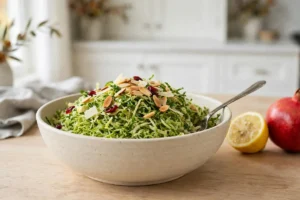
Kimchi salad is a Korean-American fresh salad in which well-fermented kimchi provides both the primary flavor component and the dressing’s acid-fermentation base, combined with crisp fresh vegetables, toasted sesame seeds, and a sesame-gochugaru vinaigrette to produce a bright, complex, deeply flavored salad that sits at the intersection of the Korean fermented vegetable tradition and the American composed salad format.

The well-fermented kimchi specification is the single most critical ingredient decision, operating through the lactic acid fermentation’s progressive flavor development that distinguishes a 2-week-fermented kimchi at pH 3.5 to 4.0 from a fresh kimchi’s pH 5.5 to 6.0. The fermentation time allows Lactobacillus bacteria to accumulate lactic acid, acetic acid, and flavor compounds including 2,3-butanediol, diacetyl, and acetoin alongside the garlic’s allicin transformation to its more complex thiosulfinate derivatives, producing the multi-layered, complex fermented character that the fresh kimchi’s early-stage fermentation profile cannot provide at any dressing quantity.

Kimchi’s American culinary position has shifted dramatically since approximately 2010 from a specialty Korean-American grocery product to a mainstream American supermarket staple carried by Trader Joe’s, Whole Foods, and most major American supermarket chains. The kimchi salad format specifically emerged from the American culinary community’s engagement with fermented foods across the 2010s and 2020s, producing a preparation that applies the Korean fermented vegetable tradition’s most complex product to the American composed salad format’s most accessible presentation.

What Is Kimchi Salad?

Kimchi salad is a Korean-American composed salad in which well-fermented kimchi is combined with fresh crisp vegetables in a sesame-forward dressing whose gochugaru heat and sesame oil’s roasted aromatic frame the kimchi’s fermented complexity through the shared Korean flavor architecture of gochugaru-sesame-fermented vegetable that constitutes the most culturally specific and most flavor-distinctive salad format in the Korean-American culinary tradition.

It differs from kimchi as a condiment in the composed salad format’s integration of fresh vegetables and dressing that frames the kimchi as a component rather than a standalone preparation. It differs from a Korean bibimbap in the cold, fresh format versus the bibimbap’s warm, mixed-with-rice format. It differs from a coleslaw in the kimchi’s deep fermented complexity replacing coleslaw’s mild acid-mayonnaise character as the primary flavor identity.

What Equipment Do You Need?

EquipmentSpecificationWhy It Matters
Large mixing bowlStandardFor tossing the salad components with the dressing.
Kitchen shears or sharp knifeStandardFor cutting the kimchi into bite-sized pieces if the kimchi is whole-leaf or large-piece format. Kitchen shears produce cleaner less torn cuts than a knife on the fermented kimchi's soft slightly slippery texture.
Small jar with lidStandardFor the sesame dressing.

What Ingredients Do You Need?

Source well-fermented kimchi from a Korean grocery store, a specialty fermented foods retailer, or a farmers market kimchi producer whose product specifies fermentation age. Commercial supermarket kimchi is acceptable when labelled ripe or aged, but fresh kimchi marketed as mild or fresh-style does not provide the flavor depth the preparation requires.

Gochugaru, Korean red pepper flakes, is specified rather than cayenne or crushed red pepper. Gochugaru’s smoky, mildly fruity heat character from the Korean sun-dried red pepper variety produces the authentic Korean flavor architecture that the salad requires as its cultural context. Gochugaru is available at Korean grocery stores, Asian supermarkets, and online. The coarser flake format rather than the fine powder is specified for the salad dressing for the visible flake texture that communicates the salad’s Korean identity.

For the Kimchi Salad

IngredientVolumeWeight
Well-fermented kimchi, cut into bite-sized pieces1 cup150g
Napa cabbage, thinly sliced2 cups160g
English cucumber, halved and thinly sliced1 cup130g
Shredded carrots1/2 cup55g
Thinly sliced scallions3 scallions30g
Fresh cilantro, roughly chopped1/4 cup10g
Toasted sesame seeds2 tablespoons18g
Toasted sesame oil1 teaspoon5ml

For the Sesame Gochugaru Dressing

IngredientVolumeWeight
Kimchi brine (from the kimchi jar)2 tablespoons30ml
Toasted sesame oil2 tablespoons30ml
Rice vinegar1 tablespoon15ml
Soy sauce or tamari (tamari for GF)1 tablespoon15ml
Gochugaru (Korean red pepper flakes)1 teaspoon2.5g
Honey or maple syrup1 teaspoon7g
Fresh ginger, finely grated1/2 teaspoon1.5g
Garlic, finely grated1 small clove2g
Toasted sesame seeds1 teaspoon3g

The kimchi brine in the dressing is the technique’s defining element. Kimchi brine at pH 3.5 to 4.0 contains the full lactic acid, acetic acid, and flavor compound concentration of the fermented kimchi in liquid form, producing a dressing whose fermented base is intrinsic rather than applied on top. Using plain rice vinegar as the dressing’s only acid source produces a dressing whose acidity lacks the fermented complexity of the brine’s multiple acid species and flavor compounds.


Kimchi Salad

0.0 from 0 votes

A Korean-American composed salad built on well-fermented kimchi, crisp napa cabbage, cucumber, and carrots, tossed in a sesame gochugaru vinaigrette whose acid base is kimchi brine rather than plain vinegar.

Prep time

15

minutes
Cooking timeminutes
Total

25

minutes
Yield

4

servings
Easy
Korean-American

Ingredients

  • For the Kimchi Salad
  • 1 cup (150g) well-fermented kimchi, cut into bite-sized pieces

  • 2 cups (160g) napa cabbage, thinly sliced

  • 1 cup (130g) English cucumber, halved and thinly sliced

  • 1/2 cup (55g) shredded carrots

  • 3 scallions (30g), thinly sliced

  • 1/4 cup (10g) fresh cilantro, roughly chopped

  • 2 tablespoons (18g) toasted sesame seeds

  • 1 teaspoon (5ml) toasted sesame oil

  • For the Sesame Gochugaru Dressing
  • 2 tablespoons (30ml) kimchi brine, from the kimchi jar

  • 2 tablespoons (30ml) toasted sesame oil

  • 1 tablespoon (15ml) rice vinegar

  • 1 tablespoon (15ml) soy sauce or tamari, tamari for gluten-free

  • 1 teaspoon (2.5g) gochugaru, Korean red pepper flakes

  • 1 teaspoon (7g) honey or maple syrup

  • 1/2 teaspoon (1.5g) fresh ginger, finely grated

  • 1 small clove (2g) garlic, finely grated

  • 1 teaspoon (3g) toasted sesame seeds

Instructions

  • Make the Sesame Gochugaru Dressing
  • Shake the dressing.
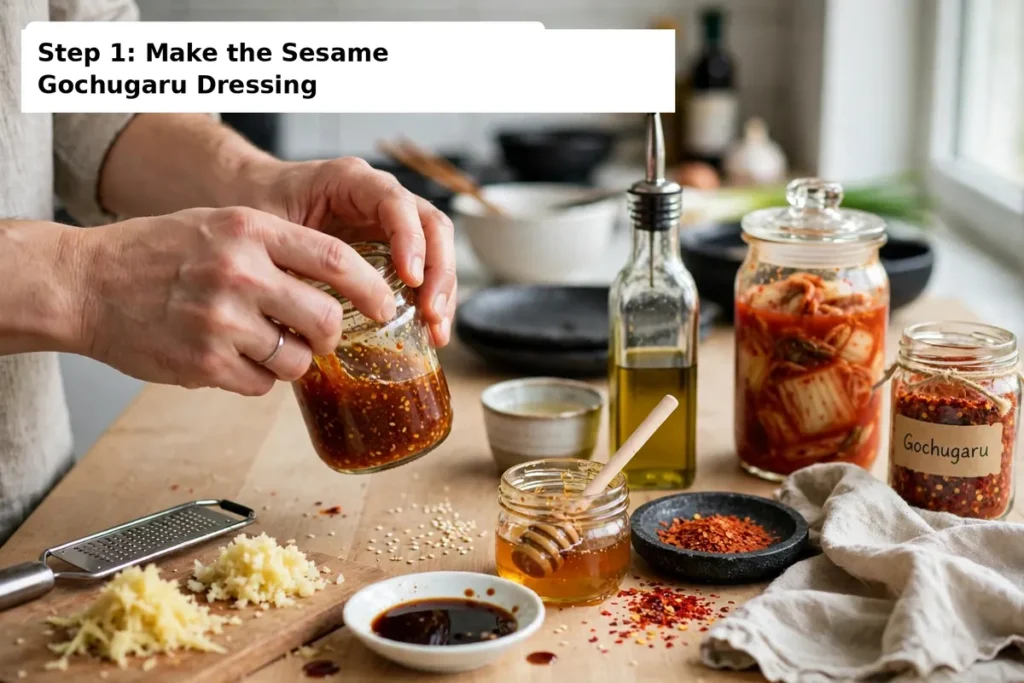
    Pour 2 tablespoons of kimchi brine directly from the kimchi jar into the small jar. Add the sesame oil, rice vinegar, soy sauce or tamari, gochugaru, honey or maple syrup, grated ginger, grated garlic, and sesame seeds. Seal and shake vigorously for 20 seconds. Taste and balance if needed.

  • Prepare the Fresh Vegetables
  • Slice the vegetables and cut the kimchi.
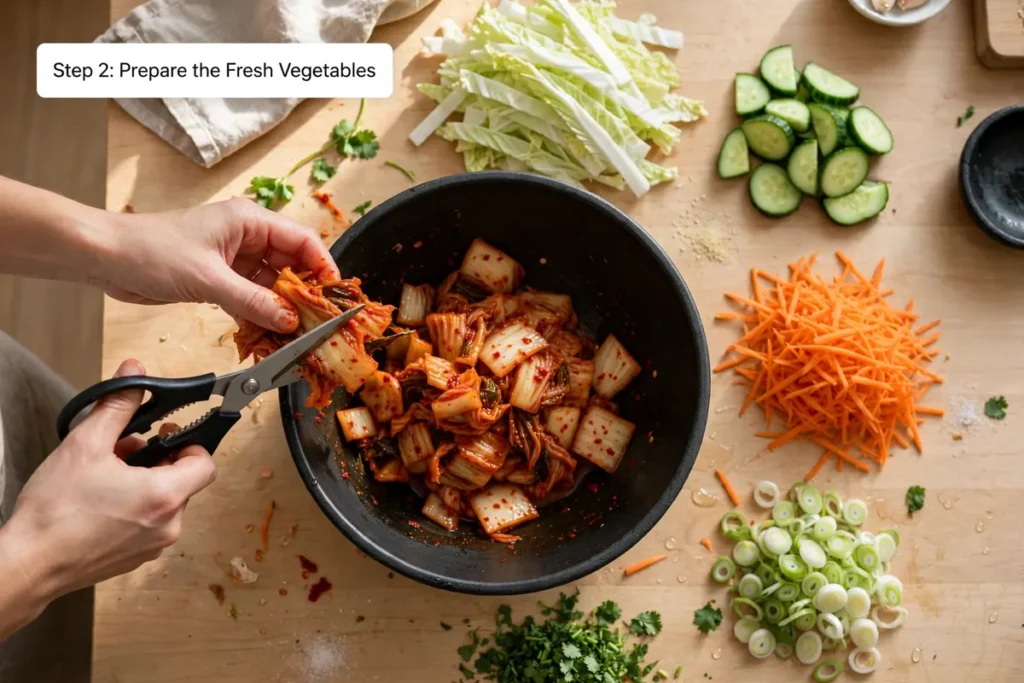
    Slice the napa cabbage, cucumber, and scallions to the specified thin-slice dimensions. Shred the carrots or slice into thin julienne strips. Cut the kimchi into bite-sized pieces using kitchen shears directly over the mixing bowl, approximately 1 to 1.5 inch pieces.

  • Assemble and Dress
  • Toss and finish.
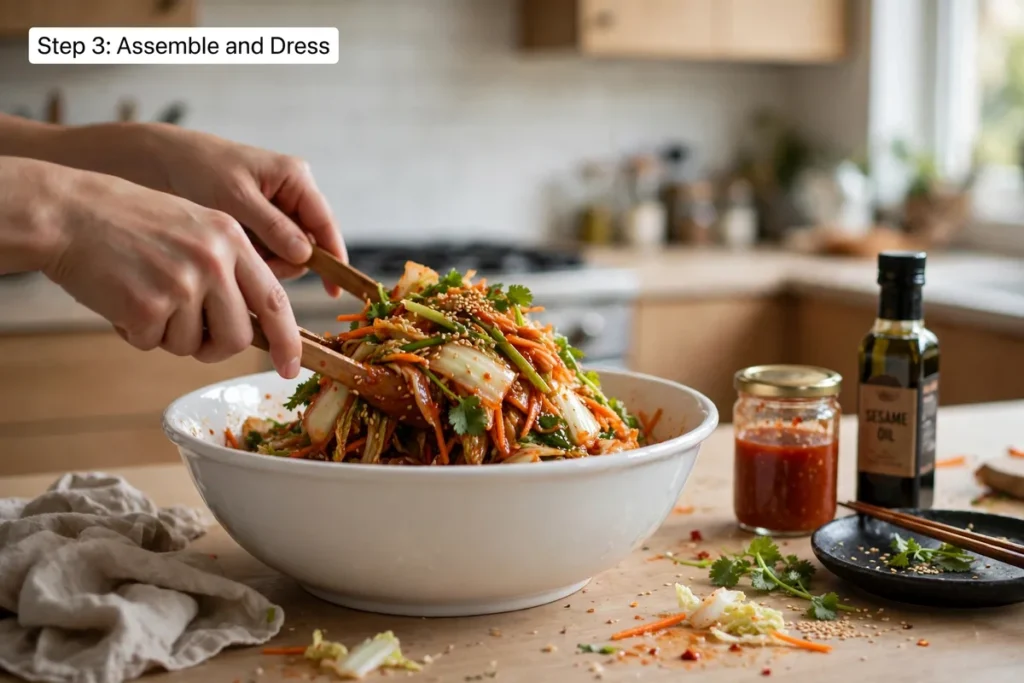
    Combine the cut kimchi, napa cabbage, cucumber, carrots, scallions, and cilantro in the large mixing bowl. Pour the dressing over the assembled vegetables and toss gently to coat all components uniformly. Drizzle the additional 1 teaspoon of toasted sesame oil over the dressed salad and toss once more. Scatter the toasted sesame seeds over the surface and serve immediately.

    Step by Step Process

    Make the Sesame Gochugaru Dressing

    Step 1. Pour 2 tablespoons of kimchi brine directly from the kimchi jar into the small jar. Add the sesame oil, rice vinegar, soy sauce or tamari, gochugaru, honey or maple syrup, grated ginger, grated garlic, and sesame seeds. Seal and shake vigorously for 20 seconds. Taste. The correctly balanced dressing is simultaneously tart from the kimchi brine and rice vinegar, savory from the soy sauce’s glutamate, spicy from the gochugaru, and aromatic from the sesame oil’s roasted thiazole and pyrazine compounds.

    Deep reddish-amber sesame gochugaru dressing shaken in a small jar.

    Prepare the Fresh Vegetables

    Step 2. Slice the napa cabbage, cucumber, and scallions to the specified thin-slice dimensions. The fresh napa cabbage alongside the fermented kimchi provides textural contrast: the fresh cabbage’s crisp, high-moisture cell structure against the kimchi’s soft, partially hydrolysed fermented texture produces the textural tension that makes the salad more interesting than kimchi alone. Shred the carrots or slice into thin julienne strips.

    Cut the kimchi into bite-sized pieces using kitchen shears directly over the mixing bowl, approximately 1 to 1.5 inch pieces. This size produces a piece that delivers the full fermented complexity in each bite while being manageable on a fork.

    Napa cabbage, cucumber and scallions sliced beside deep red kimchi cut with shears.

    Assemble and Dress

    Step 3. Combine the cut kimchi, napa cabbage, cucumber, carrots, scallions, and cilantro in the large mixing bowl. Pour the dressing over the assembled vegetables. Toss gently to coat all components uniformly. Drizzle the additional 1 teaspoon of toasted sesame oil over the dressed salad and toss once more. The second sesame oil drizzle provides a fresh aromatic layer on top of the dressing’s emulsified sesame oil, the two applications producing a more vivid sesame aromatic than a single combined addition from the surface-applied oil’s immediate volatilisation at first fork contact versus the emulsified oil’s slower aromatic release.

    Scatter the toasted sesame seeds over the surface of the assembled salad. Serve immediately.

    Kimchi salad tossed in a large bowl, glistening with dressing and sesame seeds.

    Why Well-Fermented Kimchi Produces Distinctive Character Where Fresh Kimchi Produces Generic Spiced Cabbage

    The lactic acid fermentation’s progressive flavor compound development over 2-plus weeks distinguishes well-fermented kimchi from fresh kimchi at the molecular level.

    Fresh kimchi at preparation or within the first week of fermentation has a pH of approximately 5.5 to 6.0, reflecting minimal lactic acid accumulation from the limited Lactobacillus population at the fermentation’s initial stage. The primary flavors at this stage are from the fresh vegetables, the gochugaru’s capsaicin and carotenoid compounds, the garlic’s allicin, the ginger’s gingerol, and the fish sauce’s or jeotgal’s glutamate and inosinate. While pleasant, this flavor profile is essentially a spiced, fermented-seasoned fresh vegetable whose character most tasters perceive as spicy Korean-seasoned cabbage rather than distinctively kimchi.

    Well-fermented kimchi at 2 or more weeks of refrigerator fermentation or 1 to 2 days of room temperature fermentation has a pH of 3.5 to 4.0, reflecting significant lactic acid accumulation from the exponentially grown Lactobacillus population’s metabolism of the vegetable sugars. Beyond the lactic acid itself the extended fermentation produces 2,3-butanediol and acetoin from the heterolactic fermentation pathway, acetic acid from the acetobacter activity, and the complex garlic thiosulfinate transformation that converts allicin’s sharp, raw garlic bite to the more complex, sweet-savory fermented garlic character. These compounds together produce the unmistakably kimchi flavor profile that fresh kimchi cannot produce regardless of the quantity of the spice paste applied. In the salad format this flavor depth is the entire justification for using kimchi rather than fresh spiced cabbage.

    How Does Kimchi Salad Compare to Related Korean-American Salads?

    AttributeKimchi SaladJapchae SaladKorean Cucumber SaladSeaweed SaladBibimbap Salad
    Primary flavor identityFermented kimchi complexitySweet potato glass noodle, sesameSesame, rice vinegar, gochugaruSesame, umami from seaweedGochujang, sesame, fried egg
    Fermented componentKimchi mandatoryNoneNoneMiso dressing optionalGochujang, fermented chili paste
    TemperatureCold, freshRoom temperature or coldColdColdWarm or room temperature
    Gluten-freeYes with tamariNo, glass noodle soy sauceYes with tamariYes with tamariNo, gochujang sometimes contains wheat
    Most common American occasionEveryday, Korean-American restaurantsKorean-American restaurantsEveryday, banchan traditionJapanese-American restaurantsKorean-American restaurants
    Protein additionTofu, edamame, sliced steakBeef, tofuNone typicallyNone typicallyEgg mandatory, beef or tofu
    Preparation time15 minutes30 minutes10 minutes10 minutes if pre-made seaweed30 minutes

    What Variations Can You Make?

    Kimchi Salad with Crispy Tofu

    Press 1 block (400g) of extra-firm tofu between paper towels for 15 minutes. Cut into 1/2-inch cubes. Toss with 1 tablespoon of cornstarch, 1 tablespoon of soy sauce, and 1/2 teaspoon of sesame oil. Pan-fry in 2 tablespoons of neutral oil over medium-high heat for 3 to 4 minutes per side until deeply golden and crispy on all surfaces. Cool for 5 minutes before adding to the assembled salad. The crispy tofu’s Maillard-developed surface provides both textural contrast and the protein component that transforms the salad into a complete meal. Add at the last moment before serving to preserve the crust’s crunch against the dressing’s moisture.

    Kimchi and Watermelon Salad

    Add 2 cups (300g) of cubed seedless watermelon to the assembled salad alongside the fresh vegetables. The watermelon’s high fructose sweetness and high moisture content provide the sweet-cooling contrast to the kimchi’s fermented tartness and the gochugaru’s heat through the same sweet-spicy-acid complementarity that the Thai larb and the Korean mul-kimchi watermelon traditions document. Replace the cilantro with fresh mint for the sweet aromatic family that frames the watermelon’s character more completely than cilantro’s citrus-adjacent note. This variation is appropriate specifically for the summer months when watermelon is at peak season and the kimchi’s heat benefits from the cooling contrast.

    Dietary Adjustments and Substitutions

    Higher Protein Version

    Add 1 cup (155g) of shelled edamame, 1 cup (165g) of canned chickpeas, drained and rinsed, or 200g of thinly sliced cooked steak seasoned with sesame oil and soy sauce. The edamame version maintains the vegan format. The steak version is the most culturally specific protein addition, the kimchi-beef combination being one of the most embedded pairings in the Korean food tradition across formats from the kimchi jjigae stew to the Korean barbecue table.

    Lower Heat Version

    Reduce the gochugaru in the dressing to 1/4 teaspoon and increase the honey to 1.5 teaspoons. The lower gochugaru quantity reduces the capsaicin heat while maintaining the gochugaru’s smoky-fruity aromatic character that differentiates it from plain spiced vinegar. For a completely heat-free version, replace the gochugaru with 1/2 teaspoon of sweet smoked paprika, which provides the smoky red pepper aromatic without the capsaicin heat.

    What Are the Most Common Problems?

    ProblemMost Likely CausePrevention or Fix
    Mild, generic spiced cabbage flavor rather than distinctive kimchi characterFresh or young kimchi usedUse well-fermented kimchi at minimum 2 weeks old. The flavor depth cannot be achieved at any fresh kimchi quantity.
    Dressing lacking fermented complexityPlain rice vinegar used rather than kimchi brineAlways use 2 tablespoons of kimchi brine from the jar as the dressing's primary acid. The brine's fermented compound profile is irreplaceable.
    Salad wilting quickly after dressingFresh napa cabbage too thinly sliced or dressing applied too far in advanceSlice napa cabbage no thinner than 2mm. Dress within 10 minutes of serving.
    Insufficient heatGochugaru too old and aromatic-depletedPurchase fresh gochugaru from a Korean grocery store. Gochugaru older than 6 months loses its fruity, smoky character and its capsaicin potency.
    Sesame oil flavor too dominantToo much sesame oil, or light rather than toasted sesame oil usedVerify the 2-tablespoon dressing quantity plus 1-teaspoon finish is the correct total. Use toasted sesame oil as specified rather than light.

    Storage

    MethodDurationInstructions
    Refrigerated, undressed components separatelyUp to 3 daysStore the cut kimchi, fresh vegetables, and dressing separately. Assemble and dress within 10 minutes of serving for maximum textural freshness.
    Refrigerated, fully assembled and dressedUp to 1 dayThe fresh vegetables' texture declines overnight from the dressing's acid activity on the cell walls. The flavor deepens as the kimchi's brine further marinates the fresh vegetables.
    Room temperature, assembledUp to 2 hoursThe kimchi's acid and the gochugaru's capsaicin both remain stable at room temperature for 2 hours. Beyond 2 hours the fresh vegetables begin softening noticeably.

    Nutritional Information

    Per serving: approximately 170g without protein additions. Based on 4 servings. Values from USDA FoodData Central using kimchi, napa cabbage, cucumber, carrot, and sesame oil.

    NutrientPer ServingNutrientPer Serving
    Calories148 kcalTotal carbohydrate12g
    Total fat10gDietary fibre2.8g
    Saturated fat1.4gTotal sugars6.2g
    Cholesterol0mgProtein3.2g
    Sodium488mgVitamin C38mg (42% DV)

    Frequently Asked Questions

    Why does well-fermented kimchi produce distinctive flavor where fresh kimchi produces generic spiced cabbage character?

    Well-fermented kimchi at 2-plus weeks has a pH of 3.5 to 4.0 from significant Lactobacillus lactic acid accumulation alongside 2,3-butanediol, acetoin, and acetic acid fermentation byproducts and the complex garlic thiosulfinate transformation products that extended fermentation produces. Together these compounds constitute the unmistakably kimchi flavor profile. Fresh kimchi at pH 5.5 to 6.0 has minimal lactic acid accumulation and its flavor profile is essentially from the fresh vegetable, gochugaru, garlic, and ginger without the fermentation-derived complexity, producing the spiced cabbage character that the salad format cannot compensate for at any dressing quantity.

    Why is kimchi brine used in the dressing rather than additional rice vinegar?

    Kimchi brine contains the full lactic acid, acetic acid, 2,3-butanediol, acetoin, and fermented garlic thiosulfinate compound profile of the fermented kimchi in concentrated liquid form, producing a dressing whose acid component is intrinsically kimchi-flavored rather than generically acidic. Rice vinegar’s acetic acid provides tartness but none of the fermented complexity that makes the dressing specifically Korean-fermented rather than Asian-vinegar-dressed. The two tablespoons of kimchi brine at pH 3.5 to 4.0 contribute more flavor complexity per milliliter than any other available acid source for this preparation.

    Why is gochugaru specified rather than cayenne or crushed red pepper?

    Gochugaru is produced from Korean sun-dried red pepper varieties whose capsaicin-to-carotenoid ratio and aromatic compound profile produce a smoky, mildly fruity, moderately hot character distinct from cayenne’s pure high-heat capsaicin or Italian crushed red pepper’s Mediterranean flavor profile. The gochugaru’s specific aromatic character from its Korean pepper variety’s carotenoid and volatile ester profile is the flavor component that situates the dressing within the Korean flavor architecture rather than a generic Asian-spiced or Mediterranean-spiced context. Substitutes change the salad’s cultural identity alongside its flavor profile.

    How do I know if my kimchi is well-fermented enough?

    Well-fermented kimchi at the correct 2-week minimum has four simultaneous indicators: a pH-appropriate tartness that produces a mild puckering sensation when the brine is tasted directly from the jar, a complex fermented aromatic combining the lactic acid sourness with the garlic’s sweet-savory transformation and a slightly fizzy carbonation note from the continued CO2 production, a partially softened vegetable texture where the cabbage has lost its raw-fresh crunch but retained a distinct chew, and a brine that is cloudy and slightly viscous from the Lactobacillus population’s exopolysaccharide production. Fresh kimchi’s brine is clear, mildly spicy, and not tart enough to produce the puckering sensation at the correct dressing quantity.

    Kimchi salad is a Korean-American composed salad whose deeply fermented, complex, unmistakably kimchi flavor identity depends on well-fermented kimchi at minimum 2 weeks old and pH 3.5 to 4.0 whose accumulated lactic acid, acetic acid, 2,3-butanediol, and fermented garlic thiosulfinate compounds constitute the distinctively kimchi flavor profile that fresh kimchi’s pH 5.5 to 6.0 spiced-fresh-vegetable character cannot produce at any quantity, combined with the kimchi brine in the dressing that delivers the fermented compound profile in concentrated liquid form as the dressing’s acid base rather than the generic tartness of plain rice vinegar, making the fermentation age specification and the brine-in-dressing technique the two ingredient decisions that determine whether the preparation delivers the Korean-American fermented salad experience its identity promises or the dressed spiced cabbage result that young kimchi and vinegar-only dressings produce.

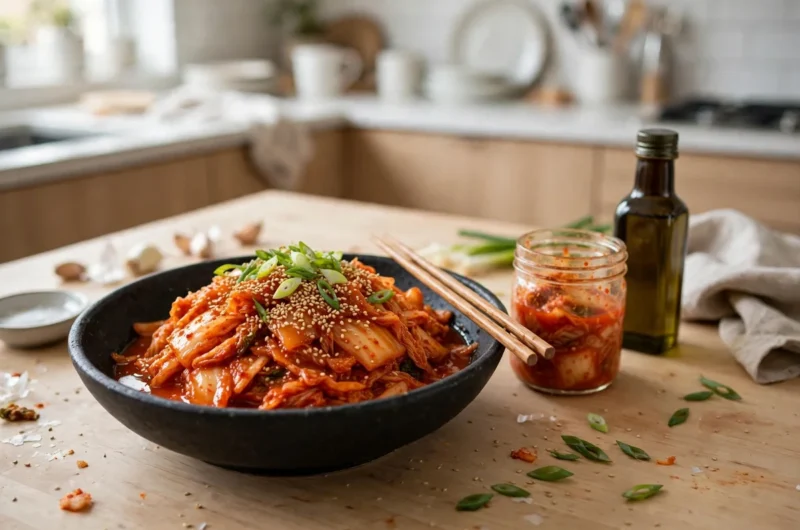
    Table of Contents

    Recent Recipes

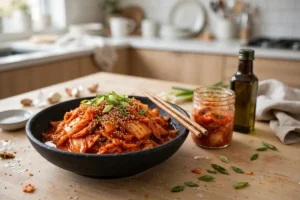
    Bright red-orange kimchi salad in a black stoneware bowl with chopsticks.
    Kimchi Salad Recipe

    Korean-American · Salads Kimchi Salad Recipe Well-fermented kimchi provides both the primary flavor component and the dressing’s acid base. Use […]

    Check Out..!

    Recent Blogs

    Scroll to Top